The Ichthys field is situated on block WA-285-P in the Browse Basin, Timor Sea, Western Australia. The gas and condensate field lies at a water depth of 280m.
Tokyo-based Inpex is the operator of the Ichthys field with a 66.07% interest. Total E&P Australia holds 30% interest, while the remaining interests are shared between Tokyo Gas (1.57%), Osaka Gas (1.2%), Chubu Electric (0.73%) and Toho Gas (0.42%).The field’s development is expected to require an investment of $35bn.
Recommended White Papers

Recommended Buyers Guides

The final investment decision was made in January 2012. First gas from the field is expected to be gained in September 2017. At its peak, the field will produce 8.4 million tonnes per annum of LNG and 1.6 million tonnes per annum of LPG, with 100,000 barrels a day of condensate.
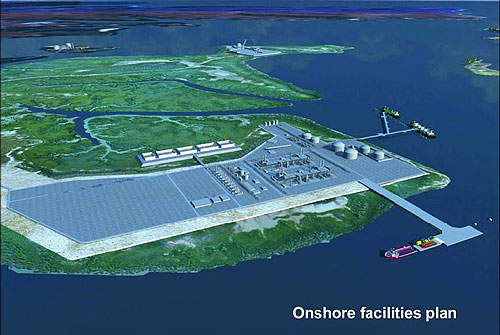
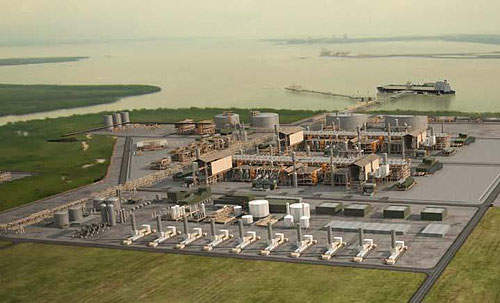
A new LNG facility at Blaydin Point, Australia, is being built as part of the project. The plant will include two LNG trains with a capacity of 8.4 million tonnes a year, processing plants, storage tanks, a jetty and other utilities. Construction of the new plant started in 2012.
Discovery of Ichthys
The Ichthys field was discovered in 1980 by Woodside Petroleum with drilling of the Brewster 1A exploration well. In 1998, Inpex acquired the rights to the field and began exploration activities.
Three additional exploration wells were drilled at the field in 2000. Five appraisal wells were drilled between June 2003 and February 2004, with the field declared commercially viable in March 2009.
Geology and reserves
Gas is contained in two reservoirs of the Brewster and Plover formation. Ichthys is estimated to contain 530 million barrels of condensate and 12.8 trillion cubic feet of natural gas. The life of field is estimated to be more than 40 years.
Ichthys field development
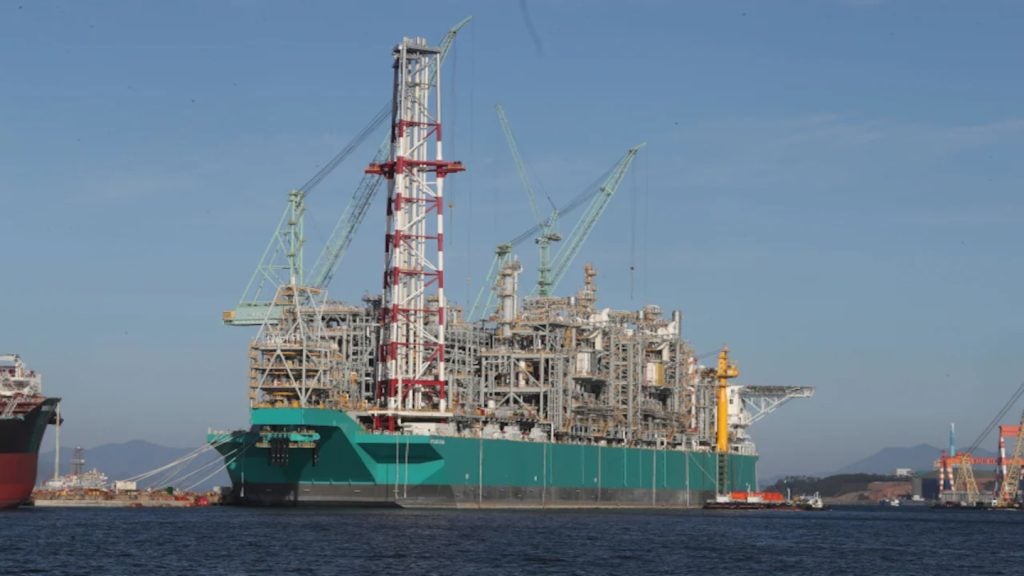
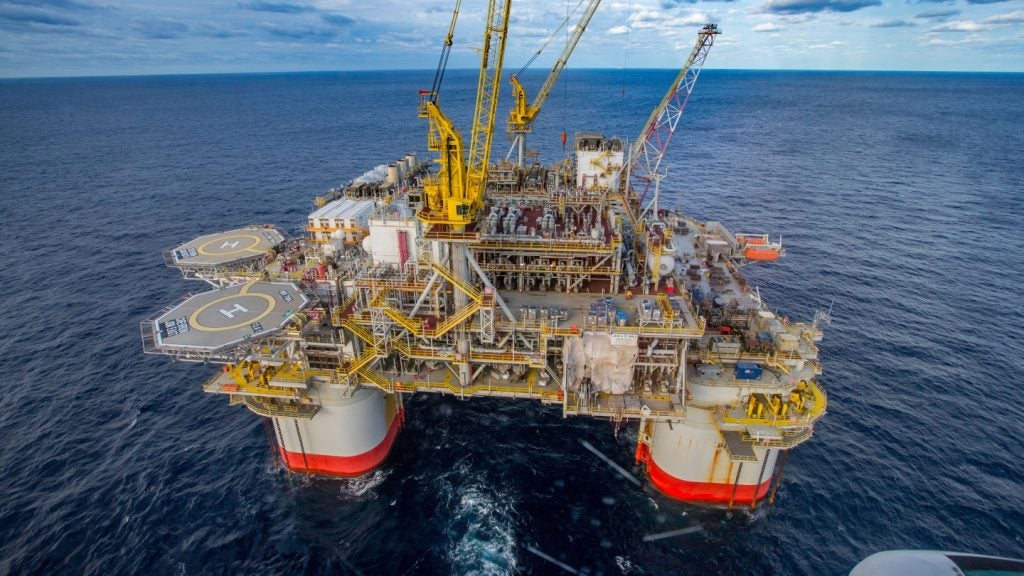
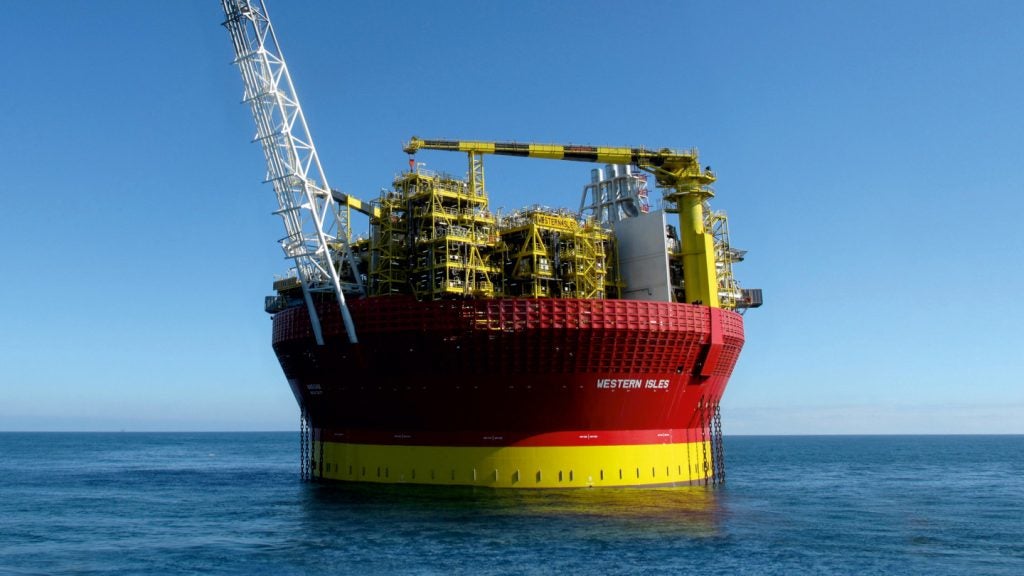
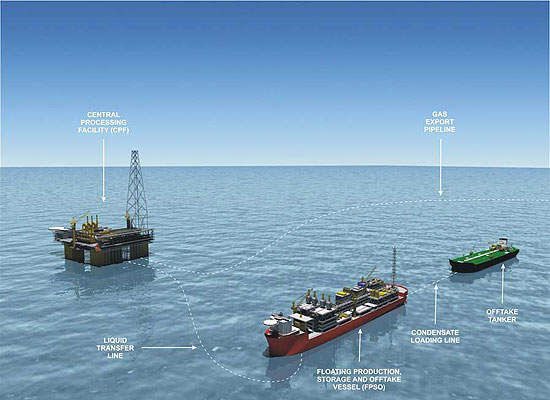
Ichthys field is being developed using a central processing facility (CPF). A floating production storage and offloading (FPSO) facility will be installed nearby to treat and store condensate. Other facilities will include umbilicals, risers and flow lines.
The development involves drilling of around 30 subsea wells in the Brewster reservoir and another 20 in the Plover reservoir.
The semi-submersible CPF will be 110m high and 110m wide. It will be moored in place by 24-32 mooring systems and suction piles, and will collect gas from various production wells and undertake initial processing. The CPF will accommodate up to 150 personnel.
FPSO
Liquids processed at the CPF will be sent to the FPSO through a turret. The FPSO will be able to store 1.2 million barrels of condensate. It will feature a 150-person accommodating facility.
The FPSO facility will be located 3.5km away from the CPF. The FPSO will process the condensate, remove water and other raw impurities, and further export it to the onshore processing facilities of Darwin through an 889km pipeline.
Keppel Shipyard is the contractor for construction of the 6,800t FPSO turret, which was integrated into the hull of the FPSO in November 2014.
Subsea system
The subsea system at the Ichthys field will include subsea trees, manifolds, flowlines and umbilicals.
Wells drilled into the field will be connected to the manifolds. Gas recovered from the wells will be collected at the manifolds and sent to the CPF through the flowlines.
The subsea gas pipelines will be made of high-quality carbon-steel and externally coated with an anti-corrosion material and concrete to increase stability.
Processing systems
Produced gas will be sent to the CPF where condensate, water and other liquids will be separated. Processed gas will be then sent from the CPF to the new LNG facility.
The condensate separated from the gas will be sent to the FPSO, from where it will be transferred to tankers for delivery to markets.
Pipeline
An 889km-long pipeline with a diameter of 42in will carry the produced gas from the CPF to the new LNG facility at Darwin.
It will be the longest offshore gas pipeline in the southern region and the fifth longest in world.
Contractors involved with Ichthys field development
In April 2009, AMEC was awarded the front-end engineering design (FEED) contract for the Ichthys field. AMEC carried out the FEED studies for the offshore facilities and an export pipeline.
AMEC subcontracted Aker Solutions to carry out the FEED studies for the CPF and the FPSO.
In May 2009, John Wood Group’s subsidiary JP Kenny won the contract for carrying out FEED studies for the field’s umbilicals, risers and flowlines. Another subsidiary of John Wood Group, MSC, is responsible for designing the field’s dynamic riser system.
Atteris provided design services for the shore crossing of the export pipeline.
RPS Group and URS Australia were involved in carrying out the environmental impact assessment studies for the field.
Fugro Survey was contracted to provide geophysical survey services for the offshore facilities, subsea pipeline and loading and handling facilities.
MSi Kenny was involved in the pre and post-FEED stages of the project. The company also performed thermal/hydraulic analysis of the subsea system and the necessary tie-backs.
McDermott is the main EPCI contractor for the project. Clough DORIS JV was contracted in August 2011 to provide integrated project management services.
GE Oil and Gas won a contract in January 2012 to supply various equipment and services such as gas turbines and compressors for the project.
Saipem is responsible for laying of the gas export pipeline. In April 2012, Technip was contracted to supply a flexible pipe for the gasfield. Technip was also awarded a contract in June 2012 to assist in the engineering and procurement of the FPSO. Technip received a $273m contract in September 2012 for providing preparation and execution services for the FPSO and CPF.
Aker Solutions is provider of umbilicals and flying leads for the project, with verification being carried out by AMOG.
Phusion won a $17.37m contract in March 2013 to provide engineering support services for the Ichthys offshore project.