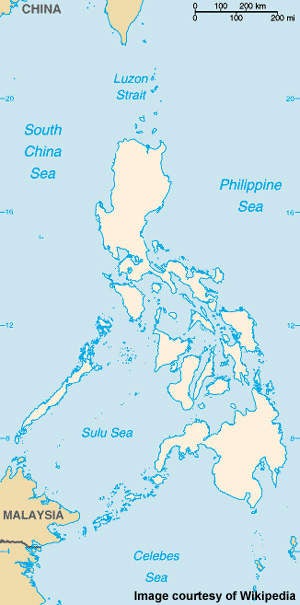
The Tindalo oil field is situated in the Northwest Palawan Basin, offshore Philippines within service contract 54 Block A. The block covers an area of 862km². It is owned by Nido Petroleum Philippines (42.4%), Yilgarn Petroleum Philippines (30.1%), Trafigura Ventures III BV (15%) and TG World Energy Corp (12.5%).
The field was estimated to have reserves of up to 24.5 million barrels of oil. First production from the field commenced in May 2010 at a peak rate of 18,689 barrels of oil per day (bopd). An extended well test programme commenced in June 2010 to test well performance and prepare a long-term reservoir management plan for the field.
Recommended White Papers

Recommended Buyers Guides

A workover of the Tindalo-1 well with the drilling of a sidetrack was planned to increase oil production and reduce water production. The sidetrack was completed in September 2010 and the workover of Tindalo-1 well was completed in November 2010.
In December 2010, testing of the Tindalo sidetrack well showed declining oil production and higher water cuts. Based on the results, the field partners decided to abandon the field as production was uneconomic.
The Tindalo-1 well was plugged and abandoned in January 2011 and entire infrastructure at the field was demobilised.
Oil field discovery
The Tindalo field was discovered in October 2008. The discovery was made by exploration well Tindalo-1, drilled at water depth of 100m. The drilling intersected an oil column of 124m-144m. The oil was found at Miocene carbonate reservoir. The well was plugged and suspended for production in future.
Further detailed evaluation of reservoir properties by using wireline logs provided an enhanced understanding of porosity and net pay of the reservoir.
Tindalo oil field development
The field development plan, consisting of jack-up rig and positioned storage vessel, was approved by joint venture partners in September 2009. The final investment decision for the field development was approved in December 2009.
The suspended Tindalo-1 well was re-entered to commence production. An electric submersible pump was installed to facilitate continued production rates during the life of the field..
Tindalo oil field infrastructure
The infrastructure at the field included M/T Tove Knutsen, a floating storage and offloading (FSO) vessel and production processing system over a jack-up drilling rig. The crude oil processed on the rig was transferred to the FSO through a floating hose.
The FSO was leased from Knutsen Shuttletanker Pool for six months in February 2010. The FSO is a double hulled oil tanker and has the capacity to store more than 600,000 barrels of oil. The vessel was placed close to the production facility and is on station via dynamic positioning systems.
The vessel’s positioning system reduces the possibility of errors in oil transmission and identifies and responds to changing weather conditions for continued production. The vessel can be unplugged for cargo offtake operations. It arrived in May 2010.
The crude produced from the well was processed over the deck of a drilling rig. The production processing equipment separated gas and water from the oil before transferring it to the vessel.
Initially, the field did not produce substantial water volumes. However, during the later stage of the field’s operations, the processing system was able to treat up to 16,000 barrels of water.
Drilling, production and delivery contractors
The drilling rig contract was given to Vantage Drilling Company in December 2009. The contract for the FSO was awarded to Knutsen Shuttletanker Pool in February 2010.
The contract for production processing equipment was given to Weatherford Asia Pacific in February 2010. The equipment is a modular system and was assembled in Indonesia. It was used for the initial well testing programme.
The contract for delivery of a floating hose was awarded to Sigma Offshore in March 2010. The contract was valued at $1.2m.
Tindalo drilling rig
Related project
Al Shaheen Oil Field, Qatar
The largest producing oil field on the west coast of the Qatar peninsula is the Dukhan field, operated by Qatar Petroleum (QP). Offshore production is mainly via Exploration and Production Sharing Agreements (EPSA) with foreign oil companies in partnership with QP on behalf of the Government of Qatar. Qatar has proven recoverable oil reserves of 15.2 billion barrels.
The drilling rig Aquamarine Driller is owned by Vantage Drilling. It is a jack-up rig built at Keppel shipyard in 2009. It has maximum production capacity of 20,000 barrels of oil a day. The rig can operate at maximum depth of 375ft under water and can drill to a maximum depth of 30,000ft. It can accommodate 120 people.