Private 5G can connect workers, automate inspections, and bring more operational data into AI-driven applications. But for oil and gas operators, the bigger question is simple: will the investment pay off?
The answer depends less on the network itself than on what it enables. Reduced downtime, preventive maintenance, automated inspections, connected workers, and less reliance on cabling can all contribute to the business case. The challenge is determining what those improvements are worth at a specific site.
The operational cost of connectivity gaps
Many facilities have built connectivity incrementally, adding multiple wireless networks and wired connections as new requirements emerge. Over time, that has created fragmented coverage, disconnected mobile assets and gaps in operational data. But the impact goes beyond the network.
Round-the-clock maintenance teams are often tethered to pen-and-paper, passive workflows, manual SOPs (standard operating procedures), cutoffs from asset history, technical specifications, and remote engineering support at the point of work. Because field data is never synchronized with central control systems, critical operational blind spots can emerge.
This analog process can severely reduce wrench time, forcing technicians to make repeated trips to the control room to retrieve P&IDs, review maintenance logs, or consult senior experts. Those delays translate directly into labor costs, longer maintenance cycles, and potentially more downtime.
Where private 5G can create measurable value
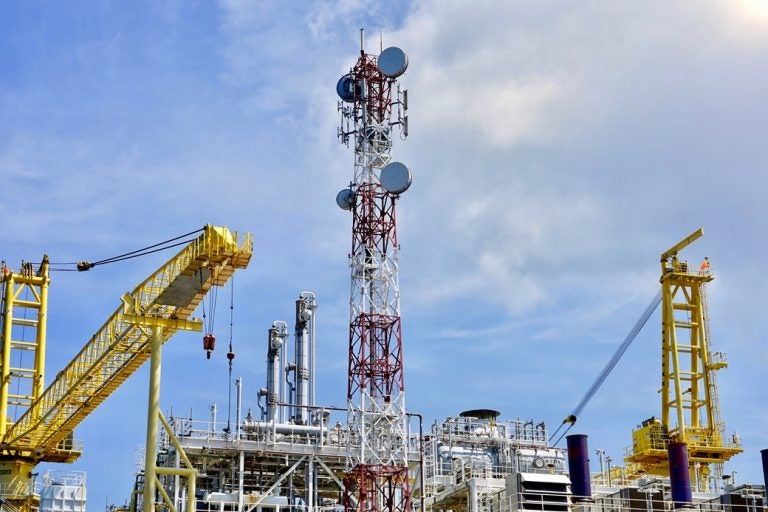
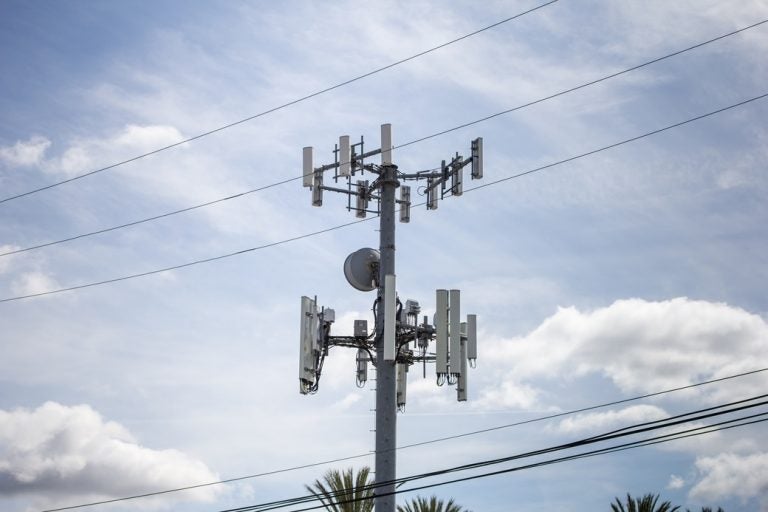
A private 5G network provides dedicated cellular coverage within an operator’s facility, from control rooms and workshops to process units, storage areas, pipelines, loading zones and outdoor yards. This matters especially in oil and gas environments, where coverage must work around dense steel structures, tall tanks, pressure vessels, pipe racks, cranes, machinery and other obstacles that can block, reflect or distort radio signals. The result can be a highly variable wireless environment, with shadowed areas, changing signal paths and difficult-to-reach locations. Technologies such as beamforming and beam steering concentrate radio signals toward devices and areas where coverage and capacity are required, helping the network function around difficult site layouts. Beamforming does not remove the need for good radio planning, but it gives the network more flexibility to adapt to complex industrial layouts.
Cellular handover also uses a make-before-break approach, allowing a device to establish its next connection before releasing the existing one. This supports continuous service for assets in motion indoors and outdoors.
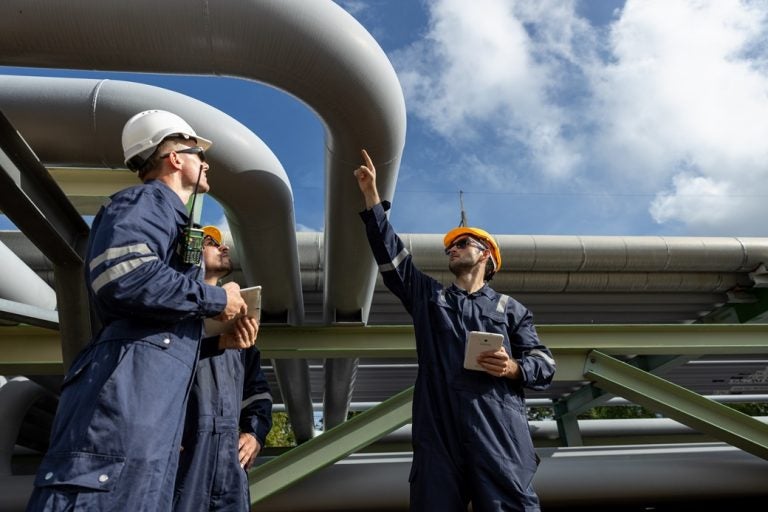
Once this connectivity foundation is in place, operators can connect assets and applications that have been difficult to deploy at scale. Field workers can use 5G smartphones, tablets, or video-enabled helmets to manage electronic permits, maintenance records, and digital and remote expert support at the point of work. Wireless sensors can feed asset-condition data into monitoring systems across indoor and outdoor areas. 5G-connected robotics and drones with cameras and sensors can inspect infrastructure for leaks or monitor smoke, flare, or gas leakage without sending people into every hazardous or hard-to-reach location.
The business value comes from what those capabilities allow operators to do differently: improve worker safety, reduce inspection and maintenance time, respond faster to abnormal conditions, increase asset visibility and make better use of specialist personnel. But understanding where private 5G can create value is only part of the equation. Operators also need to understand what those improvements could be worth in their own environment.
ROI calculator: Building a site-specific business case
For oil and gas leaders, understanding how private 5G can affect their operation’s bottom line is a critical step in building use cases for improved infrastructure. But estimating that value can be difficult when site-specific data is limited, or teams need to model operational scenarios they have not yet deployed.
An Oil and Gas Value Calculator can make that assessment more practical, drawing on business cases developed by Ericsson consultants with industry partners, together with insights from live projects.
Users can select specific use cases that fit their organization’s priorities and enter operational information such as the area requiring coverage, employee numbers and production throughput. Pre-populated averages provide a starting point where site data is not yet available.
A sample case published by Ericsson models a mid-size refinery covering four square kilometers, with an average daily throughput of 175,000 barrels and 450 employees. It uses an average engineering labor cost of $50 an hour and compares different adoption paths over five years. These assumptions illustrate how the value calculation can be grounded in the operating profile of a specific facility.
The calculator then estimates the effect of private 5G over a five-year investment period. Its output includes return on investment, the expected payback year and five-year net present value. Users can compare the value generated by selected applications with the total cost of operating the network. They can also test different adoption paths, including a broad initial deployment or a phased introduction as teams gain experience.
What drives the return on private 5G?
The overall return from private 5G comes from the network itself and from the applications it enables. Potential network savings can include fewer access points and less cabling. But the larger opportunity may come from operational improvements. Connected-worker systems can shorten permit and maintenance workflows.
Wireless condition monitoring can also help teams intervene before equipment fails and identify assets operating outside their normal energy profile. Drones and robots can reduce the labor needed for routine inspections while limiting workers’ exposure to hazardous areas, and video analytics and dynamic digital twins can support remote operations, assuming the network provides consistent bandwidth and latency.
Each benefit needs to be tied to a measurable operating variable – engineering hours saved, cabling costs avoided, inspection time reduced, maintenance costs lowered, or production value protected through reduced downtime. Rather than treating private 5G as a standalone technology investment, this approach allows operations and finance teams to evaluate it against the business outcomes it enables.
To learn more about the ROI calculator or for a custom analysis based on your oil and gas environment, click here.