



The Lufeng 22-1 oil field lies 250km south-east of Hong Kong in the South China Sea, in 330m of water. Recoverable reserves are estimated at 30 million bbls, representing a recovery factor of approximately 25% of oil-in-place.
Lufeng 22-1 is prone to tropical cyclones that have an average passing speed of 18-22km/h, (50km/h max) and an average duration of 26 hours, which generate waves up to 8m high. The South China Sea is also subject to a cold wave from Siberia, causing force six winds and correspondingly, very rough seas.
Recommended White Papers
Recommended Buyers Guides

The field is jointly operated by StatoilHydro (75%) and CNOOC (25%).
Decommissioning
Lufeng 22-1 was officially shutdown on 16 June 2009, ending its production activities that began more than a decade ago in December 1997.
It is the first Chinese offshore oilfield to be officially shut down. As agreed upon with StatoilHydro in April 2009, CNOOC is to take over full ownership of the field and is currently in the first phase of decommissioning. CNOOC announced that the FPSO Munin will also leave the oilfield after the last cargo is received. After tank cleaning is complete the FPSO will depart from China.
FPSO
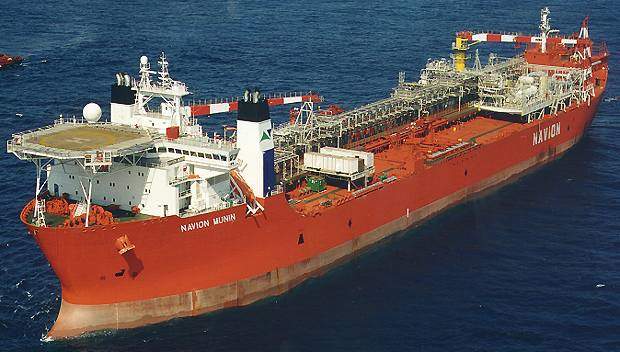
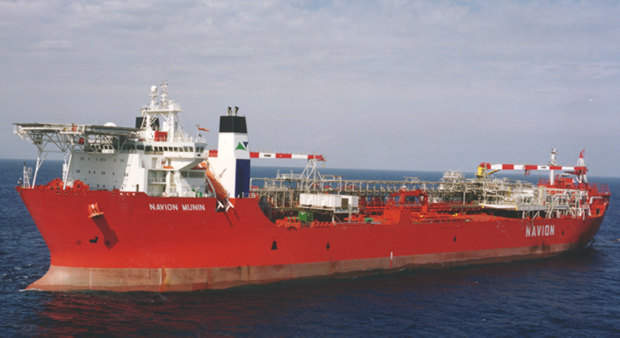
The Navion Munin is a 103,000dwt multi-purpose ocean-going single-screw tanker, with diesel-electric propulsion. Two electrically-driven side thrusters, each 2,000kW, with controllable pitch propeller (CPP) are installed in the bow and two 3,000kW retractable azimuth thrusters are located in front of the pump room.
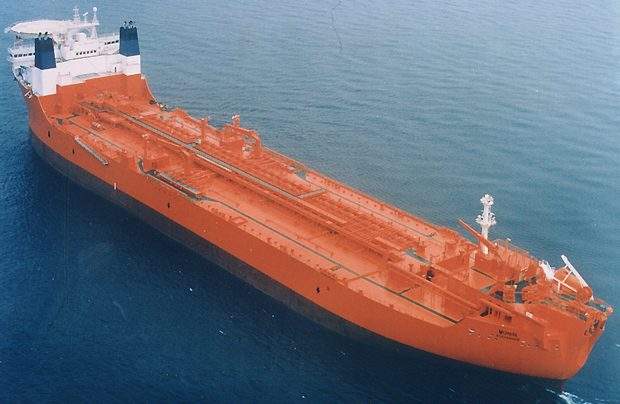
The hull is designed with the main engine room and accommodation in front, with the cargo/ballast pump room and the engine room housing the electric propulsion motors behind. The cargo tank section consists of 18 cargo tanks, plus two slop tanks with a total cargo capacity of 101,400m³.
All cargo tanks are protected by a double bottom and ballast tanks at the sides. There are two longitudinal bulkheads in the cargo section, with one centretank and two sidetanks of equal breadth. The ship is provided with a pump room for cargo and ballast pumps located aft of the cargo section.
The living quarters can accomodate 55 people and are located at the front of the vessel. Electricity is provided by four 5,200kW Wartsila 6R46A engines and one Wartsila 9R20 engine with a generator output of 1,100kW.
The engineering, procurement, construction and installation contract for the FPSO was awarded to FMC Technologies in 1996. FMC SOFEC supplied a turret mooring for the floating production system.
Process system
Production on-board the FPSO has been designed to process the wide range of oil and water rates expected from the Lufeng 22-1 field, under severe metocean conditions. The designs for the Lufeng 22-1 facilities are based on a capacity of a 60,000b/d instantaneous oil rate (for the start of field life) and a maximum throughput capacity of 125,000b/d (as watercut increases).
The production facility includes a first-stage production separator, a second-stage separator, an electrostatic coalescer and crude transfer pumps.
Wellstream fluid arrives on the FPSO via two flexible production risers and is directed to the production separator via the production manifold.
The oil from the crude heater is then routed to the second stage separator, where gas is flashed off. Produced gas from the separation equipment is cold vented. From the separator, oil is pumped by means of two centrifugal pumps, through the coalescer, where water is removed. The water from the coalescer is then pumped back to the first-stage separator by a centrifugal pump.
From the coalescer, oil is cooled to 70°C in a plate cooler. Finally, processed crude oil is routed to storage tanks, where heating coils keep the temperature of the crude oil at 65°C.
Subsea
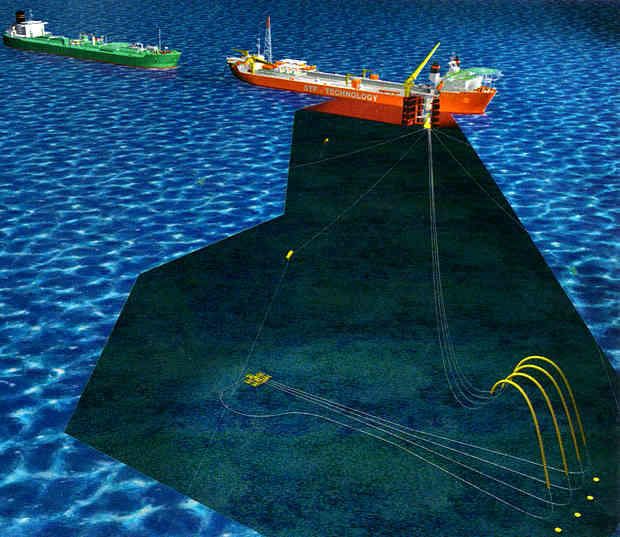
The field is developed with five subsea horizontal production wells drilled through a five-slot template on the seabed. One of these has the longest horizontal section ever drilled off China at a length of 2,060m. The wells produce into an integral manifold, installed on the template.
The FPSO is moored with a conventional catenary mooring system, consisting of six symmetrically spread mooring lines, all connected together at the upper end to a disconnectable STP buoy.
Decommissioning
The Lufeng 22-1 oilfield project is the first Chinese Offshore oilfield to be abandoned, shutting down officially on 16 June 2009. Earlier, in April 2009, CNOOC and StatoilHydro entered into an agreement to decommission Lufeng 22-1 oilfield project. Under the agreement, CNOOC is responsible for decommissioning the oilfield after it is shut down. After receiving its last cargo the FPSO “Munin” would leave the oilfield completing its tank cleaning operations. The Phase I of decommissioning activities is in progress.
