

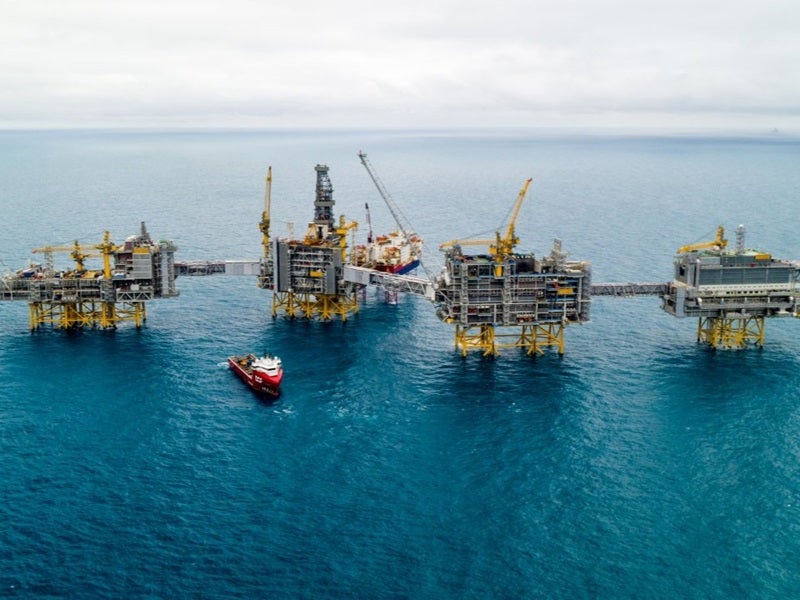
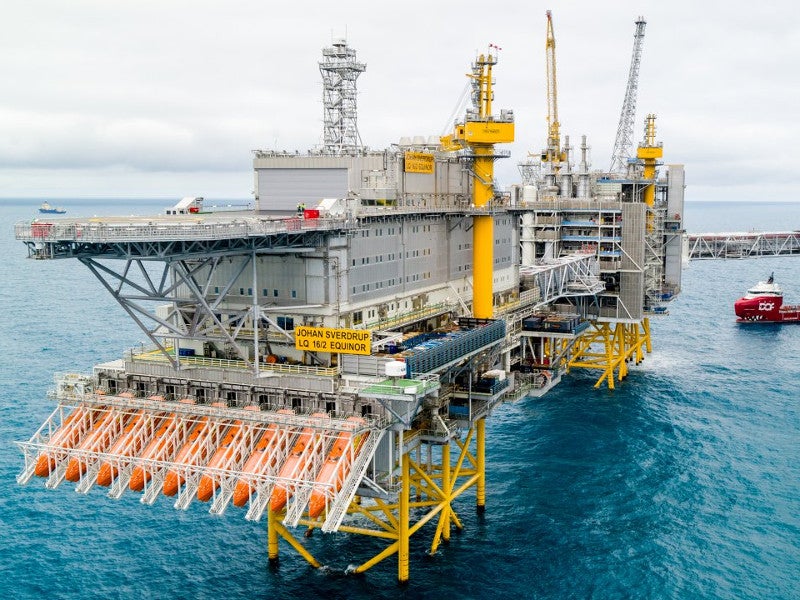
Johan Sverdrup field is located in the Utsira High area in the North Sea, approximately 160km away from the coast of Stavanger, Norway.
The offshore development, which includes the Avaldsnes and Aldous discoveries, is the third largest oil field on the Norwegian continental shelf.
Recommended White Papers

Recommended Buyers Guides

Discovered in 2010, it is jointly owned by Equinor (operator, 42.6%), Aker BP (31.5%), Petoro (17.3%), and TotalEnergies EP Norge (8.44%).
The field is being developed in three phases, with the first and second phases already operational.
The final investment decision for the third phase was announced in July 2025 with an investment plan of Nkr13bn ($1.27bn). Production from this phase is expected to commence in the fourth quarter of 2027.
Johan Sverdrup accounts for roughly one-third of Norway’s total oil production. The field’s carbon dioxide emissions are reported to be 80%-90% lower than the global average for oil production, primarily due to electrification with hydroelectric power from shore.
It is expected to remain in operation for more than five decades, generating more than 3,400 person‑years of work per year over the period.
Geology and reserves
Johan Sverdrup field lies in water depths of 110m-120m, spanning three primary production licences – PL 265, PL 501, and PL 502, and covers an area of about 200km².
The primary reservoir holds oil within Upper Jurassic intra-Draupne sandstone at a depth of around 1,900m. This main reservoir is characterised by excellent quality, with particularly high permeability.
Additional oil volumes are identified in sandstone formations of the Upper Triassic Statfjord Group and the Middle to Upper Jurassic Vestland Group, as well as in spiculite deposits of the Upper Jurassic Viking Group. Further hydrocarbons have also been confirmed in carbonates of the Permian Zechstein formation.
The Johan Sverdrup field is estimated to hold about 2.7 billion barrels of oil equivalent in recoverable reserves.
At peak capacity, it is designed to deliver up to 755,000 barrels of oil a day (bpd), representing around one third of Norway’s present oil output.
Johan Sverdrup phase one
The plan for operation and development (PDO) for phase one of the Johan Sverdrup offshore development was approved in August 2015. Construction on phase one of the project commenced in March 2016, and production started in October 2019.
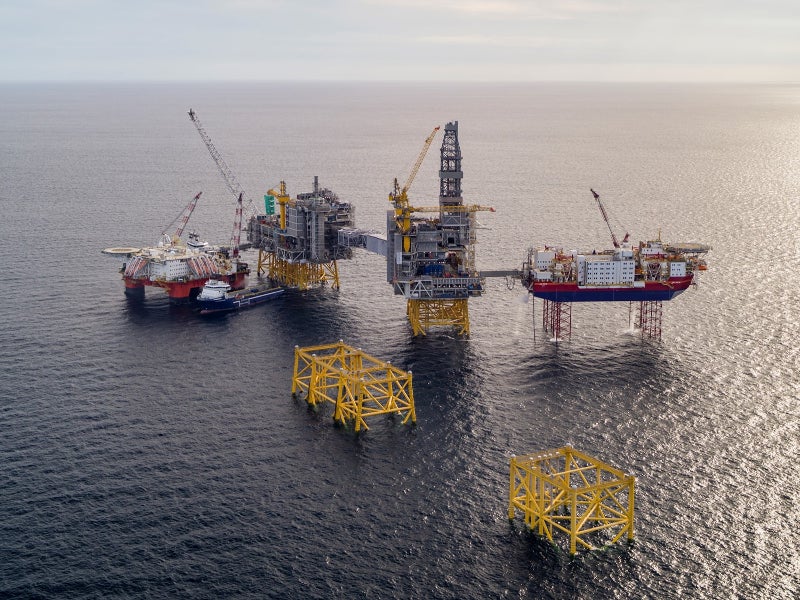
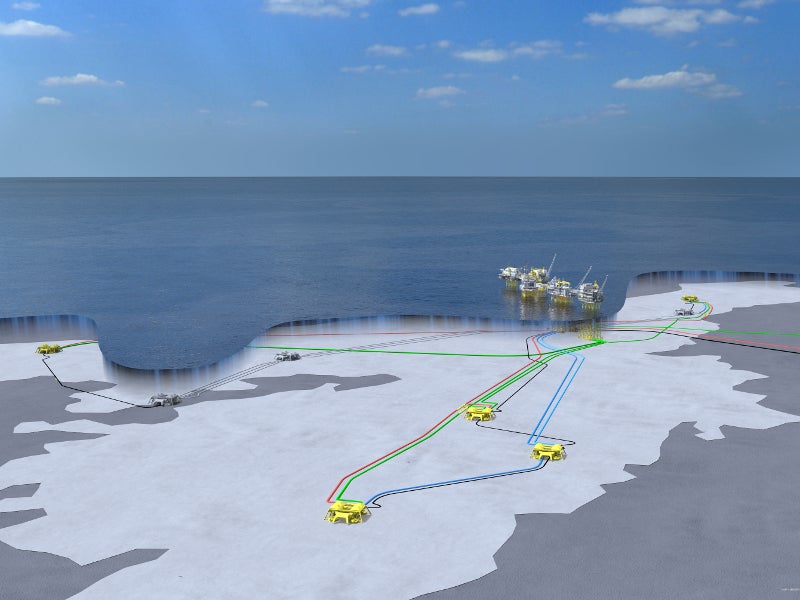
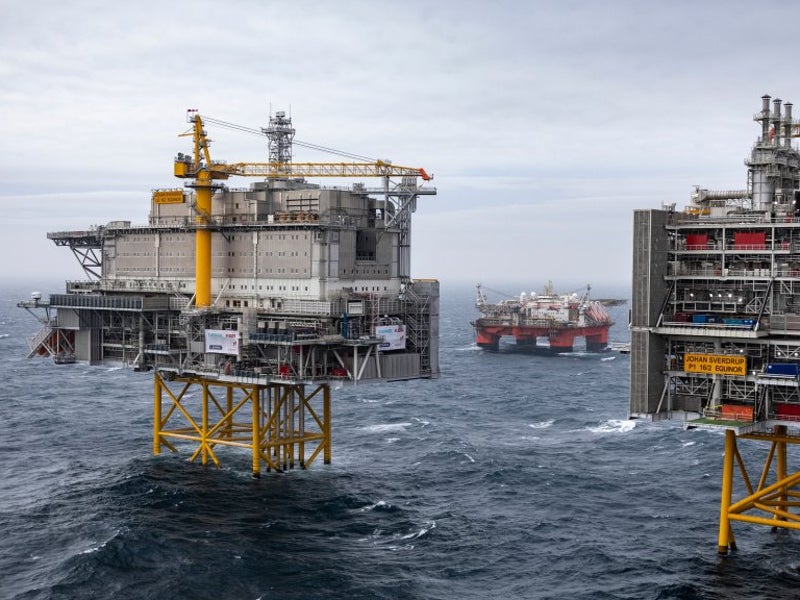
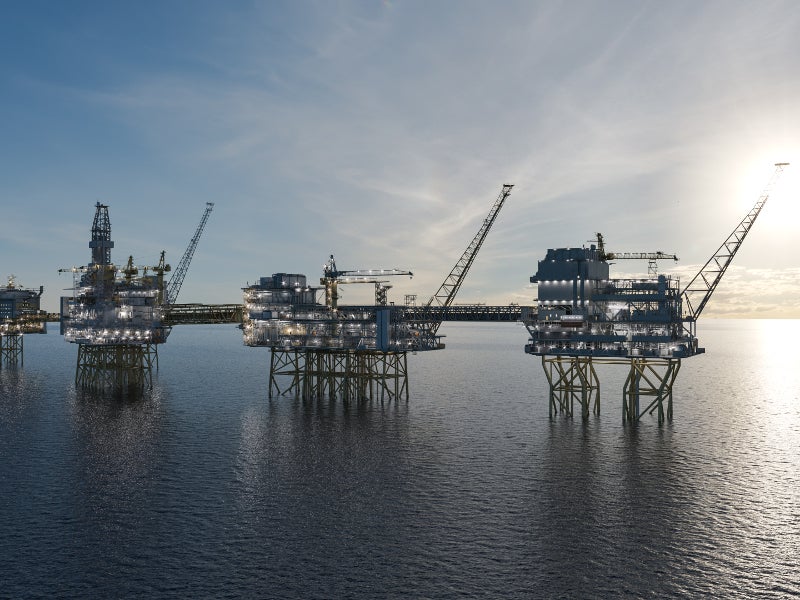
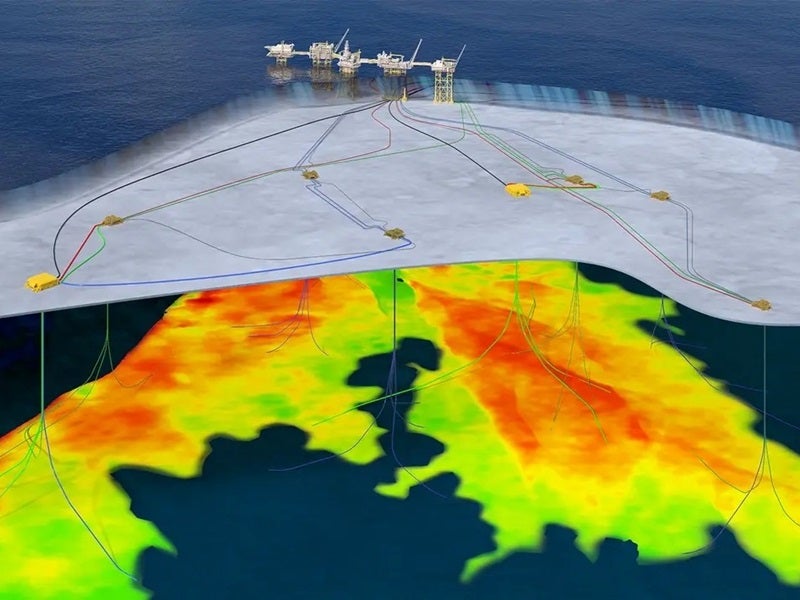
The first phase involved the installation of four bridge-connected platforms, including an accommodation and utility platform, a processing platform, a drilling platform and a riser platform. It also includes three subsea installations for water injection and 35 injection and production wells.
Phase one has a production capacity of 440,000bpd. The produced oil and gas from the field is delivered to the shore through oil and gas pipelines.
The oil pipeline transports oil to the Mongstad Terminal in Norway while the gas pipeline delivers gas to the Karsto Terminal.
Johan Sverdrup phase two
The PDO of phase two was submitted to the Norwegian Ministry of Petroleum and Energy in August 2018, and the same was approved in May 2019.
The second phase entailed capital expenditure of Nkr41bn.
Construction on the second phase began in May 2019 and was successfully brought on stream in December 2022.
Phase two of the Johan Sverdrup development involved the installation of a new platform, five subsea systems, 28 wells, a new module tied into the existing riser platform and equipment to supply power to the wider Utsira High area.
This phase was completed within the planned schedule and approved budget despite the disruption caused by the Covid-19 pandemic.
Johan Sverdrup phase three
Phase three development will involve the installation of two subsea templates in the Kvitsøy and Avaldsnes areas.
Each template will have six well slots, accommodating a total of eight wells comprising seven oil producers and one water injector.
These new wells will be connected to existing subsea infrastructure and routed to the P2 platform, where the fluids will be processed and exported.
Contractors involved
The feasibility and concept studies, as well as front-end engineering design for phase one of the project, were done by Aker Solutions. The company was also awarded the engineering services, procurement and management assistance contract for the phase.
Kvaerner (now part of Aker Solutions) received a $119m contract to supply jackets for the process platform and drilling platform for the field while Samsung Heavy Industries received an approximately $836m contract to fabricate topsides for the processing and riser platforms in June 2015.
Aibel received a $956m contract to deliver engineering, procurement and construction services for the deck of the drilling platform. The company was also contracted for building two onshore converter stations for the development of the Johan Sverdrup field.
Aker Solutions and Kvaerner won a $373m contract to carry out modifications on the riser platform for the second phase of the project in April 2018.
In March 2025, TechnipFMC secured an integrated engineering, procurement, construction and installation contract valued at Nkr5.3bn from Equinor for work on phase three of the Johan Sverdrup development.
The scope of work involves design, manufacturing and installation of subsea production systems, umbilicals, and rigid pipelines to connect new templates to the existing Johan Sverdrup field centre.
Suppliers and contractors involved in the project include ABB, Autronica Fire and Security, Flux Group, Rapp Bomek, IKM Ocean Design, FMC Kongsberg, Baker Hughes and Odfjell Drilling.
Additionally, Siemens, NKT, Technip FMC, Kaefer Energy, Kongsberg Maritime, Dragados Offshore and Subsea 7 are the other contractors involved in the development of the Johan offshore field.
