

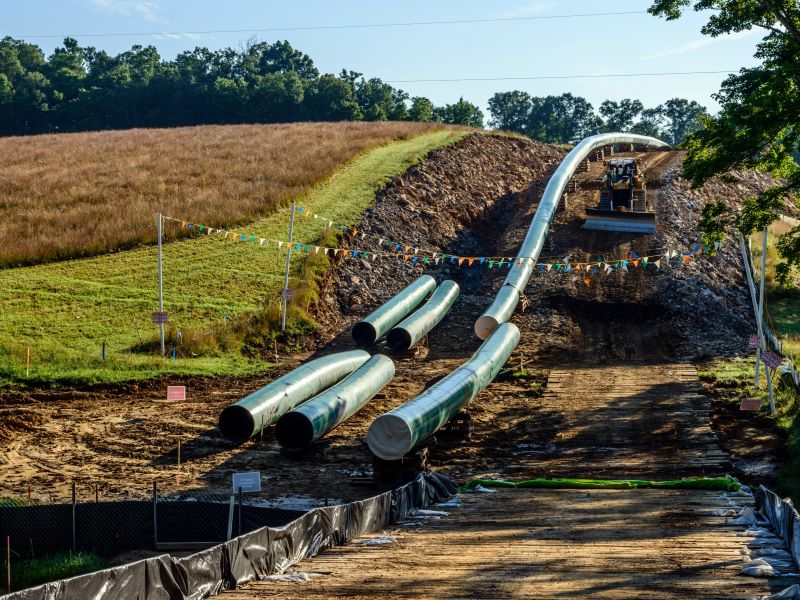
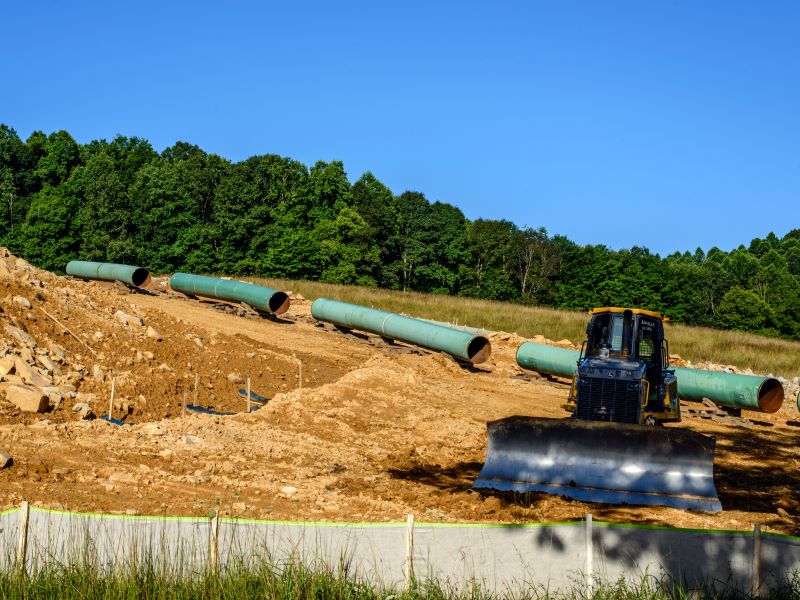
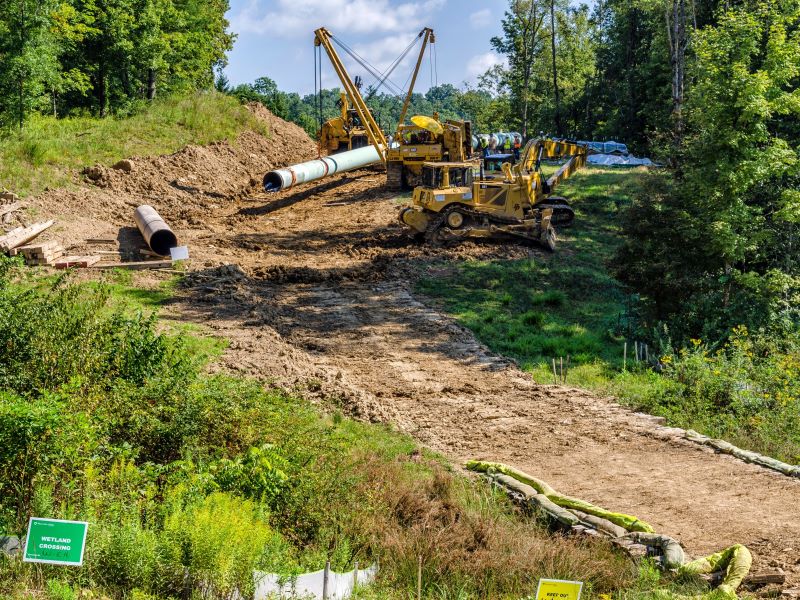
The Mountain Valley Pipeline (MVP) is a 303-mile (487.6km)-long natural gas pipeline project between West Virginia and Virginia in the US.
The project supplies natural gas from the Marcellus and Utica shale regions to markets in the Mid and South Atlantic regions in the US and is regulated by the Federal Energy Regulatory Commission (FERC).
Recommended Buyers Guides

The pipeline is owned by Mountain Valley Pipeline, a joint venture formed among affiliates of EQT (48.35%), NextEra Energy (32.82%), Con Edison Transmission (7.95%), AltaGas (10%) and RGC Midstream (0.88%). Equitrans Midstream, a wholly owned subsidiary of EQT, operates the pipeline.
The pipeline project received the final environmental impact statement from the FERC in June 2017, while a Certificate of Public Convenience and Necessity for the project was issued in October 2017.
Construction commenced in February 2018 and the pipeline entered service in June 2024.
In October 2025, Mountain Valley Pipeline applied to the FERC, seeking approval for the MVP Boost project, citing rising demand for additional capacity on the MVP mainline system.
With an estimated cost of $450m, the project is expected to add 600 million cubic feet per day of capacity to the MVP mainline.
If approved, construction on the project is expected to begin in 2026/2027, with start-up planned for mid-2028.
MVP route
The MVP runs from the Equitrans L.P. and EQT Transmission network in Wetzel County, West Virginia, to Transcontinental Gas Pipeline Company’s Transco Zone 5 Compressor Station 165 in Pittsylvania County, Virginia.
The pipeline covers a total distance of 196 miles in West Virginia, passing through Braxton, Fayette, Greenbrier, Harrison, Lewis and Monroe counties. In Virginia, the pipeline covers 107 miles, passing through Giles, Montgomery, Roanoke and Franklin counties.
MVP project details
The pipeline measures 42in (3.5ft) in diameter and is installed underground within a permanent 50ft (15.2m)-wide easement. It includes three compressor stations in West Virginia, situated in Wetzel, Braxton and Fayette counties.
It also includes four metre and regulation stations and an interconnection, three new taps, five pig launchers and receivers, 36 mainline block valves and 31 cathodic protection beds.
The MVP can deliver up to two million dekatherms per day (mdth/d), equivalent to around two billion cubic feet a day (bcf/d), of firm natural gas transmission capacity to markets across the mid-Atlantic and southern Atlantic regions of the US.
Gas purchase agreements
The gas supplied from the pipeline is being purchased by Consolidated Edison Company of New York (250mdth/d), Enbridge (125mdth/d), EQT (1,290mdth/d), NEXTera Energy (125mdth/d), Roanoke Gas Company (10mdth/d) and WGL Midstream (200mdth/d).
MVP Boost project details
The MVP Boost project will increase throughput by adding compression at three existing compressor stations in West Virginia and building an additional compressor station in Montgomery County, Virginia, on company-owned land next to the existing pipeline corridor.
Installing modern, high-efficiency compressor units at sites in both states will deliver the additional horsepower required to handle the extra throughput from the MVP Boost project, while ensuring the pipeline continues to run within its maximum permitted operating pressure as established through its design, testing and safety approvals.
The new compression equipment will include emissions reduction technology and will be fuelled using a portion of the gas transported on the mainline, avoiding the need for additional electrical infrastructure at remote sites.
Most of the work in West Virginia will be carried out within areas previously authorised by the commission for the construction and operation of the mainline.
The project is expected to create 140 jobs in West Virginia and 60 jobs in Virginia during the construction phase.
