
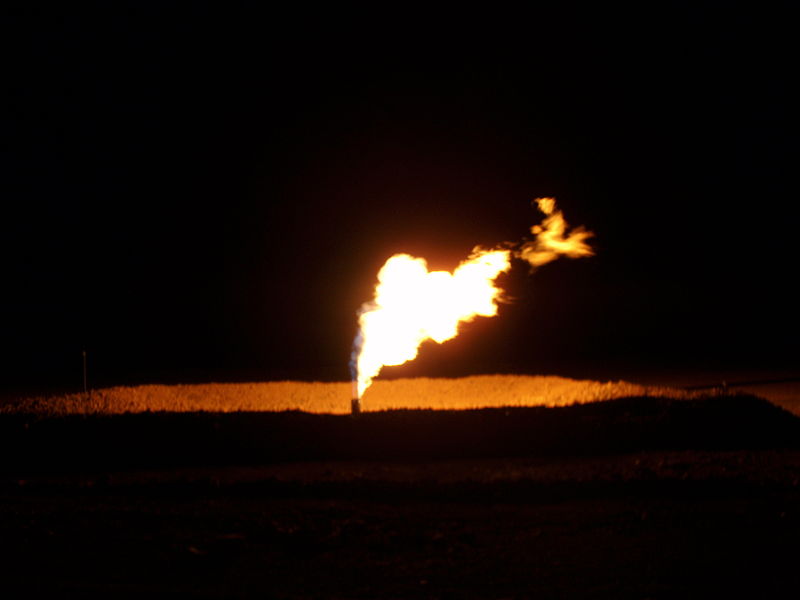
Global technical consultant for the energy industry DNV GL has suggested alternative ways to gas flaring which can reduce energy wastage and emissions while offering revenue opportunities for the operators.
Research conducted by the agency has indicated that 140 billion m3 of natural gas, produced together with oil, is burned as wastes or ‘flared’ across thousands of oil fields globally.

Discover B2B Marketing That Performs
Combine business intelligence and editorial excellence to reach engaged professionals across 36 leading media platforms.
The flared gas is equivalent to the total combined gas consumption of Central and South America in 2013.
DNV GL carried on its detailed case studies across Russia, US, Algeria and Vietnam, amidst varying technical, regulatory and economic conditions, to come up with the new methodology that can replace wasteful flaring.
It uses gas flowrate and distance to market for drawing up an appropriate technical solutions on a case-by-case basis.
Besides bringing down the emission levels and opening up revenue opportunities, the proposed solutions can also help the gas producers to comply with the regulatory requirements.
DNV GL Gas Value Chain global segment leader Martin Layfield said: "It’s a significant challenge to turn waste from flaring and venting into a profitable economic product with sound environmental benefits, however our research shows that there are economically viable solutions that can assist in carbon abatement and develop flare gas for societal use.
The solutions are mostly viable for small-scale applications, where flaring is conducted at large.
Layfield said: "We need innovation in applying associated gas to energy intensive processes, such as air separation and water desalination.
"Though some solutions might be immature for near-term implementation, current applications such as micro LNG, compressed natural gas, natural gas hydrates (NGHs) and conversion methods can deliver significant benefits, and are proving to do so in some cases in certain markets like North America."
DNV GL CEO Elisabeth Tørstad said: "This research helps identify new value chains and revenue streams that can help meet the industry’s demand for sustainable, cost-effective and reliable alternatives to gas flaring.
"The objective is to support the industry in raising the standards of safer, smarter and greener performance.
"This will reduce CO2 emissions and local pollution and ultimately improve the quality of life in local communities around oil & gas extraction."
Image: Gas flaring is mostly carried out in small-scale applications. Photo: courtesy of Joshua Doubek / Wikipedia.


