
Nord Stream has announced that its twin pipelines running from Russia to the European Union have come on stream.
The new four-million-tonne pipeline system will provide the capacity to transport up to 55 billion cubic metres (bcm) of natural gas annually for at least 50 years.

Discover B2B Marketing That Performs
Combine business intelligence and editorial excellence to reach engaged professionals across 36 leading media platforms.
Gas flow will be started in the control centre of the nearby Gazprom Compressor Station Portovaya, enabling pumping of the gas without the need for interim re-compression all the way through the Baltic Sea, and onwards into the European gas transmission network.
Pressures of up to 220 bar will be generated by the compressor units, which would be sufficient to take the gas through both 1,224km pipelines to Lubmin on the German Baltic coast.
The pipeline routing has been agreed over a four-year period of intensive consultations with the nine countries that border the Baltic Sea. Environmental monitoring results have confirmed a low environmental impact from construction of the pipelines.
Nord Stream managing director Matthias Warnig said: "Looking at the number of other pipeline projects in various stages of planning in Europe, Nord Stream certainly serves as the new benchmark. In terms of design, construction, safety, environmental compliance and the operation of our pipelines, we truly deliver."
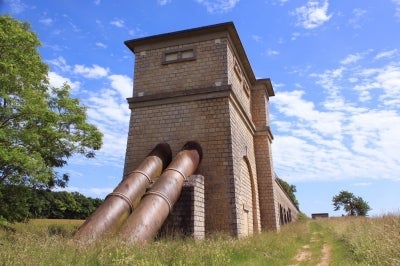
Image: Twin pipelines capable of transporting up to 55 billion cubic metres of gas to Europe per year. Photo: courtesy of freedigitalphotos.net.



