The oil and gas industry is at a crossroads. Amidst the challenges of enhancing operational efficiency, productivity, worker safety and cybersecurity, there’s a simultaneous need to minimize environmental impact. This task is further complicated by a scarcity of skilled labor, limited access to capital, and geopolitical uncertainties, all introducing unpredictable risks beyond the industy’s control.
Digital transformation can help combat these challenges; however, the current state of oil and gas connectivity is a hodgepodge of different solutions. Even when operations are digitized, they’re often siloed into single-purpose connectivity systems that prevent facility managers from seeing the total picture of their network.
When future-proofed with 5G, private cellular networks are the connectivity platform to launch oil and gas operations into the next era. As a reliable, secure, and unified solution that can meet current needs and enable future use cases like automation, realtime monitoring, and artificial intelligence (AI), oil and gas companies can futureproof their business – while reducing operating costs, improving reliability, and bolstering security
Digitalization now: Current use cases for private cellular
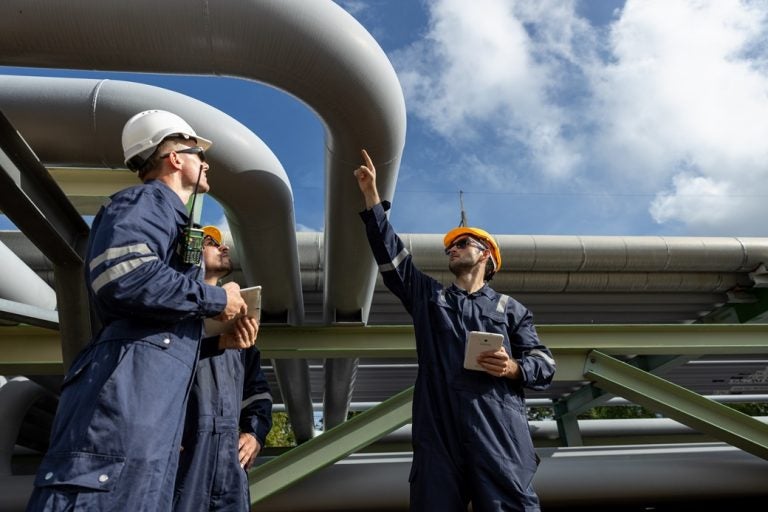
Connected workers Recent data indicates the need to connect workers across a variety of geographies and facility types is the number one use case driving digitalization in oil and gas.
While it assists workers to do more with less, it also increases safety through monitoring, and moving pen-and-paper maintenance operations to a tablet or phone app while eliminating the need for workers to repeat inputting of data into a central repository.
Wearables are particularly keeping front-line workers safe and productive, alerting them to unsafe conditions and connecting them to outside expertise. However, this requires real-time data transfer and high-resolution video best supported by mobile connectivity.
Camera as a sensor
A significant portion of the industry’s major challenges, particularly regarding environmental compliance, revolve around the necessity for round-the-clock monitoring. Examples include automated readings, monitoring capped well sites for leaks, security and more. These solutions are applicable across all segments of operations: upstream, midstream and downstream.
For instance, methane, a byproduct of the oil and gas industry, is tightly regulated due to its impact on climate change. In the past, monitoring and fixing leaks were expensive and complicated tasks. However, now smart cameras linked to a central system can monitor constantly, quickly spotting leaks and guiding repair teams to the exact spot. This reduces methane pollution and saves on costly repairs. Flare detection is a commonly requested use case, where connected cameras across visible and IR spectrum utilize computer vision to automatically notify operators of an incident.
Additionally, connected cameras facilitate instant data transmission to the cloud for real-time analysis and heightened security measures. Looking ahead, the integration of AI tools, similar to the Connector Worker, holds promise for predictive capabilities, preemptively identifying potential leaks before they occur.
Sensor networks
To enable transformative use cases in the oil and gas industry, a strong, sprawling network of IoT-connected sensors is essential for collecting, analyzing, and acting upon data. Things like proactive asset maintenance, automation, tank monitoring and advanced safety protocols are dependent on collecting this data and processing it through a centralized platform.
A real-time sensor network can send all information into a data lake, where back-end processing, artificial intelligence and machine learning can be applied. Then prescriptive actions can be derived to help drive additional efficiency and revenue generation.
An Ericsson and Arthur D. Little study found that using a 5G network to monitor and predict asset maintenance can provide a 25% reduction in the number of maintenance sessions needed per asset, per year, reduce the number of workers needed to monitor equipment by 80% and enable a 35% reduction in unplanned downtime, compared to a maintenance schedule only program
Centrica case study
Centrica, a UK-based energy company, was looking to digitize their operations and launch a connected worker solution to keep their workers safe. They also understood the need to modernize manual, paper processes for increased efficiencies.
Using Ericsson private cellular radio and core, Vodafone built an on-premise, redundant private LTE network, upgradeable to 5G, that allows Centrica’s staff to connect to a new set of maintenance, operation and safety applications via their handheld devices. The installed solution was the first private 5G standalone network in the world.
Building the right network: Identifying stages in the digital journey
Each company is unique in its digital transformation journey, and understanding its current stage and future direction is essential for tailoring the right connectivity solution to align with business objectives.
Companies’ positions on the journey can differ, influenced by the nature of their operations and the status of existing connectivity solutions. Nonetheless, private networks offer a consistent, centralized platform that simplifies IT operations and supports Operation Technology teams in developing advanced use cases for the future. They serve as a solution to current needs while also future-proofing operations for what lies ahead.
While it may be tempting to immediately introduce advanced functions like automation and AI, the first step in building a connectivity platform enabled by private wireless is connecting the assets and workers. This will begin to provide the data oil and gas companies will need to take the next step in the digital transformation journey, using the insights gleaned from that data to find efficiencies through predictive maintenance, root cause analysis and more.
By putting the right platform and network in place, firms can lay the groundwork for what’s coming, including remote maintenance through AR and fully autonomous operations. Ericsson can help oil and gas companies find the right network solutions no matter where they are in the process of digitalizing operations.
A digital enabler for the future: Technical use cases
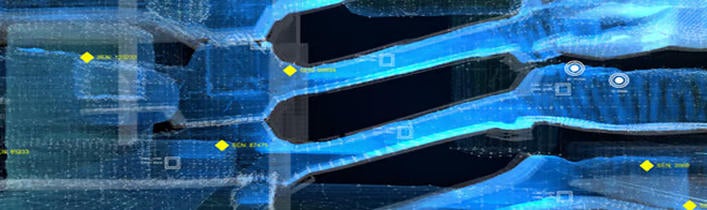
Across the oil and gas industry, leaders are investing in digital twins for training, maintenance and connected worker solutions. A digital twin is essentially a copy of a physical asset, based in the cloud – a software representation of all the assets, information and processes present in the real-world version.
Digital twins can help companies simulate wear and tear on a piece of equipment, better predicting when maintenance will be needed or when a part will have to be replaced. They capture every piece of relevant information about an asset, such as operating instructions, schematics, troubleshooting procedures, maintenance records and more, and store them in the cloud for easy access and updating.
Digital twins are also critical for training AI and machine learning (ML) algorithms to bring further intelligence and predictive analytics to bear on operations, making them even more efficient. They have tremendous potential to reduce downtime and minimize maintenance needs.
Augmented reality/Virtual reality (AR/VR)
Oil and gas companies are already beginning to capitalize on remote operations and AR, but their true potential of the technology can be unlocked with private cellular networks that bring high-resolution video and processing power to bear at the edge.
The ability to have experts at a central facility see what an onsite worker is seeing is a powerful tool. Workers can troubleshoot repairs in real time by connecting with a subject matter expert through an integrated eyepiece and camera. Alternatively, they can view a schematic at eye level, overlaying it on the actual equipment
Drone/ROV maintenance and security
Drones can be used for surveillance, flare monitoring, leakage detection and more. High-resolution video drones and other remotely operated vehicles (ROVs) can conduct site inspections and monitor for security breaches on oil platforms, pipelines and other hazardous work sites with more efficiency and accuracy – while also keeping human workers out of potential danger. In fact, conducting manual site inspections of oil platforms is one of the most hazardous tasks in the industry.
The Arthur D. Little study cited earlier found that drone inspections could lower the need for manual inspections by 75%, cut the number of incidents related to site inspections by 75% and reduce the time to carry out an inspection by 90%
Exploration
Exploring deeper reservoirs and remote places poses higher political and physical risks. Data collection and analysis can enable more efficient manpower and equipment utilization and create more efficient, centralized and synchronized processes. The ability to collect large amounts of data on-site during exploration and to upload that data to a central repository enables quicker analysis and, in turn, quicker decision-making on-site, which drastically streamlines site selection.