

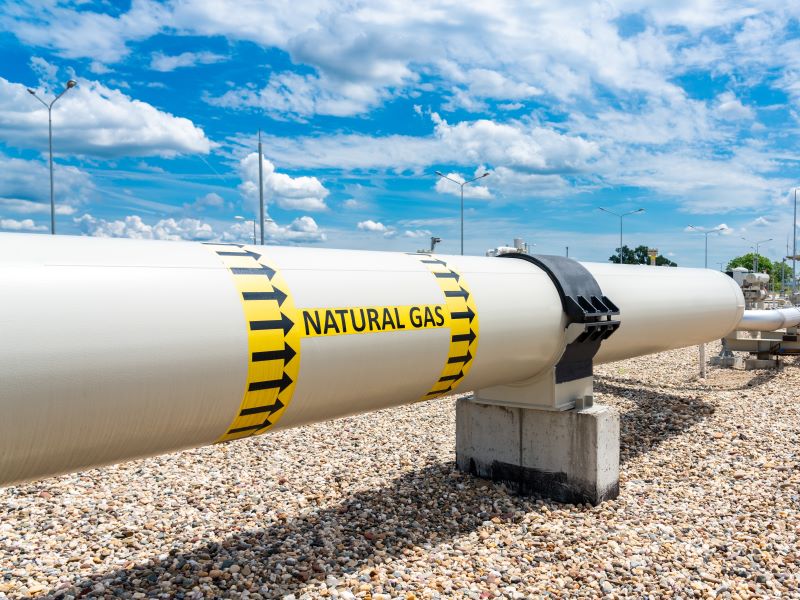
The Sunrise Expansion Programme is a planned upgrade to the southern section of the Westcoast natural gas pipeline system, known as T-South, in British Columbia (BC), Canada by Westcoast Energy Limited Partnership (Westcoast), an Enbridge affiliate.
The expansion project includes new pipeline loops installed alongside parts of the existing system, along with compression and modifications at current facilities. It will add 300 million cubic feet per day (mcf/d) of capacity to the Westcoast pipeline to enhance access to natural gas during periods of peak demand.
Recommended Buyers Guides

Gas moved on the Westcoast system is used for heating homes and public buildings, and supports power generation and BC’s industrial and manufacturing base. It also helps secure a sufficient liquefied natural gas (LNG) supply for the province as LNG export projects such as Woodfibre LNG are set to commence operations.
The project, requiring an estimated investment of C$4bn ($2.9bn), received Canadian Government approval in April 2026.
Westcoast expects the project to add more than C$3bn to the Canadian economy and support around 2,500 construction jobs, including roles for local communities and indigenous groups in BC.
The company says more than C$52m has already been directed towards indigenous businesses through hiring and procurement.
Construction is due to start in July 2026, with start-up targeted for late 2028.
Sunrise Expansion Programme details
The Sunrise Expansion Programme will involve the installation of around 137km of new 42in pipeline loops across 11 segments.
Additional compression is planned through new compressor units at existing stations at Azouzetta Lake (CS-2B), 93 Mile (CS-6B), Kingsvale (CS-8A) and Othello (CS-8B).
Westcoast proposes using electric-driven compressors for part of the requirement to reduce greenhouse gas emissions and noise compared with gas-driven units.
The new CS-2B compressor unit will be powered by a gas turbine, while CS-6B, CS-8A and CS-8B will use electric motor drives.
Pipeline route
The route for the new pipeline starts at Westcoast’s CS-2B compressor station, roughly 100km west of Chetwynd in the Peace River Regional District. It then runs south, with proposed looping near McLeod Lake and generally following the John Hart Highway through the Regional District of Fraser-Fort George, including additional loops near Summit Lake, Salmon Valley and Hixon.
From there, it continues into the Cariboo Regional District, in places tracking the Cariboo Highway, with looping planned near 150 Mile House, 94 Mile House and 70 Mile House.
The alignment then crosses the Thompson-Nicola Regional District, where a loop is proposed north of Logan Lake. It enters the Fraser Valley Regional District at CS-8B near Hope, with a looping near Agassiz and a final section terminating at the Huntingdon meter stations south-west of Chilliwack.
Westcoast estimates that around 95% of the pipeline alignment will follow existing linear disturbances such as pipeline corridors, multi-utility routes and powerline rights-of-way, with the remainder requiring new rights-of-way.
The permanent right-of-way is expected to be around 18m wide, while the typical construction footprint would be 45–55m, including around 27m of temporary workspace, subject to local conditions.
Additional infrastructure
The new compressor units using electric motor drives will require electricity, for which Westcoast plans to construct three new powerline infrastructures with a combined length of approximately 34km, following existing disturbed corridors where feasible.
The right-of-way is expected to be around 60–80m for 69kV lines and 80–100m for 138kV lines, depending on terrain and vegetation. Substation equipment will also be installed within the compressor station sites to step down the voltage from the incoming lines.
Overhead line structures are expected to be typically 20–25m high and will include H-frame designs using two wooden poles with steel cross arms and bracing; wishbone structures with a single pole and steel cross arms; and post vertical structures using a single pole fitted with three insulator stacks set at an upward angle.
Contractors involved
The environmental and socio-economic impact assessment for the Sunrise Expansion Programme was undertaken by Jacobs, an advisory and consulting company based in Canada.n Canada.
