

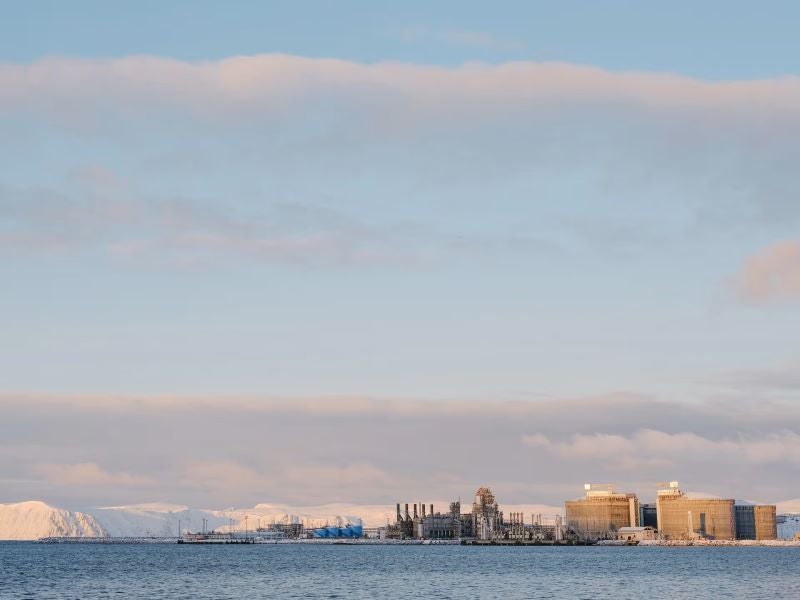
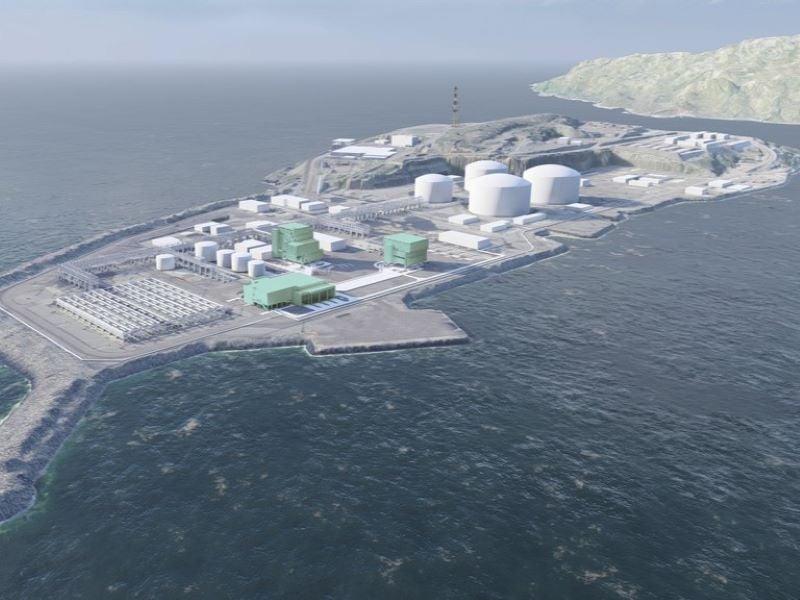
The Snøhvit Future project combines measures designed to sustain gas output at the Hammerfest liquified natural gas (LNG) plant on Melkøya island in Norway beyond 2030 with the electrification of the onshore facility.
The Hammerfest LNG plant processes the gas and condensate produced by the Snøhvit field, which entered production in August 2007. It produces 6.5 billion standard cubic metres of LNG per year during normal operations, alongside LPG and condensate. Production from Snøhvit is transported through a 143km pipeline to Hammerfest LNG.
Recommended White Papers
Recommended Buyers Guides

The development is being progressed by the Snøhvit partnership led by Equinor Energy (operator), which holds a 36.79% interest in the Snøhvit field, along with Petoro (30%), TotalEnergies E&P Norge (18.4%), Neptune Energy Norge (12%) and Wintershall Dea Norge (2.81%).
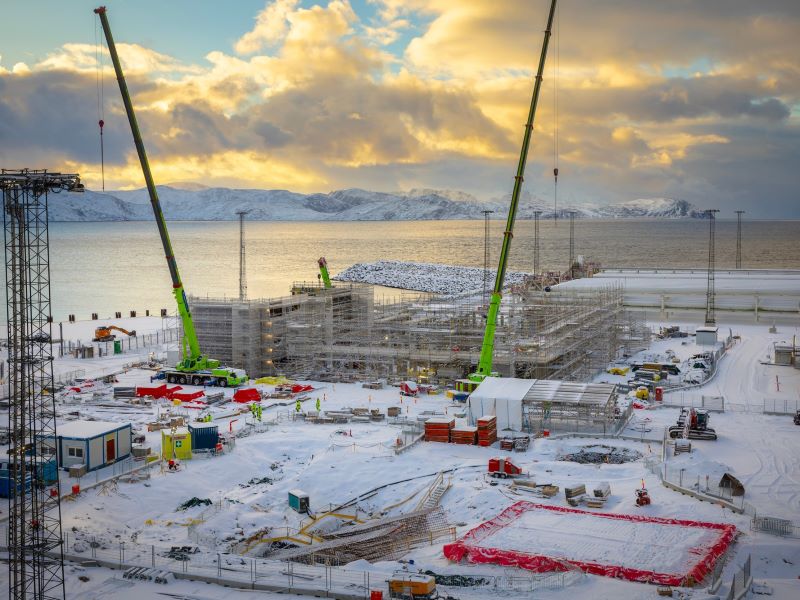
Electrification works started in May 2024. The partners initially planned to invest Nkr13.2bn ($1.3bn) in upgrades at Hammerfest LNG, but the estimate had risen to Nkr20bn by December 2025, reflecting inflation and higher costs for engineering and machinery.
The start-up of the new infrastructure at the Hammerfest LNG plant is targeted for 2029, with electrification scheduled to commence from 2030.
The Snøhvit Future project is expected to reinforce Norway’s role as a dependable, long-term supplier of natural gas produced with very low greenhouse gas emissions, while helping to meet Europe’s energy needs beyond 2050 and supporting continued employment in Hammerfest.
Development background
In December 2022, Equinor submitted a plan for development and operation for the Snøhvit Future project to the Minister of Petroleum and Energy on behalf of the Snøhvit partnership.
The Norwegian Government approved the partners’ plans for continued operations at Snøhvit and the Hammerfest LNG plant in August 2023. The decision also covered Norwegian state-owned power enterprise Statnett’s licence for a 420kV power cable between Skaidi and Hyggevatn and Equinor’s licence for a 132kV power cable between Hyggevatn and Melkøya.
The approved plans also allows the existing gas turbines at the plant to remain available for back-up power from 2030 to 2033, with the requirement that they be reviewed by 2028 at the latest.
Snohvit Future project details
The Snøhvit Future project comprises two main components, namely onshore compression and electrification at the Hammerfest LNG plant.
Onshore compression is intended to help maintain plateau production at the Snøhvit field as reservoir pressure declines. It will also reduce the likelihood of liquid build-up in the multiphase pipeline running from the field to the coast. Additionally, it will lengthen the operating window and sustain plateau output for longer.
The project involves the installation of compressor modules, electric steam boilers and a transformer station at Melkøya, alongside wider modification work.
Electrification at the Hammerfest LNG plant is expected to reduce annual carbon dioxide (CO₂) emissions by 850,000t, equivalent to 2% of Norway’s annual emissions. It is also expected to cut the carbon intensity of LNG output at Melkøya from 3.8g to 0.6g of CO₂ equivalent per megajoule.
Once complete, electrification will replace the existing gas turbines with grid electricity. The plant will continue to operate on gas turbines during the construction period.
Electrification details
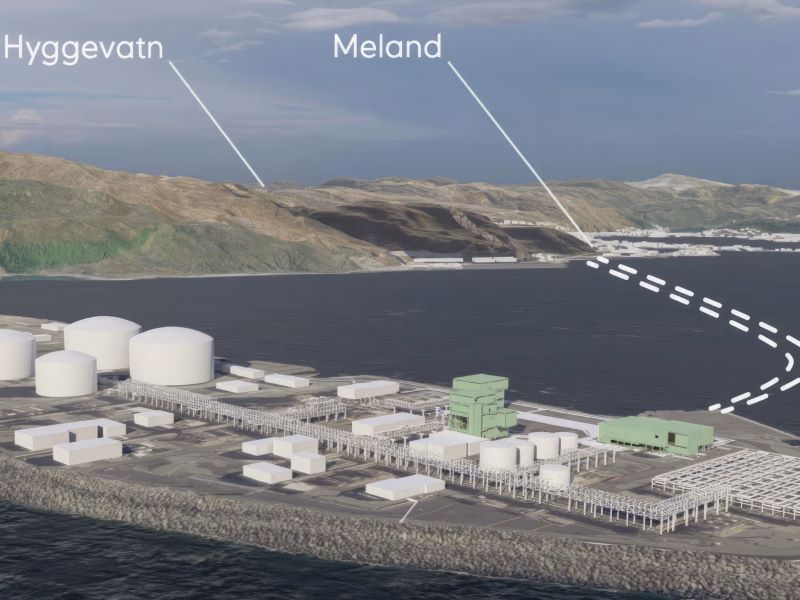
The electrification component involves the development of a new grid connection between Hyggevatn and the Hammerfest LNG transformer station on Melkøya. An underground tunnel-based solution has been selected to limit impacts on the surrounding environment, reindeer herding and local land use in Hammerfest.
The connection from Hyggevatn will run for around 3.2km through a tunnel between a new transformer station, to be built north of Lucerna’s existing transformer station, and Meland, before continuing via two sets of submarine cables from the Meland landfall to the Melkøya landfall. Drilling and blasting are required offshore in connection with the landfalls.
Statnett is responsible for the construction of the new transformer station and new 420kV high-voltage lines from Skaidi to Hyggevatn. The new transformer station will include a dedicated section for Equinor’s transformer station, and the tunnel entrance at Hyggevatn will be below ground level.
The tunnel entrance and submarine-cable landfall at Meland sit at the end of National Road 94, a few hundred meters south of the access control point to Melkøya.
The tunnel is being driven from Meland towards Hyggevatn to avoid transporting excavated material through Hammerfest. Spoil from the tunnel will be used locally to create a sea fill of about 16 acres at Meland in line with the current zoning plan.
Contractors involved in Snohvit Future project
Aibel secured a front-end engineering and design contract in September 2020 to support modifications to the Hammerfest LNG plant linked to the Snøhvit Future project.
In February 2023, Equinor awarded Aibel the engineering, procurement, construction and installation contract for further modification work at the Hammerfest LNG facility. Under the scope, Aibel will handle design and procurement, fabricate modules and carry out installation activities on Melkøya.
Aibel has entered into agreements with several subcontractors for the project, including ABB Hammerfest, Energy Consult, AF Group, Norconsult and Momek, as well as Coor, Hammerfest Industrial Service and Hammerfest Machine Shop. Other subcontractors involved are Gagama Electro, Asco and Bilfinger Hammerfest.
Consto, as subcontractor to Aibel, is overseeing the construction and civil engineering scope, working alongside local subcontractors such as Concrete Beer and Jaro.
In January 2024, Leonhard Nilsen & Sons (LNS) was awarded the contract to carry out the main construction work related to the grid connection.
LNS has chosen several subcontractors including Kjell Foss, Viggo Eriksen, Alta plant, Sjøentrepreneurøren and Entreprenørservice, as well as G. Hagen, GC Rieber Salt and Harila.
Multiconsult designed the grid connection and is now supporting the implementation phase by providing design input and client assistance.
Nexans Halden and Nexans Rognan in Nordland are supplying and installing the cable between Hyggevatn and Hammerfest LNG. YABIMO is contributing specialist personnel to the project, working across insulation, scaffolding and painting.
