

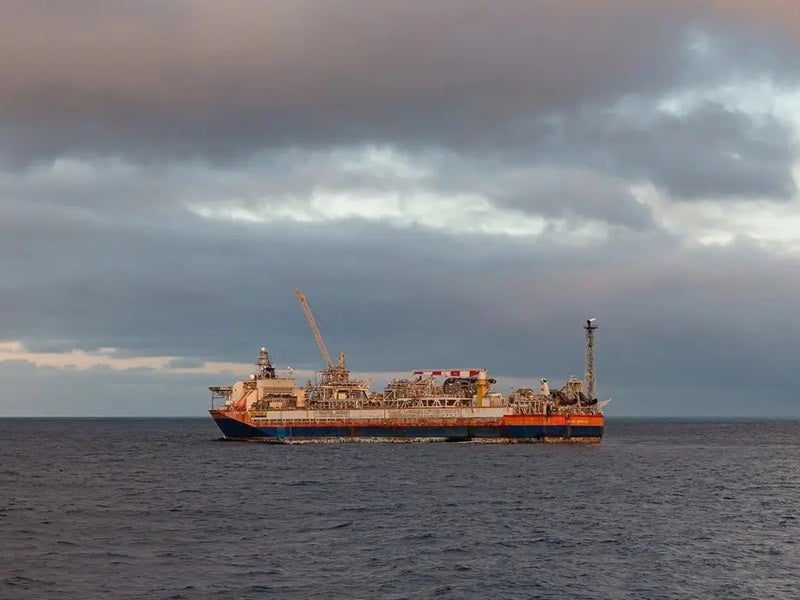
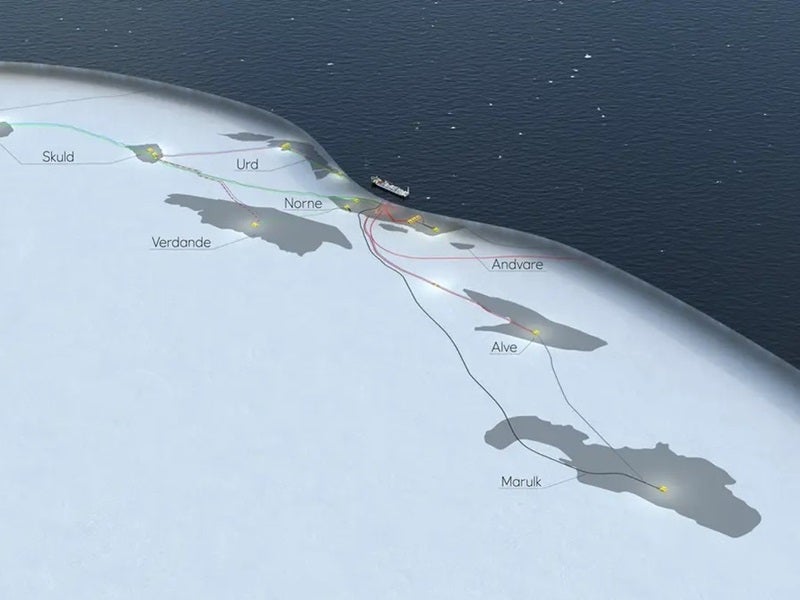
The Verdande oil and gas field is located in the Norne area of the Norwegian Continental Shelf and comprises the Cape Vulture and Alve Nord East (Alve Nordøst) discoveries.
The field development for the project was approved in June 2023.
Recommended Buyers Guides
The field was earlier jointly owned by Equinor Energy (59.3%, operator), Petoro (22.4%), DNO Norge (10.5%), Aker BP (3.5%), Japex Norge (3.5%) and Orlen Upstream Norway (0.8%).
In November 2025, DNO Norge agreed to acquire the interests held by Aker BP and Orlen Upstream Norway as part of a wider asset swap.
DNO transferred its 28.9% stake in the Vilje field, 9% stake in the Kveikje discovery and reduced its interest in three exploration licences as part of the agreement. The transaction was completed in December 2025, increasing DNO’s interest in Verdande to 14.8%.
The field ownership now stands at Equinor Energy (59.3%, operator), Petoro (22.4%), DNO Norge (14.8%) and Japex Norge (3.5%).
Verdande achieved start-up in December 2025, extending the Norne field’s production beyond 2030. Capital spending on Verdande was more than Nkr6bn ($5.8m).
Project location and reserves
The Verdande subsea development is located in the Norwegian Sea around 7km north of the Norne field and roughly 200km from Sandnessjøen, in approximately 380m of water.
The reservoir is in Early Cretaceous sandstones of the Lange Formation at close to 3,000m depth and is regarded as of good quality. Recoverable resources are estimated at 36 million barrels of oil.
Cape Vulture discovery and appraisal
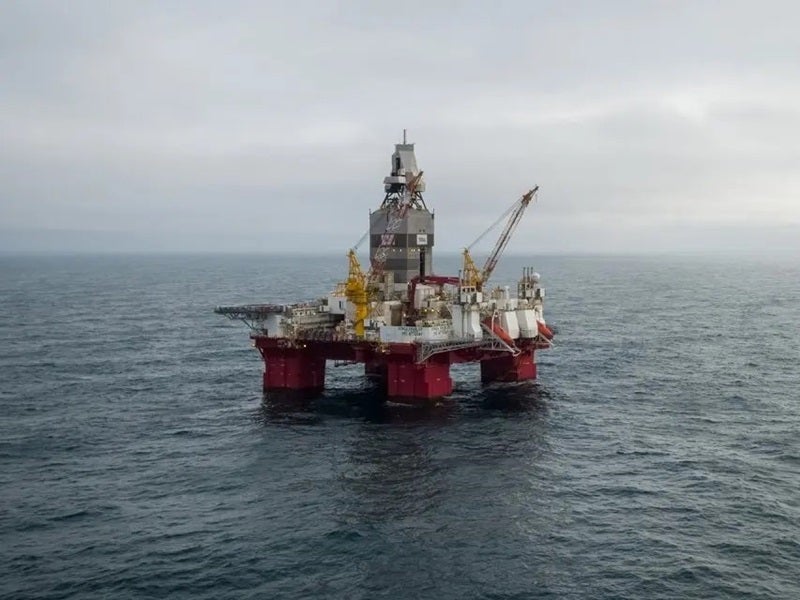
The Cape Vulture oilfield was discovered by the 6608/10-17S wildcat well drilled in 2017 by the Deepsea Bergen drilling rig.
The discovery well encountered oil and gas in two zones of the Lower Cretaceous reservoir of the Lange formation. It established the presence of petroleum reserves on the Nordland Ridge of the North Sea.
Equinor drilled one appraisal well named 6608/10-18 and two sidetracks, 6608/10-18 A and 6608/10-18 B, in 2017 at the Cape Vulture oilfield. The wells were drilled by the Songa Encourage drilling rig to depths of 3,437m, 3,114m and 3,256m, respectively.
The appraisal well was drilled to delineate the discovery and evaluate the presence of a third reservoir zone. It reached the Melke Formation of Middle Jurassic Age and discovered oil in three reservoir zones of the Cretaceous Lange formation.
The 6608/10-18 well encountered oil in a 2m-thick sandstone layer in the deepest zone with good reservoir properties. The 6608/10-18 A sidetrack well encountered a 10m oil column in the upper zone with good-to-very-good reservoir properties.
Oil columns of 10–15m thickness were encountered in the 6608/10-18 and 6608/10-18 A wells in the middle zone with moderate-to-good reservoir properties.
Alve Nord East discovery and appraisal
The Alve Nord East discovery was made by the 6607/12-4 wildcat well and appraised by the 6607/12-4 A well in November 2020.
The two wells, drilled using the Deepsea Nordkapp drilling rig, are located around 7km north-east of the 6607/12-2 S Alve Nord oil and gas discovery.
The 6607/12-4 well was primarily aimed to confirm hydrocarbons in Jurassic to Triassic age (the Garn, Ile, Tofte, Tilje and Åre Formations), with a secondary objective of testing the Early Cretaceous Lange Formation.
The well encountered an 80m gas column in the Garn, Not and Ile formations, although only 45m was within sandstone with poor reservoir quality. In other sections of the Jurassic to Triassic section, the sandstones were aquiferous, showing moderate-to-poor reservoir properties.
In the Lange Formation, oil was encountered in three separate reservoir intervals as a 2m poor-to-moderate quality sandstone in the upper interval, a 5m moderate-to-good quality sandstone in the middle interval, and a 3m poor-to-moderate quality sandstone in the lower interval. No oil water contact was identified.
The wildcat was drilled to a vertical depth of 4,124m below sea level and ended in the Triassic Åre Formation.
Appraisal well 6607/12-4 A was initially planned to define the Jurassic to Triassic potential indicated by the wildcat, but this work was dropped after reservoir quality proved worse than expected.
The programme was then redirected towards delineating the oil accumulation in the Lange Formation, where it encountered oil in three intervals. Hydrocarbons were encountered in a 4m upper sandstone of poor-to-moderate quality, a 6m middle sandstone with moderate-to-good quality and a 4m lower sandstone with poor-to-moderate quality. No oil water contact was observed.
The appraisal well was drilled to a vertical depth of 3,109m below sea level and was terminated in the Early Cretaceous Lange Formation.
Water depth at the location is 362m, and both wells have been permanently plugged and abandoned.
Verdande development details
The Verdande field development comprises three production wells on a manifold and template tied back by pipeline to the Norne field and onward to the Norne floating production, storage and offloading (FPSO) vessel. The manifold weighs 100t and is 12m long, 10m wide and 4.5m high.
Equinor secured consent from the Petroleum Safety Authority of Norway in December 2018 for the extension of the Norne FPSO and other facilities until December 2026.
Gas is routed via the Åsgard Transport System to the Kårstø onshore terminal, while liquids are exported from the Norne unit by shuttle tankers.
Contractors involved
TechnipFMC won a contract in February 2023 to supply the subsea production system under its framework agreement with Equinor, covering connection equipment, controls, installation support, structures, subsea trees and tooling.
During the same month, Subsea7 secured a subsea tieback contract for the project. The pipelines were fabricated and spooled onto the company’s installation vessel at its Vigra facility, while subsea installation was carried out by a joint team from Subsea7 and Haugesund-based Deep Ocean. Engineering and project management for the programme were handled from Subsea7’s Stavanger office.
Aibel carried out modifications to the Norne FPSO from Harstad, with subcontract support from Momek, while Aquarock supplied rock for subsea placement.
Drilling was performed with the Transocean Encourage rig, and Halliburton provided well services.
Completion Tracer supplied specialist tracer solutions for the wells, helping to optimise and improve production performance, while OneSubsea provided the control cable for the Verdande field development.
Agility, a subsea manifolds and structures manufacturer, was responsible for manufacturing the template and manifold in Tønsberg.
Westcon Helgeland was responsible for manufacturing the suction anchors.
