
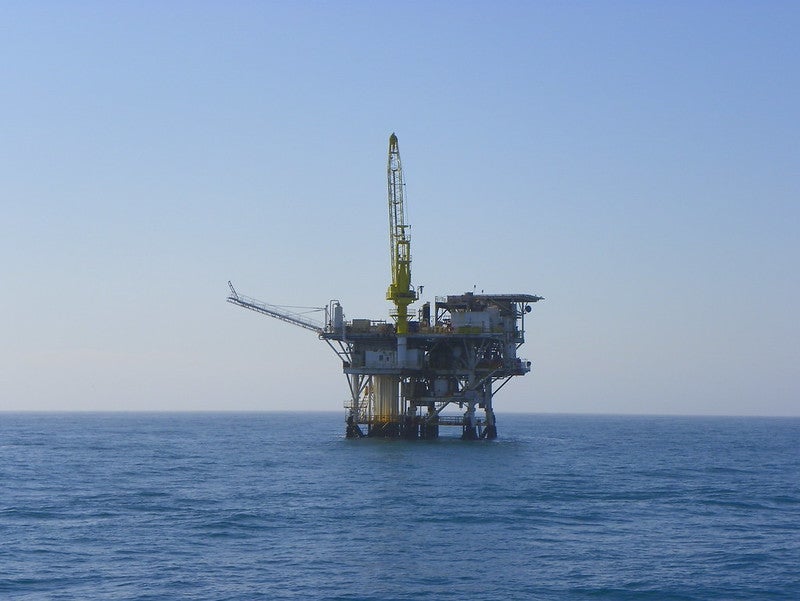
Australian offshore oil and gas regulator National Offshore Petroleum Safety and Environmental Management Authority (NOPSEMA) has accepted Shell Australia’s Offshore Project Proposal (OPP) to develop the Crux gas field offshore Western Australia.
The Crux project involves the development of the Crux gas field located in Browse Basin, approximately 160km offshore north-west Australia.
Go deeper with GlobalData


Discover B2B Marketing That Performs
Combine business intelligence and editorial excellence to reach engaged professionals across 36 leading media platforms.
Comprising five production wells, the gas field will supply backfill gas to the Prelude floating liquefied natural gas (FLNG) facility via a 165km-long, 26in diameter export pipeline.
The gas field is being developed by a joint venture comprising Shell Australia, a subsidiary of Royal Dutch Shell (82%, operator), SGH Energy, a subsidiary of Seven Group Holdings (15%), and Osaka Gas Holding (3%).
Shell Australia serves as the operator of the joint venture.
NOPSEMA stated: “The Crux development is subject to further regulatory approvals prior to proceeding, including an accepted environment plan, a well operations management plan and facility safety case. All required regulatory approvals must be in place before activity can begin.”
Once the final investment decision (FID) is made, the Crux gas field is expected to take up to five years to come online.
Following an expected life of 20 years, the field will be abandoned and decommissioned. It is estimated to have a production capacity of 2.9 million tonnes per annum (Mtpa).
Discovered in 2000, the Crux gas field was initially operated by Nexus, which is now part of SGH.
Last week, Royal Dutch Shell reported a sharp drop in its earnings in the second quarter of this year following an unprecedented fall in oil prices due to Covid-19 pandemic.


