
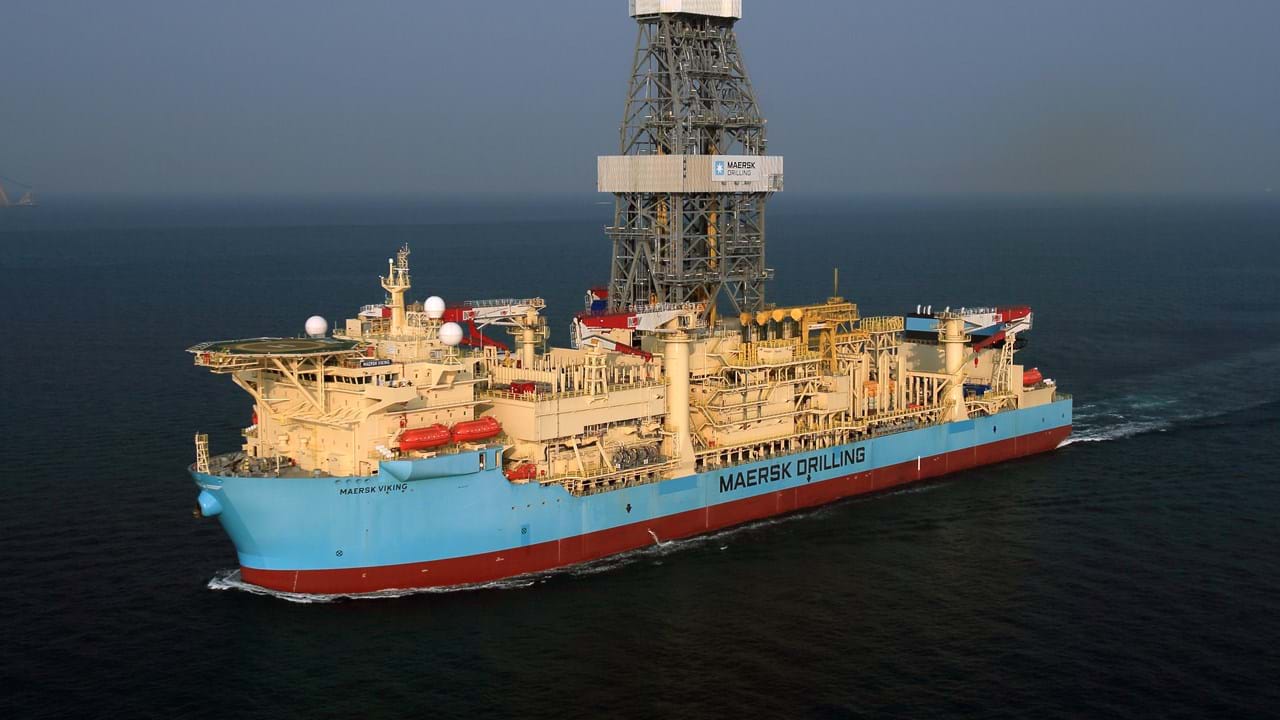
Denmark-based offshore drilling contractor Maersk Drilling has secured a contract from Brunei Shell Petroleum (BSP) to drill one deepwater exploration well.
The contract represents the deployment of Maersk’s seventh-generation drillship Maersk Viking at Brunei Shell Petroleum’s drilling campaign offshore Brunei Darussalam.
Go deeper with GlobalData


Discover B2B Marketing That Performs
Combine business intelligence and editorial excellence to reach engaged professionals across 36 leading media platforms.
BSP is a joint venture (JV) between the Government of Brunei and oil major Shell.
The contract is valued at around $9m, including mobilisation fee and other services provided.
Delivered in 2013, Maersk Viking is an ultra-deepwater drillship designed to accommodate 230 personnel. The drillship’s design and capacities include features for ‘high efficiency’ operation.
Maersk Drilling COO Morten Kelstrup said: “We’re happy to get this opportunity to add further to our great relationship with BSP. Our jack-up rig Maersk Convincer has been operating offshore Brunei Darussalam for several years now, and our performance has been recognised by Shell as Jack-up of the Year in both 2018 and 2019.
US Tariffs are shifting - will you react or anticipate?
Don’t let policy changes catch you off guard. Stay proactive with real-time data and expert analysis.
By GlobalData“I’m certain that Maersk Viking with its high-spec capabilities in combination with our fantastic crew will add even more value to our strong collaboration with BSP.”
The drilling-rig operator noted that the contract also includes an option for an additional one-well campaign.
Maersk Viking is presently ‘warm-stacked’ in the Malaysian state of Johor, after completing Bay of Bengal’s drilling programme earlier this year.
In October last year, Maersk secured a three-well contract from South Korean firm Posco to deploy Maersk Viking at Posco’s three-well campaign offshore Myanmar.
In September, Maersk Drilling announced to cut the ‘intensity’ of carbon dioxide (CO₂) emissions from its drilling operations in half by 2030.


