
Companies that ship crude oil by rail are now required to test the volatility of fuel out of North Dakota’s Bakken oilfields before it is transported, following an emergency order from the US Department of Transportation.
The federal cabinet department issued the order to ensure the proper classification of crude oil, while also prohibiting its transportation in the lowest-strength packing group.

Discover B2B Marketing That Performs
Combine business intelligence and editorial excellence to reach engaged professionals across 36 leading media platforms.
The fourth emergency order from the DOT in less than a year was issued in response to recent derailments involving trains carrying crude oil from the Bakken region.
DOT secretary Anthony Foxx said that the department is raising the bar for shipping crude oil on behalf of the families and communities along the railway network.
"And when you do ship it, you must follow the requirements for the two strongest safety packing groups. From emergency orders to voluntary agreements, we are using every tool at our disposal to ensure the safe transportation of crude," Foxx added.
As part of the order, all Class III crude oil shipments should be designated as Packing Group I or II which require the use of a more robust tank car. Until further notice, the lower-risk designation Packing Group III will not be accepted.
US Tariffs are shifting - will you react or anticipate?
Don’t let policy changes catch you off guard. Stay proactive with real-time data and expert analysis.
By GlobalDataShippers are required to properly classify their hazardous materials by using nine hazard classes as a guide so as to ensure that the material is placed in the proper package and that the risk is communicated properly to emergency responders.
According to the DOT, lack of proper testing and classification during shipping of crude oil or any other hazardous material may result in material being shipped in containers that are not designed to safely store it.
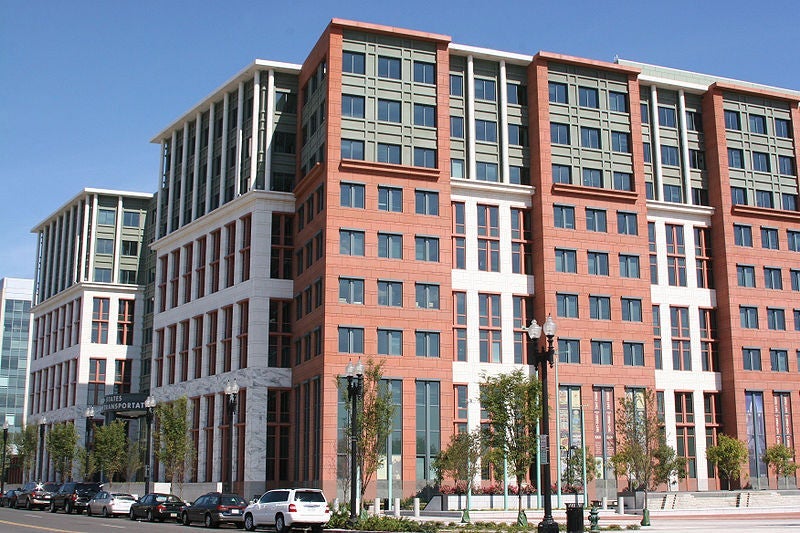
Image: Headquarters of the US Department of Transportation in Southeast Washington. Photo: courtesy of Aude.



