
US-based technology giant General Electric (GE) and Norwegian oil and gas firm Statoil have announced winners from an open innovation challenge.
The challenge was to suggest alternatives to sand in shale development.

Discover B2B Marketing That Performs
Combine business intelligence and editorial excellence to reach engaged professionals across 36 leading media platforms.
Bioastra Technologies, Biopolynet, Hoowaki, Semplastics and the University of North Dakota Energy and Environmental Research Center are the five selected winners in the competition.
Hoowaki’s solution proposed an alumina ceramic proppant, while Semplastics and the University of North Dakota Energy and Environmental Research Center suggested a lightweight polymer proppant and a locally sourced ceramic proppant respectively.
The proppant solutions developed by the companies will be further tested by GE and Statoil for potential development and commercialisation.
During the conventional hydraulic fracturing process, sand is mixed with water and injected into a formation to stimulate or prop open tiny fractures to enable free flow of oil and natural gas.

US Tariffs are shifting - will you react or anticipate?
Don’t let policy changes catch you off guard. Stay proactive with real-time data and expert analysis.
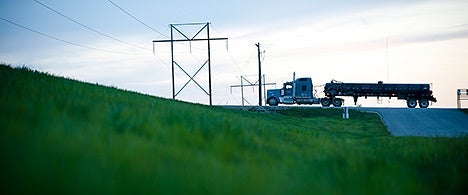
By GlobalDataThe process necessitates materials to be trucked, which increases road wear and traffic along with noise, dust and emissions for the environment.
GE and Statoil selected five winners for the inaugural open innovation challenge, which aims to reduce truck trips and support quicker energy production through hydraulic fracturing and shale extraction.
Statoil research, development and innovation senior vice-president Lars Høier said: "We were seeking both a lighter or more compact replacement for currently used proppants and/or new types of fluid or fluid additives that better suspend the proppant and are more efficient.
"The endgame is to develop a diverse portfolio of technologies that help reduce the environmental footprint, while enhancing operational efficiencies."
The firms also announced a second open innovation challenge, which aims to find technologies that can reduce water usage for onshore unconventional oil and gas reservoir developments.
Image: The objective of the challenge was to reduce truck trips. Photo: courtesy of Ole Jørgen Bratland / Statoil.


