
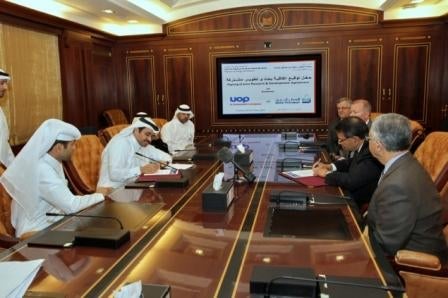
Qatar Petroleum (QP) and UOP are working together to optimise the process of carbon dioxide and sulphur removal from natural gases.
The joint research agreement was signed by Qatar Minister of Energy and Industry and QP chairman Dr Mohammed bin Saleh Al-Sada and UOP president and CEO Dr Rajeev Gautam.

Discover B2B Marketing That Performs
Combine business intelligence and editorial excellence to reach engaged professionals across 36 leading media platforms.
Signed at QP headquarters, the agreement’s primary aim is for treated natural gases to be efficiently used in processing operations.
The operations include transportation of natural gas in pipelines, the production of liquefied petroleum gas (LPG), natural gas liquids (NGL), liquefied natural gas (LNG) and gas-to-liquids (GTL) products.
According to QP, the treated natural gas will also be used in associated / non-associated gas cleanup in upstream petrochemical / fertilizer manufacturing plants.
Dr Al-Sada said: "Developing more efficient technologies to remove contaminants from natural gas will help boost Qatar’s reputation as a safe, reliable supplier of natural gas as well as high-quality products."
US Tariffs are shifting - will you react or anticipate?
Don’t let policy changes catch you off guard. Stay proactive with real-time data and expert analysis.
By GlobalDataDr Rajeev Gautam said: "Global natural gas demand is growing rapidly and LNG/LPG/NGL/GTL production is critical to meeting the needs of regions not served by pipelines and to enable global trade."
UOP provides natural gas treating technologies that are currently are used in QP LNG and gas processing facilities. The company’s separation technology and equipment remove contaminants such as water, carbon dioxide and sulphur compounds from natural gas in order to meet rigorous product specifications and requirements for downstream transmission and liquefaction equipment.
Image: Qatar Petroleum and UOP signed the agreement at Qatar Petroleum headquarters. Photo: courtesy of Qatar Petroleum.



