
New research by Researching Fracking in Europe (ReFINE) has found that highly variable well barrier and well integrity failure rates over the last 100 years are a particular issue for shale exploitation.
Around 6.3% of the 8,030 wells targeting the Marcellus shale in Pennsylvania have been reported to the authorities for infringements with regards to well barrier or integrity failure.

Discover B2B Marketing That Performs
Combine business intelligence and editorial excellence to reach engaged professionals across 36 leading media platforms.
By contrast, only one out of the 143 active UK wells that were producing at the end of 2000 has evidence of a well integrity failure according to the report.
The study, entitled ‘Oil and Gas Wells and Their Integrity: Implications for Shale and Unconventional Resource Exploitation’ was published in Marine and Petroleum Geology following a peer review process. It is authored by academics from Durham University (UK), Duke University (US) and the British Geological Survey.
ReFINE, an independent research consortium led by Durham Energy Institute, also sought to determine the categorisation of wells as production, abandoned, idle, and orphaned.
The consortium analysed data from countries including Australia, Austria, Bahrain, Brazil, Canada, Netherlands, Poland, UK and the US.

US Tariffs are shifting - will you react or anticipate?
Don’t let policy changes catch you off guard. Stay proactive with real-time data and expert analysis.
By GlobalDataDurham University and ReFINE project leader professor Richard Davies said that the research findings confirm that well barrier failure and well integrity failure in hydrocarbon wells is an issue.
"The data from the monitoring of active wells and the carrying out of periodic surveys of abandoned wells would help assess the impact of shale exploitation and it is important that the public should have access to this information," Davies added.
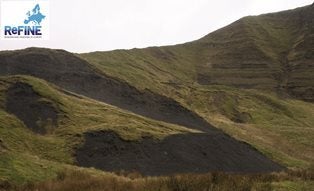
Image: Carboniferous shales in Edale, Derbyshire. Photo: courtesy of the University of Durham.



