
Royal Dutch Shell has launched the $1.35bn Quest carbon capture and storage (CCS) project in Alberta, Canada and commenced operations.
Designed to capture and store more than one million tonnes of carbon dioxide (CO²) a year safely, Quest was made possible through partnership of the public as well as private sectors to advance CCS globally.

Discover B2B Marketing That Performs
Combine business intelligence and editorial excellence to reach engaged professionals across 36 leading media platforms.
According to Shell, Quest integrates the components of CCS for the large-scale capture, transport and storage of CO².
Developed by Shell’s subsidiary Cansolv, CCS technology has the capacity to minimise carbon emissions from industrial sectors of the economy.
Royal Dutch Shell CEO Ben van Beurden said: "Quest represents a significant milestone in the successful design, construction and use of carbon capture and storage (CCS) technology on a commercial scale.
"Together with government and joint-venture partners, we are sharing the know-how to help make CCS technologies more accessible and cost-effective for the energy industry and other key industrial sectors of the economy."
US Tariffs are shifting - will you react or anticipate?
Don’t let policy changes catch you off guard. Stay proactive with real-time data and expert analysis.
By GlobalDataOne-third of the emissions from Shell’s Scotford Upgrader will be captured by Quest, which would later on convert oil sands bitumen into synthetic crude that can be refined into fuel and other products.
Transported through a 65km pipeline, the CO² is then injected more than 2km underground below multiple layers of rock formations.
The facility was built on behalf of the Athabasca Oil Sands Project joint-venture owners Shell Canada Energy (60%), Chevron Canada (20%) and Marathon Oil Canada (20%).
The governments of Alberta and Canada provided C$745m ($560m) and C$120m ($90m) funding respectively, for the project.
According to the International Energy Agency (IEA), CCS can provide as much as one-sixth of the world’s CO² emissions reductions by 2050.
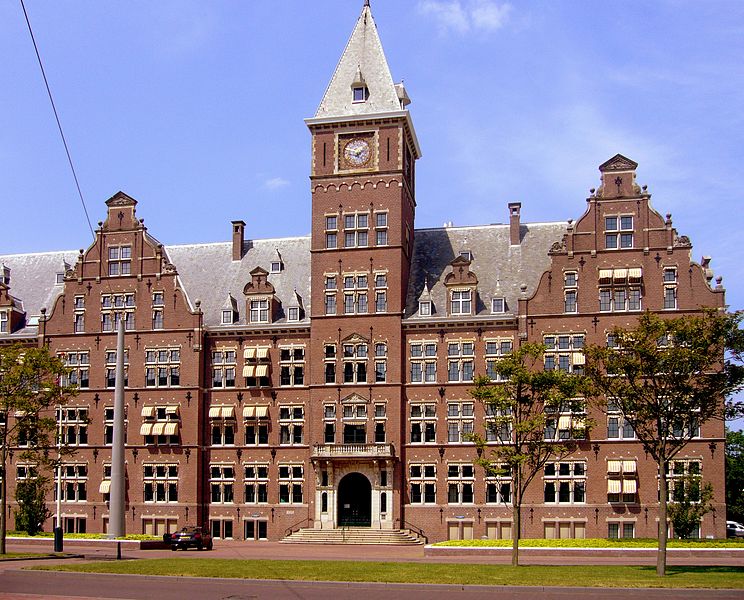
Image: Royal Dutch Shell head office, Carel van Bylandtlaan, The Hague. Photo: courtesy of P.L. van Till


