
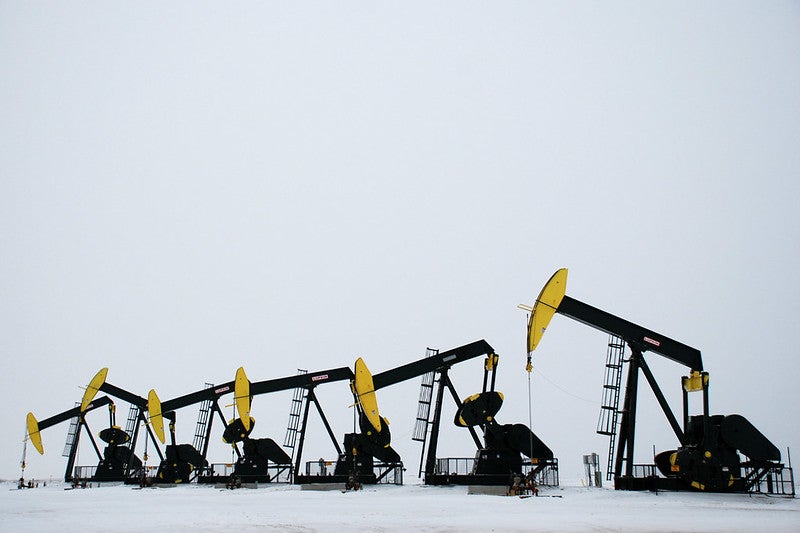
Oil prices have fallen as investors rethink the risk of supply disruption in the Middle East.
According to Reuters, Brent crude futures were down $0.52 at $68.39 a barrel. US West Texas Intermediate (WTI) crude futures were also down $0.42 cents at $62.85 a barrel.
Go deeper with GlobalData


Discover B2B Marketing That Performs
Combine business intelligence and editorial excellence to reach engaged professionals across 36 leading media platforms.
Oil prices rose during the previous two sessions. Brent crude reached its highest since September last year while WTI surged to the most since last April.
The surge in prices follows concerns about escalating conflict after a US drone strike in Baghdad claimed the life of Iran’s military commander Qassem Soleimani last week.
National Australia Bank commodity research head Lachlan Shaw was quoted by the news agency as saying: “The market’s clearly worried about the potential for supply disruption but there’s no obvious path forward from here.
“It’s all a matter of scenarios that may impact oil production or not, so the market seems to have recalibrated in the last 24 to 36 hours on some of those likelihoods.”
US Tariffs are shifting - will you react or anticipate?
Don’t let policy changes catch you off guard. Stay proactive with real-time data and expert analysis.
By GlobalDataConsultancy Eurasia Group said that Iran may focus more on US military targets rather than energy targets.
Meanwhile, OPEC members pumped around 29.50 million barrels per day (bpd) last month. This has fallen 50,000bpd from the November 2019 revised figure, according to a survey conducted by Reuters.
ING analysts said in a note: “We still believe in the absence of retaliation or disruptions, that oil prices will trend lower over the course of 1Q20, with the market remaining well supplied over the first half of 2020.”


