
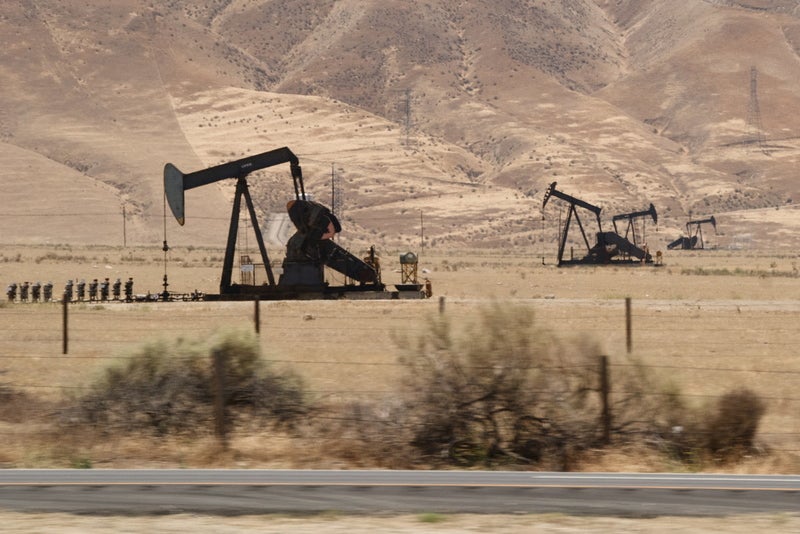
Oil prices have increased in the wake of growing expectations that the upcoming G20 meeting in Argentina could boost global economy and oil demand, but gains have been due to US crude stocks reaching their highest level in a year.
Brent crude LCOc1 rose six cents per barrel, or 0.1%, to stand at $58.82 after declining 2.4% on the previous day to $58.76 a barrel, reported Reuters.
Go deeper with GlobalData


Discover B2B Marketing That Performs
Combine business intelligence and editorial excellence to reach engaged professionals across 36 leading media platforms.
US crude futures CLc1 increased by 20 cents, or 0.4%, to trade at $50.49 a barrel.
CMC Markets and Stockbroking chief strategist Michael McCarthy was quoted by the news agency as saying: “We have seen huge increases in supply and the demand picture is in question. However, we might see some movement on global trade issues at the G20 meeting, which starts on Friday.
“I think we are seeing some positioning ahead of those potential demand-positive events.”
Investors are now focused on the G20 meeting to be held this weekend, with a key focus on the ongoing trade war between Washington and Beijing.
US Tariffs are shifting - will you react or anticipate?
Don’t let policy changes catch you off guard. Stay proactive with real-time data and expert analysis.
By GlobalDataMeanwhile, US President Donald Trump is set to meet his Chinese counterpart Xi Jinping later this week to resolve longstanding trade issues, according to White House economic adviser Larry Kudlow.
A key factor affecting prices is an increase in stockpiles. Data released by the Energy Information Administration (EIA) indicated that US crude stockpiles soared by 3.6 million barrels last week to reach 450 million barrels, the highest level in a year.
Rivkin Securities Investment analyst William O’Loughlin said: “WTI oil is now trading right around the $50 per barrel level, a price last seen well over a year ago, as the current oversupply situation has now manifested itself in ten consecutive weekly increases in US oil inventories.”
At a meeting in Vienna next month, the Organisation of the Petroleum Exporting Countries (OPEC) and other oil producing countries are expected to discuss new round of output reductions between one million to 1.4 million barrels a day to address emerging supply excess.


