
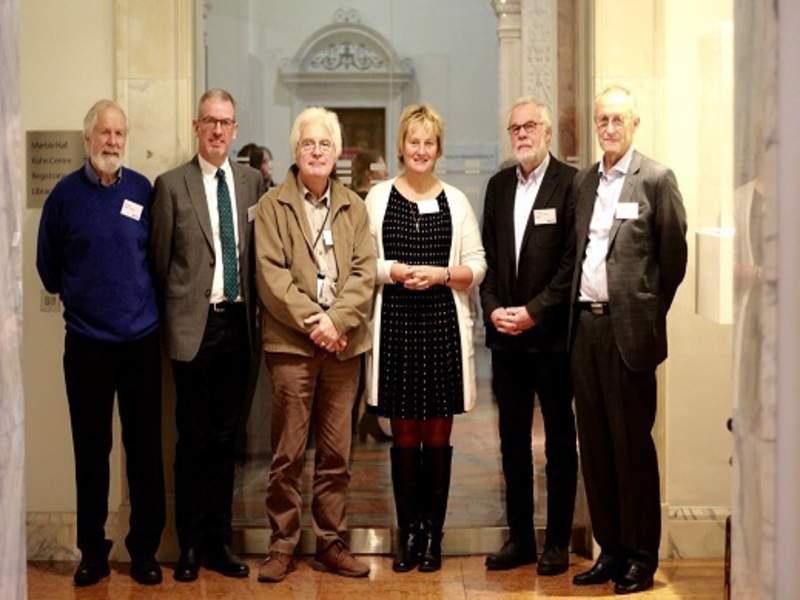
UK-based independent scientific academy The Royal Society has held a ‘Science Day’ to understand the influence of man-made offshore structures on the marine environment.
The event witnessed participation from 80 researchers, academics and industry representatives who assembled to discuss the latest research findings from the UK and European institutions.
Go deeper with GlobalData


Discover B2B Marketing That Performs
Combine business intelligence and editorial excellence to reach engaged professionals across 36 leading media platforms.
The studies represent a part of the culmination of the first phase of the INSITE Programme, which is an oil and gas industry-sponsored joint industry project (JIP) developed by an Independent Scientific Advisory Board (ISAB).
Under the programme, private companies signed up to broaden scientific knowledge of the impact of man’s activity on the ecology of the North Sea, with the existing oil and gas infrastructure reaching the end of its working life and the entry of several new offshore windfarms.
The foundation phase of the exercise runs for two years, with further studies expected to develop a targeted programme of marine research in the field.
It is understood that around 98.5% of the North Sea is composed of a sandy and muddy seabed, against the greater proportion of hard substrate that was identified in the past.

US Tariffs are shifting - will you react or anticipate?
Don’t let policy changes catch you off guard. Stay proactive with real-time data and expert analysis.
By GlobalDataThe hard substrate is believed to have supported greater biodiversity of the marine ecology.
According to the JIP, man-made structures such as offshore platforms and pipelines are believed to have played a role in increasing biodiversity.
However, there is no significant historic precedence of research focused on such effects.
The focus of the project’s foundation phase is centred on two areas, with the first targeting the establishment of the spatial and temporal extent of the effects of man-made structures, while the second will determine the extent of their connectivity.


