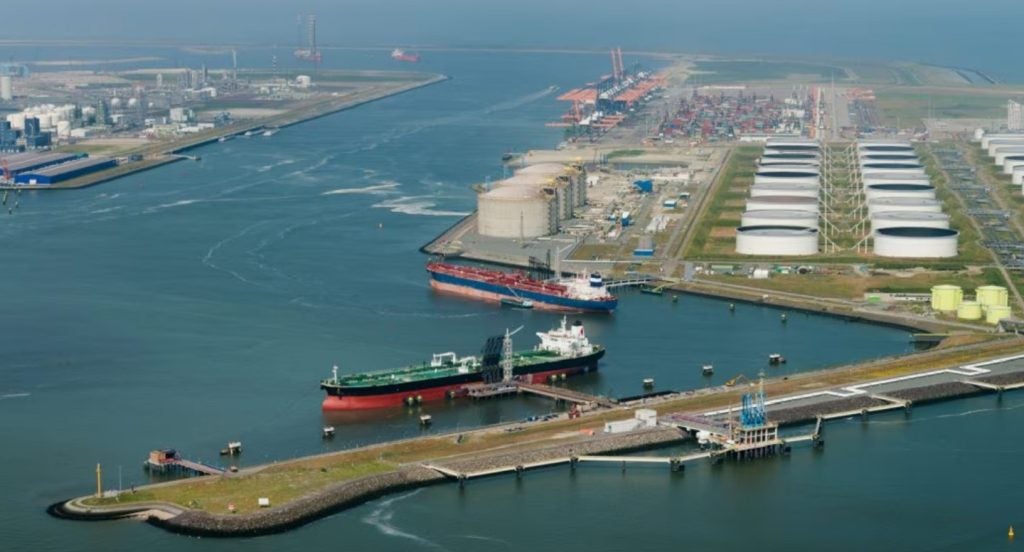
The European Commission has approved a €40m ($44.14m) support measure for the construction and operation of Germany’s first onshore liquefied natural gas (LNG) terminal in Brunsbüttel.
According to the European Commission, the funding will contribute to the security and diversification of energy supplies in Germany in a bid to help end dependence on Russian fossil fuels, in line with the bloc’s REPowerEU Plan. “The new LNG terminal in Brunsbüttel will improve gas supply and infrastructure in Germany,” EU State Aid Chief Margrethe Vestager said on Wednesday.
The gas supply from the proposed terminal is expected to operate until 2044, just six years shy of global net-zero targets outlined by the Paris Agreement. The project was first announced two weeks after Russia mounted its full-scale invasion of Ukraine last year.
It is hoped that the injection of cash from the EU will incentivise energy developers RWE and Gasunie to commit to building the terminal, which is expected to be operational by 2027 at the latest if construction goes ahead.
Germany’s state bank KfW will take a 50% stake in the project, with Gasunie holding a 40% stake and RWE 10%. When the terminal begins operation, it will replace the existing floating LNG terminal stationed in Brunsbüttel, holding a regasification capacity of up to 7.5 billion cubic metres. After 15 years of operation, KfW plans to exit the project, when the preferential dividend distribution mechanism will stop.
Germany currently has a target to reach net-zero emissions by 2045. Its government hopes that the terminal could then be converted to enable capacity for cleaner energy.
“Plant components that cannot be converted or can only be converted at disproportionate cost must be planned and constructed so that they can be used for operation with hydrogen or derivatives from 2044 at the latest,” the government said in a statement.
For the EU, avoiding a “lock-in of gas” was crucial, stressing that the terminal “will be converted after 15 years of operation, at the latest by 2043”.