

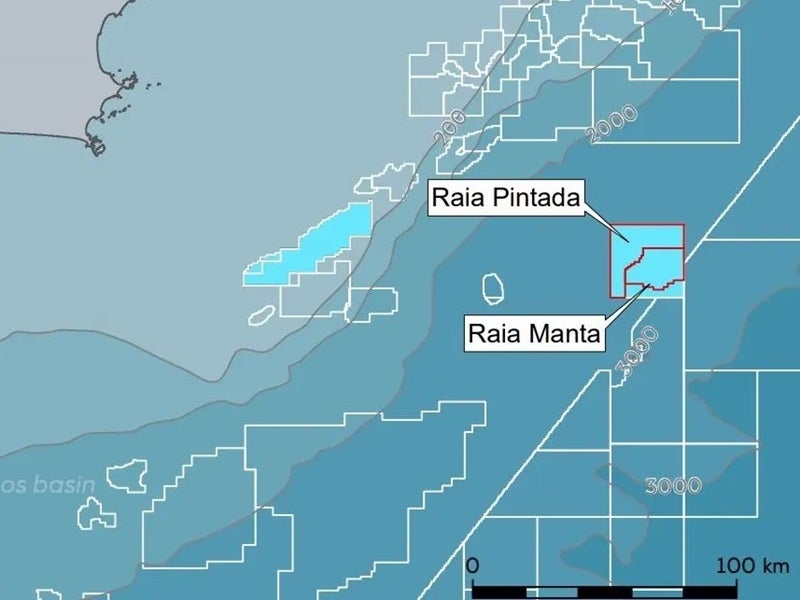
Raia is a deep-water offshore gas development in the pre-salt section of Brazil’s Campos Basin, within concession BM‑C‑33, and consists of two discoveries known as Raia Manta and Raia Pintada.
The licence is jointly owned by Equinor (35%, operator), Repsol Sinopec Brasil (35%) and Petrobras (30%).
Recommended Buyers Guides

The BM-C-33 block was acquired by Repsol Sinopec Brasil at the auction held by Brazil’s National Petroleum Agency in 2005. The potential hydrocarbons in the block were revealed through the Pao de Acucar, Gavea and Seat discoveries in 2010. Equinor took over the operatorship of the block in 2016.
The development concept of the Campos Basin field was approved by the licence partners in March 2021.
Equinor and its partners made the final investment decision for the field development in May 2023.
The project represents an estimated investment of $9bn and is expected to commence production in 2028.
Over the life of the project, the field is expected to create up to 50,000 direct and indirect jobs, reinforcing Brazil’s energy security and contributing to wider economic growth.
Raia location and reserves
Raia is located 200km offshore in the pre-salt section of the Campos Basin in water depths of up to around 2,900m.
The field holds complex reservoirs, situated at a depth of approximately 3,000m, containing a heterogeneous silicified carbonate with vugs, caverns and fractures. The total resources in the block are estimated to be more than 700 million barrels (mbbl) of light crude and three trillion cubic feet of gas.
The field is estimated to contain recoverable reserves of more than one billion barrels of oil equivalent, making it one of the most significant natural gas projects under development in the country.
Appraisal details
A total of seven appraisal wells, including three on Pao de Acucar and two each on Seat and Gavea, were drilled as part of the appraisal programme. Located around 195km offshore Rio de Janeiro, Pao de Acucar was drilled to a depth of approximately 2,800m to encounter a 500m-thick oil column.
Drilled to a total depth of 6,230m, the Gavea A1 well encountered a 175m hydrocarbon column in a good-quality reservoir of silica-rich carbonates in the Macabu formation. It was tested to produce approximately 4,000 barrels per day (bpd) of oil and 16 million standard cubic feet of gas.
The Seat-2, PdA-A1 and PdA-A2 appraisal wells were also drilled and tested between 2013 and 2015. The appraisal activities in the block were completed in 2016.
Raia field details
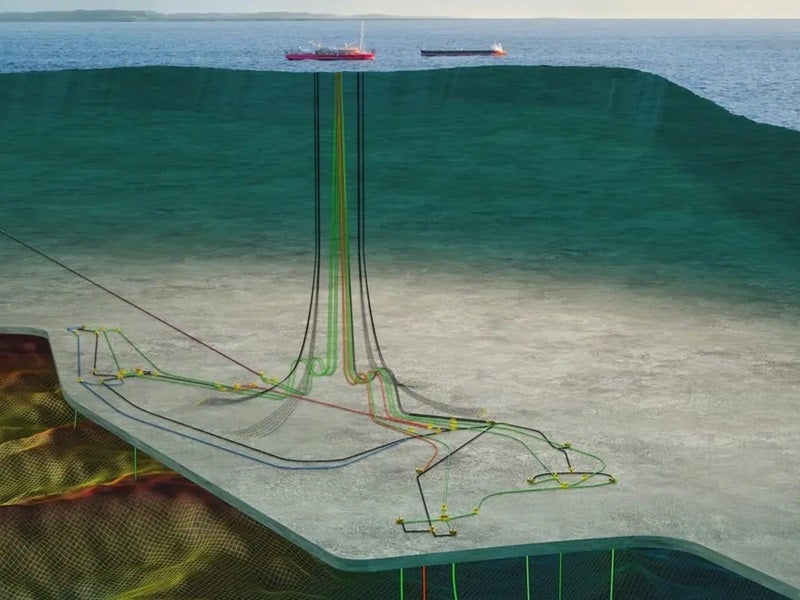
Production at Raia will come from subsea wells tied back to a floating production, storage and offloading (FPSO) vessel, which will process oil and condensate and separate sales-quality gas.
The FPSO will be permanently spread-moored and initially connected to six pre-drilled production wells, with two additional producing wells planned.
Drilling operations are expected to commence in 2026, with six wells to be drilled ahead of first production.
For the first time in Brazil, gas from an offshore development will be treated offshore to transmission specifications and delivered directly into the pipeline grid without the need for onshore processing, enabled by the high quality of the produced hydrocarbons.
Export gas will be transported through a 200km offshore export pipeline from the FPSO to the gas transportation system near Cabiúnas in Macaé, Rio de Janeiro state, while liquids will be evacuated by shuttle tankers.
In September 2025, installation of the shallow‑water section of the export pipeline was completed, marking a major step towards connecting the Raia FPSO to the Cabiúnas gas transportation system.
Raia FPSO details
The Raia FPSO will feature a custom full double‑hull design, with an oil processing capacity of 126,000bpd, a gas production capacity of 16 million cubic metres per day (mcm/d) of gas and a gas export capacity of 14mcm/d of gas.
It can store up to 2mbbl of crude, while the enlarged topsides are intended to support stable, efficient long-term production.
The FPSO will be Equinor’s second FPSO in Brazil to incorporate combined‑cycle gas turbines, in which a gas turbine is paired with a steam turbine to recover and use waste heat, improving power generation efficiency.
Equinor aims for the unit to achieve an average carbon intensity of below 6kg of CO2 per barrel of oil equivalent over the life of the field.
Contractors involved
MODEC received an engineering, procurement, construction and installation (EPCI) contract in May 2023 from Equinor Brasil Energia, a subsidiary of Equinor, to supply an FPSO vessel for the project.
The EPCI contract was awarded after MODEC completed the front-end engineering and design for the FPSO.
MODEC is also responsible for the operations and maintenance service of the FPSO for the first year from the start of oil production. SOFEC, a MODEC group company, will supply the spread mooring system.
Baker Hughes was subcontracted by MODEC to provide gas technology equipment for the project in July 2023. The contractual scope includes the supply of LM2500 gas turbine generators and steam turbine generator technology for the FPSO’s combined cycle power generation solution.
TechnipFMC was awarded a contract to provide integrated EPCI services for the subsea system of the project in May 2023.
The contractual scope includes the provision of EPCI services for TechnipFMC’s Subsea 2.0 jumpers, manifolds, pipeline end terminations, risers and flowlines, subsea distribution and topside control equipment, tree systems and umbilicals, as well as life-of-field services.
Saipem was contracted in November 2023 for the transportation and installation of subsea gas export pipeline and associated equipment.
In December 2023, BrasFELS Shipyard, part of the Seatrium Group, secured a contract from MODEC to build components for the FPSO topside modules.
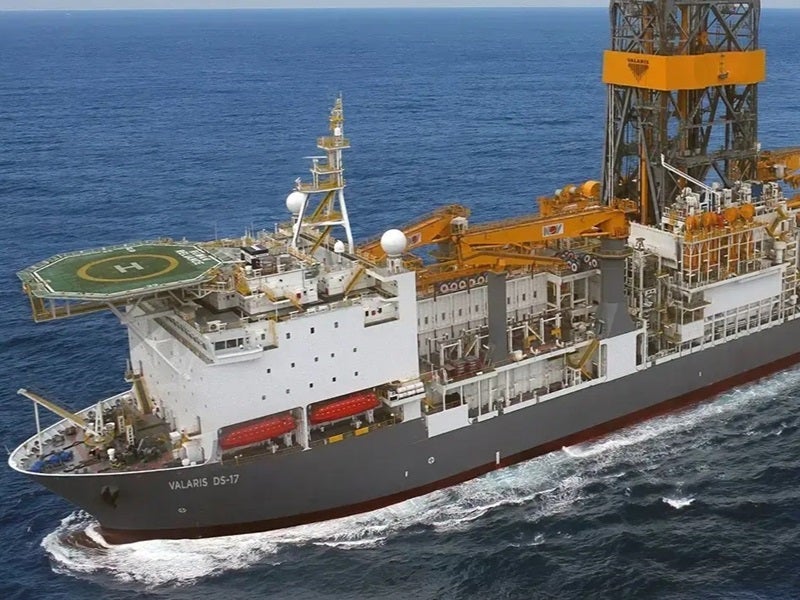
Valaris was awarded a $498m contract for drilling the production wells for the project. The scope of work includes mobilisation, rig modifications, integrated services and provisions for a potential interim idle period.
Equinor also entered into agreements with SLB, Baker Hughes and Halliburton for drilling and well services with a combined value of around $109m.
In March 2020, Equinor awarded an ultra-deep-water pipeline concept study contract to IKM Ocean Design to study gas export from the field to the Rio de Janeiro coast.
Other contractors involved in the project are Everllence (previously MAN Energy Solutions), Huanan Building Materials, Jiangsu Yunhui Pipe Technology, Nord Welding & Engineering, Oliver Valves, RBNA Consult, Seaplace and Tenaris.
