
Gorgon Stage Three (GS3) is a backfill development of the existing Gorgon liquefied natural gas (LNG) project, situated offshore in the north-west of Western Australia (WA).
The Gorgon LNG project is owned by the Gorgon Joint Venture (JV) comprising Chevron Australian (47.33%), ExxonMobil (25%), JERA (0.417%), MidOcean (1%), Osaka Gas (1.25%) and Shell (25%). It is operated by Chevron Australia on behalf of the Gorgon JV.
Recommended White Papers

Recommended Buyers Guides

The A$3bn ($2bn) GS3 project involves the development of the Geryon and Eurytion gas fields to continue gas production at Gorgon, supplying domestic gas to WA and LNG to buyers in Asia.
In December 2025, Chevron Australia and the other Gorgon JV participants approved the final investment decision for the project.
Offshore work on the Geryon and Eurytion gas fields is scheduled to start in 2026, with production targeted from 2028 for an estimated period of 20–25 years.
GS3 location
The Geryon and Eurytion gas fields are situated within retention lease WA‑22‑R offshore in the north-west of WA, roughly 184km from Onslow and around 205km from Dampier.
The water depth at this location is roughly 1,300m, and it lies approximately 94km to the north‑west of Barrow Island.
Gorgon LNG project background
The Greater Gorgon area is estimated to hold 40 trillion cubic feet of discovered resources. The Gorgon project is aimed at developing these resources. It is capable of delivering up to 300 terajoules of gas per day to the WA market and producing 15.6 million tonnes of LNG annually.
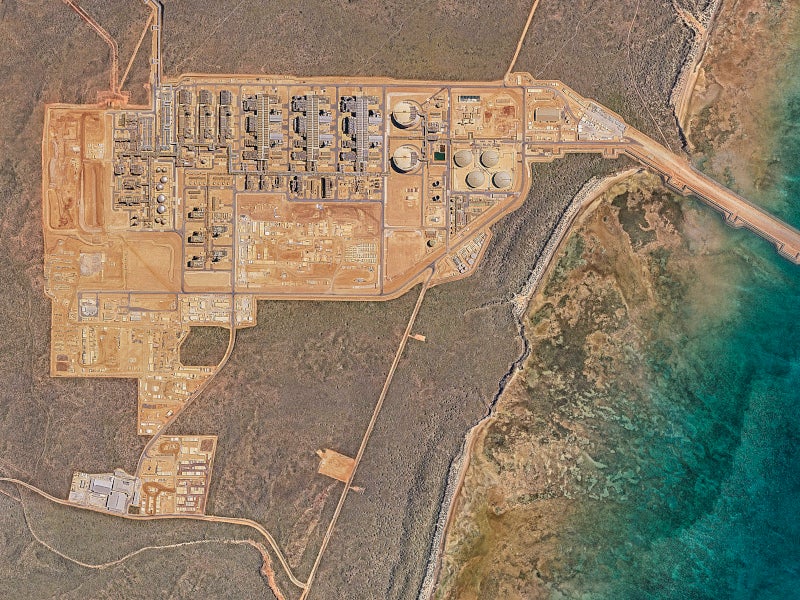
The first phase of the Gorgon LNG project, Gorgon Stage One, commenced production from the Gorgon and Jansz‑Io gas fields in 2015. The gas production is transferred by pipeline to the Gorgon gas treatment plant on Barrow Island.
In June 2023, Chevron Australia and the Gorgon JV partners reported first gas from the Gorgon Stage Two project, which involved drilling additional wells and the expansion of the production pipelines and subsea infrastructure to maintain production at the Gorgon and Jansz-Io fields.
The original environmental approvals for the Gorgon Project allowed for later development of additional “backfill” gas fields in the Greater Gorgon Area to offset the gradual decline of the Gorgon and Jansz‑Io fields.
The backfill fields development will draw natural gas from seven such fields in the Greater Gorgon Area: Chandon, Chrysaor, Dionysus, Eurytion, Geryon, Semele and West Tryal Rocks. These fields are located across retention leases WA-5-R, WA-14-R, WA-15-R, WA-20-R, WA-21-R, WA-22-R, WA-53-R, WA-75-R and WA-76-R.
The fields will be brought online in stages, individually or in combination, and connected to the existing facilities to keep production at the Barrow Island gas plant at its present level.
The Geryon and Eurytion gas fields are the first of the backfill fields to be developed under the Gorgon LNG project.
The remaining fields are expected to be brought onstream after Geryon and Eurytion start up. As production from each field declines, additional field(s) will be tied back into the Gorgon and Jansz trunklines.
The precise sequencing for developing the outstanding backfill fields has yet to be confirmed. The development is forecast to reach the end of field life around 2070.
GS3 development project details
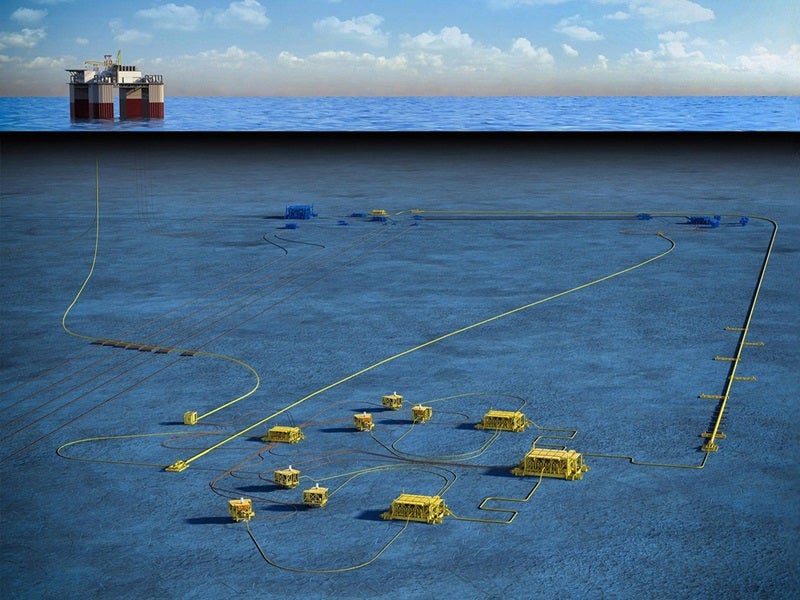
The GS3 development project involves the drilling of six subsea production wells, positioned around a single drill centre, installing three subsea manifolds, a 35km production flowline and related subsea infrastructure.
The associated infrastructure and flowlines will transport gas from the fields to the Gorgon and Jansz-Io pipeline tie-in points.
Umbilicals will be installed to transmit power, fibre-optic signals, and hydraulic and other fluids. No permanent facilities will extend above the sea surface.
A drill-ship or semi-submersible mobile offshore drilling unit will drill and complete six subsea production wells, using dynamic positioning instead of anchors.
A conventional drilling sequence will be used: each well section will be drilled, cased and cemented across all six wells before moving on to the next section.
Chevron Australia is preparing the GS3 Drilling Environment Plan (EP) for submission to the National Offshore Petroleum Safety and Environmental Management Authority for regulatory assessment and potential acceptance.
A separate EP will address the installation of the remaining subsea infrastructure and its integration with the existing Jansz-Io facilities.
Contractors involved
In December 2025, TechnipFMC received a contract worth between $75m ($55.93m) and $250m to supply its Subsea 2.0® production systems, flexible jumpers to support higher production rates and flow assurance for gas applications.
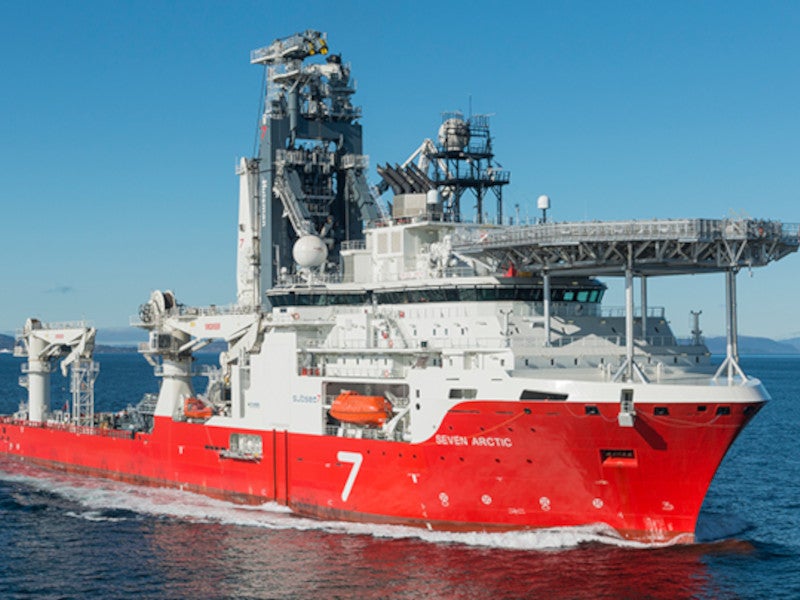
In the same month, Subsea7 was contracted to deliver a full package covering project management, engineering, procurement, fabrication, transport, installation and pre-commissioning for the subsea equipment and related infrastructure for the GS3 development project.
