

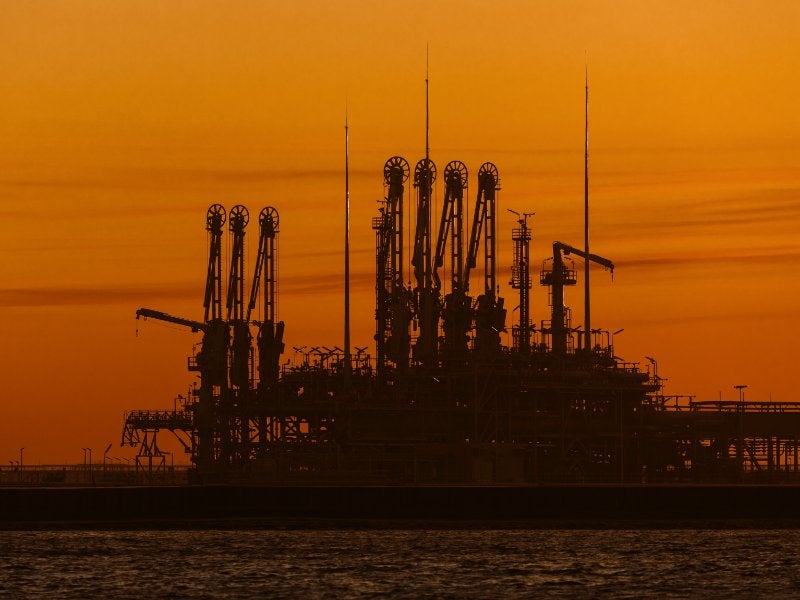
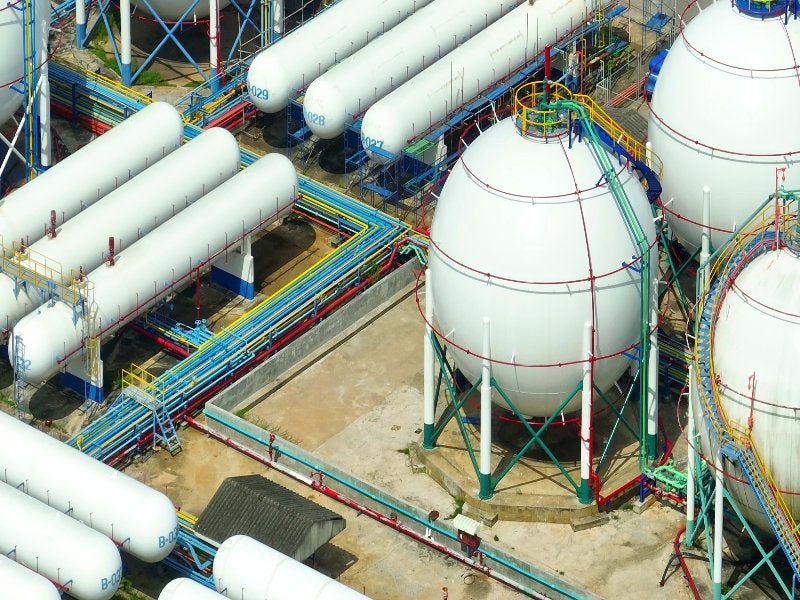
Ksi Lisims LNG is a planned floating natural gas liquefaction and export facility to be built on Pearse Island, on the north-west coast of British Columbia (BC), Canada.
The project is a joint venture of US-based Western LNG, a consortium of Canadian natural gas producers called Rockies LNG, and the owner of the land Nisga’a First Nation.
Recommended Buyers Guides

The project’s initial capital cost is C$9.9bn ($7.1bn) for the base case. This figure increases to C$11.8bn if power barges are required.
Construction works are expected to begin in late 2025, and the project is expected to commence operations in 2029.
Ksi Lisims will have a capacity of 12 million tonnes per annum (mtpa) of liquified natural gas (LNG), which will make it the second-largest LNG facility in Canada.
The project will export to Pacific basin markets, primarily in Asia, which are increasing LNG imports as part of their evolving fuel mix.
Over its life cycle, the project is expected to attract investment of close to C$30bn.
During peak construction, the project plans to employ an average of up to 450 workers. In the operational phase, the facility is expected to maintain a permanent workforce of up to 250 employees.
Ksi Lisims LNG location
The site is situated on the north-west coast of British Columbia at the northern end of Pearse Island, approximately 15km west of the Nisga’a community of Gingolx, at a location known as Wil Milit.
The floating LNG facility and marine terminal, along with associated infrastructure, are planned to be built on Category A Lands defined under the Nisga’a Treaty, specifically District Lots 5431 and 7235, and an adjacent proposed water lot.
Development background
The Ksi Lisims LNG joint venture initiated the regulatory process in July 2021 by submitting an Initial Project Description to the Government of British Columbia and the Government of Canada.
In April 2022, the BC Environmental Assessment Office (BCEAO) posted the Detailed Project Description, confirming that the project had provided sufficient information to begin the environmental assessment application process.
The project obtained a 40-year LNG export licence from the Canada Energy Regulator in December 2022. In April 2023, the Impact Assessment Agency of Canada approved a substituted process, allowing a single environmental assessment under BC’s process that satisfies both provincial and federal requirements.
In July 2023, Ksi Lisims LNG received a process order from the BCEAO authorising the project to prepare and submit a full environmental assessment (EA) application. The partners filed the EA application in October 2023.
In September 2025, the project received an environmental assessment certificate from the Government of British Columbia and a positive Decision Statement from the Government of Canada.
In November 2025, the Prime Minister of Canada referred Ksi Lisims LNG to the Major Projects Office, which identifies projects of national importance and coordinates measures to accelerate their review and delivery.
Ksi Lisims LNG project details
Ksi Lisims LNG will comprise two floating liquefaction, storage and offloading (FLNG) barges.
They will include a mooring system and ship-to-ship LNG transfer equipment with loading arms, providing each FLNG with a transfer capacity of 12,000m³.
Together, the two FLNGs will provide LNG storage capacity of 490,000m³, including associated LNG transfer pumps.
Process equipment on each FLNG will include feed gas pre-treatment comprising an acid gas removal unit, a dehydration unit and a mercury removal unit.
Each unit will also house multiple single mixed-refrigerant liquefaction trains that incorporate the natural gas liquefaction system, heavy hydrocarbon removal, condensate stabilisation and storage, and refrigerant storage.
The design also includes emergency flaring systems and the full utility package required for FLNG operations.
Both barges will run their main refrigerant boil-off gas compressors with electric motor drives.
Infrastructure details
Other key components of the project will include an onshore feed gas receiving facility that will link the project to the marine segment of the feed gas pipeline. The development will add electrical substations and on-site power distribution, water and wastewater treatment plants, interconnecting piping, and access roads.
The design also provides backup diesel power generation and diesel storage tanks, as well as a treated effluent pipeline with an outfall and diffuser discharging to the Portland Canal.
The project will install a closed-loop refrigeration cooling system that uses water as the cooling medium. Temporary power barges may be deployed with corresponding onshore cooling water systems.
Marine and logistics infrastructure will comprise a materials offloading facility, potential tug berths, and a supply and personnel jetty. Two shore-connected jetties with platforms will link each FLNG unit to land.
The project will receive electrical power from BC Hydro and the Power Authority’s electrical transmission system.
Production and export details
Ksi Lisims LNG will process pipeline-grade natural gas sourced from the Western Canadian Sedimentary Basin in north-eastern British Columbia and north-west/central Alberta.
At full build-out, the facility will receive approximately 1.7-2 billion cubic feet per day (bcm/d) of gas, equivalent to about 48.1-56.6 million cubic metre per day. It can export up to 22.4bcm of LNG per year.
Feed gas will be delivered to the site through the 900km Prince Rupert Gas Transmission pipeline, which is currently under construction.
Incoming gas will undergo pretreatment to remove carbon dioxide, sulphur compounds, hydrogen sulphide, mercury and water to protect liquefaction, storage, shipping and downstream regasification systems. Treated gas will then be cooled using a single mixed-refrigerant process to reach liquefaction temperatures of about -160°C.
The refrigerant is a proprietary blend that typically includes methane, ethylene, propane, isopentane and nitrogen. Large electric-drive compressors will circulate and compress the refrigerant.
Cooling will occur in FLNG heat exchangers using a closed-loop water system connected to onshore, electrically driven air-cooled exchangers. Both the refrigerant and the cooling water will operate in closed circuits.
As the refrigerant expands across a valve to produce low temperatures, it will pass through cryogenic ‘cold-box’ heat exchangers to remove heat from the treated gas. Heavier hydrocarbons will condense during initial cooling and be routed to a condensate stabiliser. The remaining gas will be further cooled to about -162°C to produce LNG, which will be stored in FLNG tanks.
Separated heavy hydrocarbons will form condensate and will be stored on the FLNG units for export on conventional NGL carriers roughly every 30-40 days.
Offtake agreement
In January 2024, Ksi Lisims LNG and Shell Eastern Trading signed a 20-year LNG sale and purchase agreement.
Under the deal, Shell will purchase 2mtpa of LNG from the Ksi Lisims LNG project on a free-on-board basis.
Contractors involved
In July 2023, Black & Veatch, which specialises in LNG infrastructure solutions, in collaboration with Samsung Heavy Industries of South Korea, secured the front-end engineering design contract for the Ksi Lisims LNG project.
In the same month, the project partners contracted Siemens Energy for the design of the project’s liquefaction compression and associated electrical systems.
