

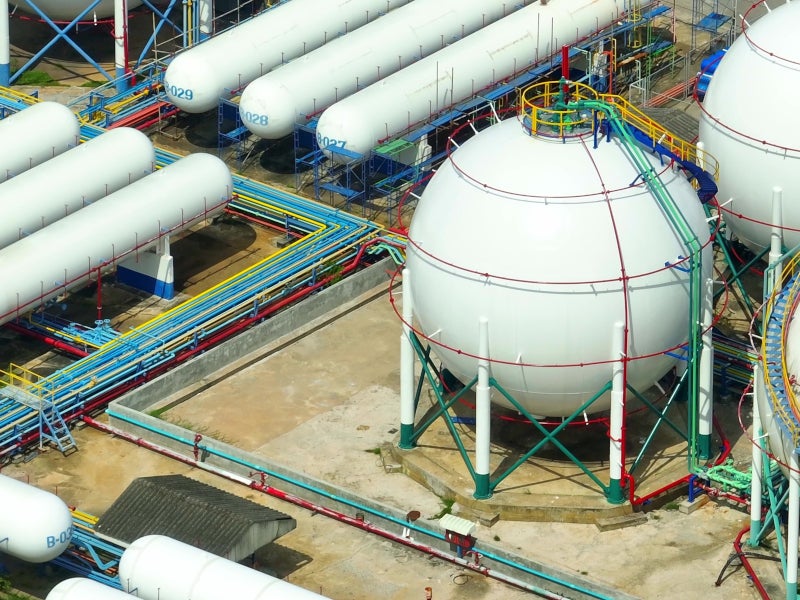
Monkey Island LNG is a liquefied natural gas (LNG) export terminal due to be developed by Monkey Island LNG (formerly SCT&E LNG) on Monkey Island in Cameron Parish, Louisiana, US.
Southern California Telephone Company is the parent company of Monkey Island LNG, which has been established to develop the LNG facility and export terminal.
Recommended Buyers Guides

The terminal will have a capacity of 26 million tonnes per annum (mtpa). It will be developed in two phases, with phase one having a capacity of 15.6mtpa across three trains.
Approval to export LNG from the terminal was granted by the Department of Energy in December 2015. A 30-year authorisation has been awarded to export 2.1 billion cubic feet a day of natural gas or approximately 15.75mtpa by ship from the proposed project destination.
The export permission has been given to ship to countries with which the US has a free trade agreement (FTA) and that do not prohibit trade.
Monkey Island LNG has also entered a 20-year fixed price binding agreement to receive natural gas for the new facility.
Front-end engineering and permitting are expected to commence in 2026, with the LNG terminal anticipated to commence operations in 2033.
Construction of the facility, expected to last around five years, will support more than 1,500 jobs each year. Once operational, it will provide a further 225 permanent roles to run the site over the long term.
Site details of Monkey Island LNG project
The LNG facility and the export terminal will be constructed on a 246-acre site on Monkey Island on Louisiana’s Calcasieu Ship Channel. The site is situated 2.5 miles (4km) from the Gulf of Mexico and lies close to the US natural gas intrastate and interstate pipeline systems, as well as significant gas pipeline interconnections.
The proposed site occupies a prime position on the Calcasieu Ship Channel, with 4,000ft of waterfront access along both the island’s western and northern edges. Benefiting from the channel’s natural flow, water depths at the site reach up to 69ft, removing the need for routine annual dredging. Additionally, the site has a 1,000ft channel width directly in front of the site.
The LNG shipping facility can host deep draft and mega LNG carriers. The site also provides access to aide channels, which are important for small-scale LNG operations and bunkering activities.
The site has been selected for its proximity to the Gulf of Mexico, which makes it an ideal destination to export LNG to FTA nations such as Costa Rica and Mexico. Domestically produced LNG can also be easily exported to other countries such as Japan and China through the Panama Canal, and to the European markets.
Monkey Island LNG project details
Monkey Island LNG will have up to five liquefaction trains to liquefy natural gas at a production rate of approximately 5mtpa per train. The project design calls for three LNG storage tanks, each with a capacity of approximately 180,000 cubic metres.
The LNG facility will also include necessary utilities, storage and marine facilities.
The identical natural gas liquefaction trains will use cryogenic technology for liquefying the natural gas. The natural gas will be supplied to the project by pipelines to be treated at the gas treatment area, and the treated gas will be stored on-site as LNG.
In September 2025, Monkey Island LNG selected ConocoPhillips’ Optimized Cascade® Process liquefaction technology for the project.
LNG carriers moored at the project site will be used for transporting LNG to domestic and export markets after it is loaded into them from the storage tanks.
Sale of LNG
The operator will export the LNG produced via take-or-pay tolling agreements and has entered offtake agreements to facilitate the delivery of LNG to customers.
A total of four agreements have been signed for the sale of a total of 4.7mtpa of LNG, which constitutes a third of the total LNG produced by the project.
The operator has also signed a multibillion-dollar agreement with Chinese LNG terminal owner JOVO Group for long-term offtake of LNG from the project, along with a potential equity investment in the project by JOVO Group.
Monkey Island LNG signed a memorandum of understanding with an investment-grade international oil company in September 2025 covering the offtake of up to 5.2mtpa of LNG for 20 years. This offtake agreement represents the output of the entire first LNG train in phase one.
Key players involved
In September 2025, Monkey Island LNG awarded a master services agreement (MSA) to McDermott to deliver front-end engineering and planning services for the project.
Under the MSA, McDermott will deliver engineering support, develop the execution strategy, and prepare cost estimates for the facility’s engineering, procurement and construction (EPC) stage. The parties anticipate converting the MSA into a definitive EPC contract, subject to the schedule of Monkey Island LNG’s financing process.
An MSA has been awarded to Technip covering engineering services that are necessary to develop the project, as well as front-end engineering design. Technip will also assist the operator during Federal Energy Regulatory Commission (FERC) approval process.
AECOM was selected to coordinate the environmental analysis and engineering services for the FERC pre-Filing review process and application in July 2017. AECOM earlier completed the phase one environmental study for the project site.
Air Products has been selected to provide its propane pre-cooled mixed refrigerant process and main cryogenic heat exchangers technology, equipment, and the related process licence.
The project’s marine infrastructure will be assessed by Proes, which will prepare a waterway suitability assessment that will be submitted to the US Coast Guard.
