

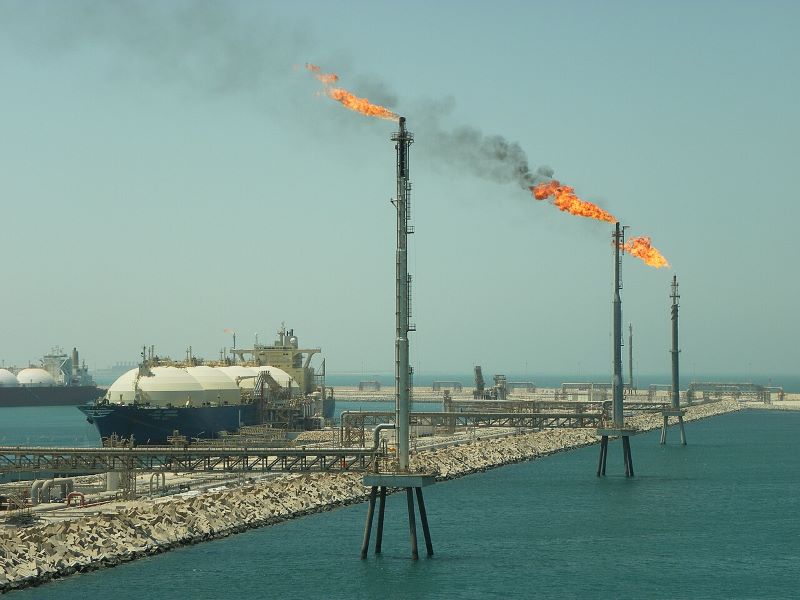
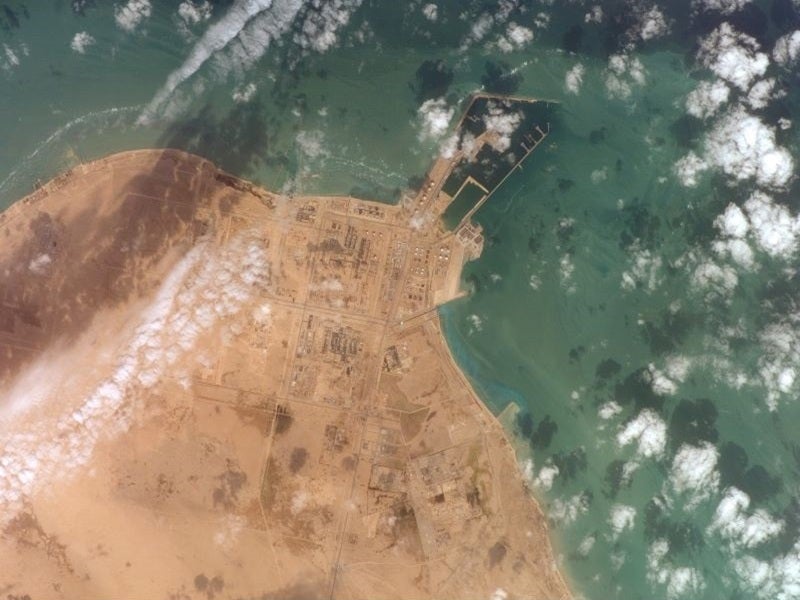
The Qatargas I LNG plant in Ras Laffan Industrial City in Qatar comprises liquefied natural gas (LNG) Trains 1, 2 and 3. It is owned and operated by QatarEnergy LNG N(1), a unit of QatarEnergy LNG, which operates a total of 14 LNG trains at Ras Laffan Industrial City.
The plant uses natural gas from the North Field reservoir as feedstock and exports the processed LNG product to Japan, Spain, Europe, Korea and the US.
Recommended Buyers Guides

The LNG project was announced in 1981 and broke ground in 1994. It was commissioned in 1997 with an initial capacity of six million tonnes per annum (mtpa), which was subsequently increased to the current capacity of 10mtpa after a debottlenecking project was completed in 2005.
The estimated cost of the Qatargas 1 development project was $2.3bn (QR8.37bn).
Qatargas, formed in 1984, owned a 65% interest in the plant through the Qatargas I LNG venture. The other partners were ExxonMobil (10%), Total (10%), Mitsui (7.5%) and Marubeni (7.5%).
Qatargas ended its joint venture (JV) partnership in 2021 upon the expiry of the company’s JV agreement and increased its equity ownership in the Qatargas I LNG venture from 65% to 100%.
Qatargas was rebranded to QatarEnergy in 2021 and to QatarEnergy LNG in September 2023.
Iran-Middle East crisis: impact on Ras Laffan Industrial City
QatarEnergy confirmed on social media that missile strikes on Ras Laffan Industrial City in March 2026 during the ongoing Iran-Middle East crisis damaged several of its LNG production facilities and affected its LNG export capacity.
The strikes damaged LNG Trains 4 and 6, which together account for 12.8mtpa. Both trains are a JV between QatarEnergy and ExxonMobil. QatarEnergy holds a 66% interest and ExxonMobil holds a 34% interest in Train 4. QatarEnergy holds a 70% interest in Train 6, while ExxonMobil holds the remaining 30%.
The company reported an estimated 17% reduction in output and indicated this could lower annual revenue by around $20bn. It stated that the damage to production facilities was extensive, with repairs expected to take up to five years. It expects to declare force majeure on a long-term basis.
QatarEnergy added that the Pearl gas-to-liquids facility was also targeted. The plant, operated by Shell under a production-sharing agreement, converts natural gas into liquid fuels and produces base oils as well as paraffins and waxes.
The company also said the disruption will reduce output of associated products, including 18.6 million barrels of condensates, 1.281 million tonnes (mt) of liquefied petroleum gas, 0.594mt of naphtha, 0.18mt of sulphur and helium of 309.54 medium-chain fatty acids.
Offshore production at North Field
The North Field was discovered in 1971. The offshore production, separation and treatment facilities are situated 80km away from the mainland. A total of 20 production wells have been drilled and completed in the North Field.
Around 1.6 billion standard cubic feet of raw gas is transported every day through a 32in underwater pipeline to the onshore LNG plant.
Qatargas I LNG plant infrastructure
The Qatargas I LNG plant includes all attendant infrastructure including LNG storage tanks, loading jetties and three liquefaction process trains of 3.3mtpa capacity each.
Each production train is 300m long. The sulphur recovery rate is 120t/day x two trains.
Construction of Qatargas I LNG plant
Engineering work started with the verification of the front-end engineering design package provided by the owner, which required the complete redesign of the acid gas removal unit, sulphur recovery unit, associated utilities and plot plan.
Construction of the project started with the site preparation and infrastructure development, including a 35km access road and camp facilities, in 1994.
The construction phase of the LNG process trains, jetty loading areas and storage tanks required a total of 66.5 million labour man-hours, concrete pour of 182,600m³, 9,300t of steel, 28,000t of pipeline and installed equipment weighing 32,000t.
Plant hand-over (PHO) of the first train was achieved in September 1996, 39 months after the contract award, and PHO of the second train occurred three months later – both ahead of the contractual schedule.
The third train was awarded in July 1995, and PHO was achieved in March 1998, 32 months after the contract award and eight months ahead of schedule.
De-bottlenecking programme
In December 2001, Qatargas carried out a de-bottlenecking programme of the three LNG process trains.
The work involved replacing or upgrading some of the key process equipment such as compressors and turbines to expand the capacity of each of the three LNG trains from 2mtpa to 3.3mtpa.
The engineering upgrades were executed during four shutdowns of about one month each between 2002 and 2005.
Two of the three original trains were successfully de-bottlenecked by 2003, and the third train was completed in 2005.
Plateau maintenance project
In order to maintain the current production level in future, Qatargas initiated the plateau maintenance project (PMP) in 2010.
The PMP project involved facilitating increased feed gas rates from offshore wells and enlarging the onshore LNG plant capabilities. It also included the construction of a new acid gas removal and sulphur recovery unit near the existing units.
In addition, continuous emission monitoring solution (CEMS) units were installed on top of the gas and sulphur recovery incinerator exhaust stacks to reduce the sulphur level in the feed gas.
Contractors involved
The three LNG trains for Qatargas 1 were supplied by Baker Hughes.
Chiyoda Corporation of Japan was the engineering, procurement and construction (EPC) contractor of the original plant.
Within Qatargas, a plant project task force team was established to manage and supervise the EPC contractor.
The de-bottleneck project was carried out by a JV of Technip and Chiyoda (TCJV) under a €100m EPC contract. The JV was also the EPC contractor for the PMP project.
Other PMP project suppliers included ABB for 16 CEMS units and Struthers Wells for a thermal reactor furnace, waste heat boiler and steam drum.
