

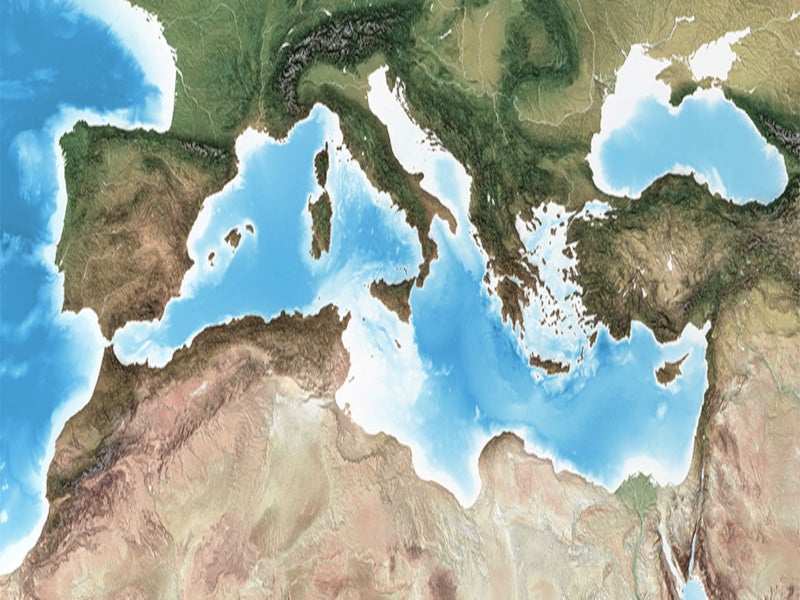
The Sakarya gas field is located within the 7,000km² block AR/TPO/KD/C26-C27-D26-D27 in the ultra-deep waters of the western Black Sea, approximately 175km offshore Eregli, Turkey.
Turkish Petroleum (TPAO), the state-owned oil and gas company, holds a 100% interest in the block.
Recommended Buyers Guides

Development of the Sakarya gas field is planned in three primary phases. The offshore field achieved first gas in April 2023.
Sakarya is expected to supply 10 million m³/day of natural gas in its first phase, with output targeted to increase to 40 million m³/day as additional wells are drilled.
By April 2025, production had reached approximately 9.5 million m³/day from the Black Sea field.
Once complete, the Sakarya field is expected to meet 30% of Turkey’s natural gas demand.
Sakarya gas field discovery details
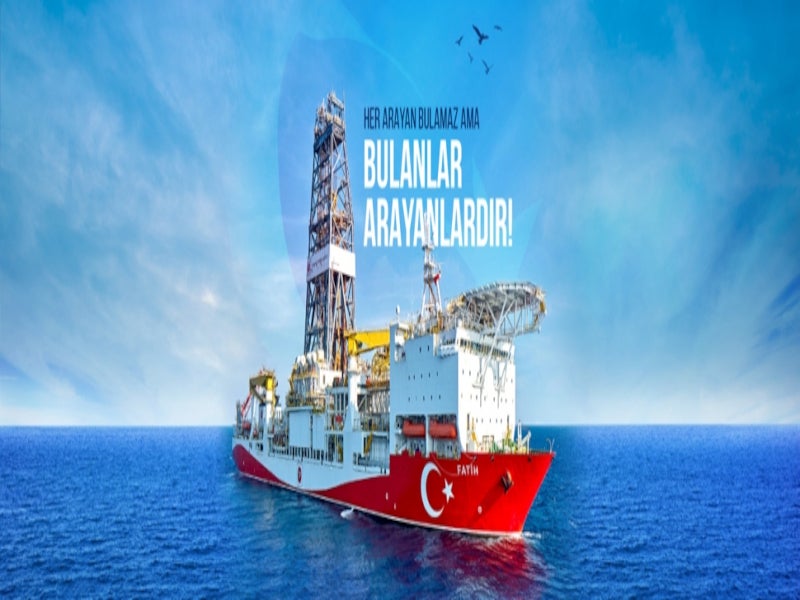
TPAO discovered the Sakarya gas field by drilling the Tuna-1 ultra-deepwater exploration well, using its sixth-generation ultra-deepwater drillship Fatih, in August 2020.
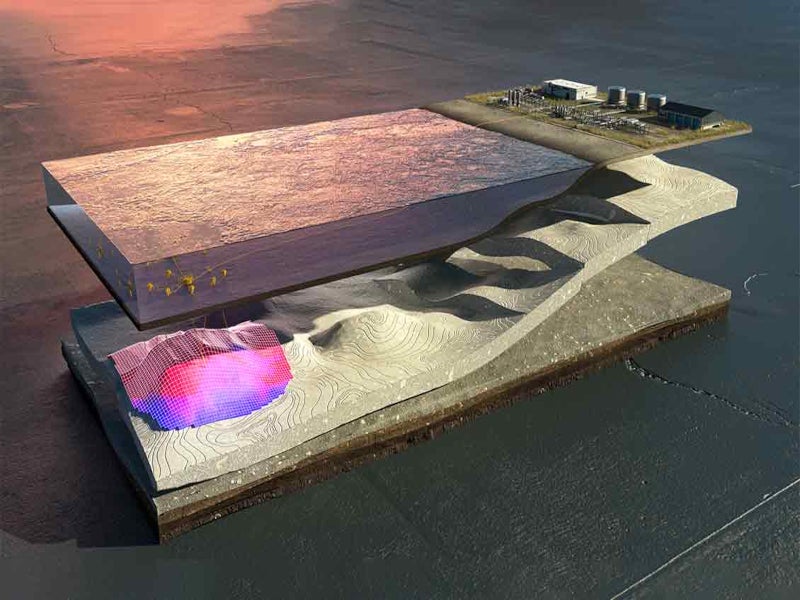
Tuna-1 was drilled at a water depth of 2,115m to reach a depth of 4,525m in the Black Sea. The well intercepted a natural gas-bearing reservoir of more than 100m in the Pliocene and Miocene sandstone formations.
The field was estimated to hold potential natural gas reserves of 320 billion cubic metres (bcm)/11 trillion cubic feet (tcf) of lean gas, considered the largest gas reserve discovered in the Turkish Exclusive Economic Zone and the Black Sea.
The company made a second discovery in the lower sections of Tuna-1, which increased the potential reserve estimate to 405bcm (14.3tcf) of lean gas in October 2020. Drilled in 2,117m of water, the discovery of an additional 30m gas-bearing reservoir in sandstones of the early-Pliocene to late-Miocene era was found at a depth of 4,775m.
Furthermore, the drilling of the Amasra-1 exploratory well in the northern Sakarya gas field uncovered 135bcm of gas in June 2021, increasing the cumulative natural gas reserves of the field to 540bcm.
The natural gas was intercepted at three levels between 3,000m and 4,775m in the Pliocene to Miocene-era sandstone formations.
Appraisal details
The successful exploration drilling at the Sakarya gas field encouraged the company to conduct field appraisals and acquire three-dimensional (3D) seismic data of the block using state-of-the-art technology.
The drilling of the appraisal wells Turkali-1, Turkali-2, Turkali-3 and Turkali-4 was carried out by the Fatih drillship, while the well completion operations and borehole testing were performed by Kanuni, TPAO’s third drillship.
Located 4km to the northwest of Tuna-1, the Turkali-1 well was drilled to a total depth of 3,920m, while Turkali-2 was completed at a drilling depth of 3,950m.
Separate flow tests were conducted on three reservoir sections of the Turkali-2 appraisal in 2021. They indicated a total flow potential of 2.05 million cubic metres a day (mcmd) of gas from the well.
Similar flow tests conducted in the Turkali-1 appraisal well in the first quarter of 2022 indicated an estimated gas production potential of 2.7mcmd.
TPAO’s Kanuni drillship was used to carry out the well flow tests at the field. It used the Barbaros Hayreddin Paşa seismic vessel to complete 3D seismic exploration operations over an area of 11,000km² at the Sakarya gas field and moved onto the interpretation stage in July 2021.
Sakarya gas field development details
TPAO will drill up to 40 production wells at Sakarya by 2028, with ten wells completed by 2023 in the first phase of development.
The second phase, expected to be completed in 2028, will involve the development of 26 wells. This will increase production capacity by an additional 30 million m³/day.
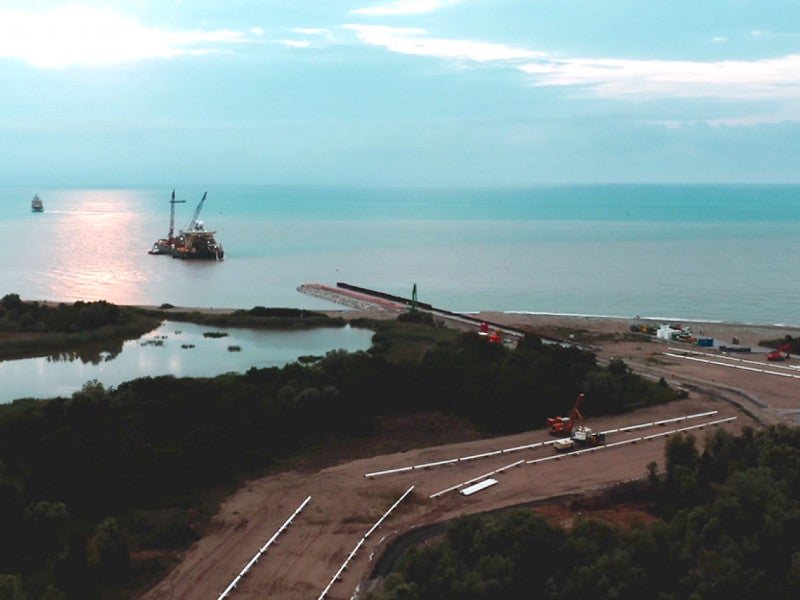
The Sakarya project includes a subsea natural gas production system and an onshore natural gas processing facility in the Filyos Industrial Zone, Zonguldak province.
A pipeline of approximately 170km, laid in the seabed at a depth of 2,000m, transports gas from the field to the onshore facility for processing.
Turkey’s Petroleum Pipeline Company (BOTAS) transports the processed gas to the national gas network through a 36km-long onshore pipeline.
The third phase of development will include a new floating production unit linked to 27 wells in the Sakarya and Amasra fields, tied back via a new trunkline to the Filyos onshore facility.
Contractors involved
A consortium of Subsea7 and Schlumberger received the engineering, procurement, construction and installation (EPCI) contract for the Sakarya field development in October 2021.
The contractual scope includes the installation of subsea production systems (SPS), subsea umbilicals, risers and flowlines (SURF), tie-in connections, associated subsea equipment, the laying of 170km of gas export pipeline as well as monoethylene glycol injection pipeline, and the development of an onshore early production facility.
Saipem was contracted for the installation of pipelines in November 2021. Tenaris was contracted to supply 68,000t of steel pipes for the project.
Norwegian geophysical services company Shearwater GeoServices conducted a 2,000km² 3D seismic survey in the Sakarya area as part of its 6,200km² programme in 2019.
Sakarya gas field Phase 2 contracts
In May 2023, TPAO awarded the engineering, procurement, construction, and installation (EPCI) contract for the second phase of the Sakarya gas field to a consortium of SLB, Subsea7, and Saipem.
The work package includes subsea production systems with subsea umbilicals, risers, and flowlines.
Saipem and Subsea Integration Alliance, which comprises SLB’s OneSubsea and Subsea7, will be responsible for project execution.
Subsea7’s scope includes EPCI activities for roughly 37km of infield flowlines, 47km of control umbilicals, and associated subsea hardware, in water depths of around 2,000m.
The agreement also allows for further front-end engineering design (FEED) work and possible expansion of the original scope.
TPAO also contracted Norway’s Nord Welding & Engineering (NWE) to perform design reviews, on-site supervision, material inspections and third-party verification during fabrication and installation in the second phase.
In July 2025, Spanish company Ampo Poyam Valves was contracted to deliver more than 110 high-pressure, metal-seated on-off ball valves fitted with pneumatic actuators for the Sakarya Gas Field Development Phase-2A floating production unit (FPU). Deliveries are scheduled across 2025 and 2026.
Sakarya gas field Phase 3 contracts
In September 2025, TPAO subsidiary Turkish Petroleum OTC awarded Saipem a $1.5bn offshore contract for Phase 3 of the Sakarya gas field development.
Saipem agreed to offer EPCI of eight rigid flowlines and a 24-inch gas export pipeline, about 183km long, connecting the offshore field, at water depths of up to 2,200m, to Filyos.
The contract duration is about three years, with the offshore campaign scheduled to begin in 2027 using the Castorone pipelay vessel.
In September 2025, Wison New Energies received an EPCIC contract for the FPU in Phase 3 of the project.
In the same month, Baker Hughes was awarded a contract by TPAO and the Turkish Petroleum Offshore Technology Centre to provide subsea production and intelligent completion systems.
