

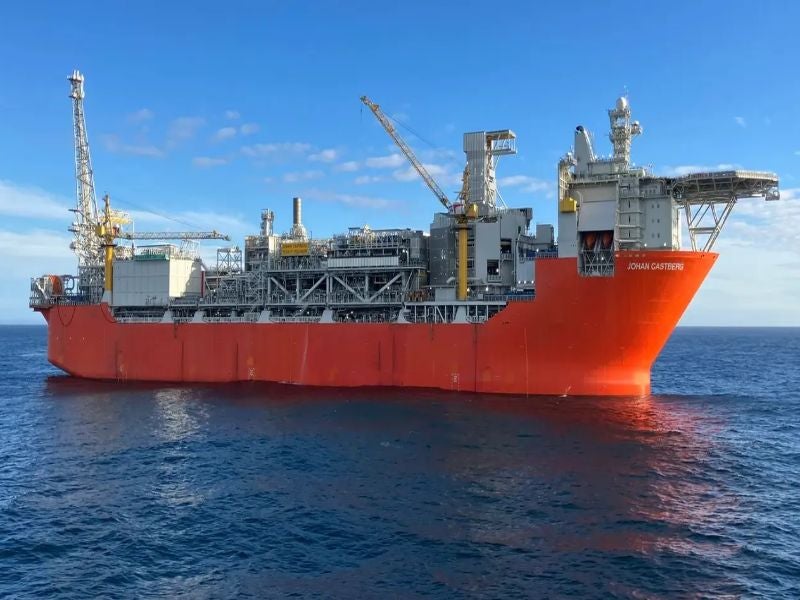
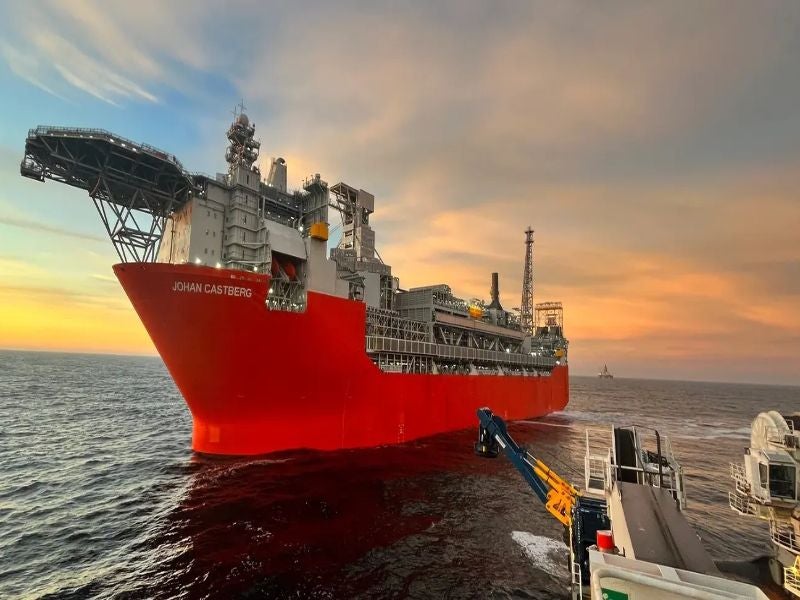
The Johan Castberg project, located in the Barents Sea, is Norway’s northernmost offshore field.
The project comprises three oilfields, namely Skrugard, Havis and Drivis, all situated in production licence PL532.
Recommended Buyers Guides

Ownership of production licence PL532 is held by Equinor (46.3%, operator), Vår Energi (30%) and Petoro (23.7%).
Equinor submitted the project’s plan for development and operation (PDO) in December 2017 and it received approval from the Norwegian Government in June 2018.
When the PDO was submitted in 2017, the field development was estimated to cost approximately Nkr49bn.
In September 2023, the figure was updated to Nkr80bn. The revised estimate reflects a rise in project costs of Nkr15.5bn and a currency effect of around Nkr7bn.
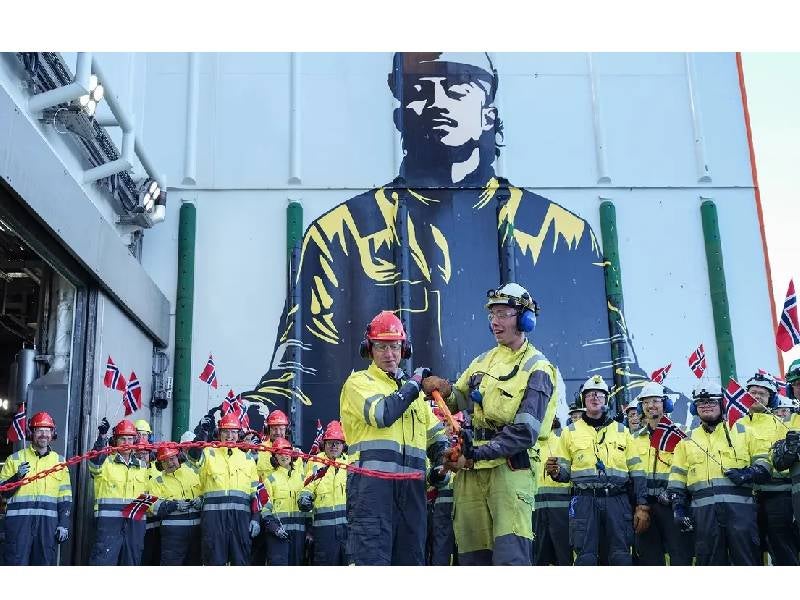
Johan Castberg achieved first production in March 2025 and was officially opened in August 2025.
The field achieved peak capacity production of 220,000 barrels of oil per day within three months. It is expected to have an operational life of 30 years.
Location and reserves
The Skrugard, Havis and Drivis oilfields are situated in blocks 7219/9 and 7220/4,5,7, approximately 100km north-west of the Snohvit field, 150km north-west of Goliat and roughly 240km from Melkoya. They lie at water depths of approximately 360–390m.
The oilfield reservoirs are situated at depths ranging between 1,250m and 1,900m, and are estimated to hold between 450mbbl and 650mbbl of estimated recoverable reserves.
Discovery and appraisal of Johan Castberg project
Skrugard was discovered in April 2011 and Havis in January 2012, while Drivis was discovered in May 2014.
The fields were discovered after the 20th licensing round on the Norwegian Continental Shelf was announced in April 2009 by the Ministry of Petroleum and Energy.
Drilling of Skrugard was concluded in early 2011 with the completion of the drilling of the well (7220/8-1) using Transocean’s rig Polar Pioneer, which encountered hydrocarbons at approximately 1,250m below sea level.
The appraisal of the Skrugard discovery was concluded in March 2012 with the drilling of the 7220/5-1 appraisal well by the Transocean Barents drilling rig.
The appraisal confirmed the estimated initial volume from the Skrugard and Havis facilities in the range of 450mbbl–650mbbl of recoverable oil.
The Havis prospect drilling was concluded in early 2012. The 7220/7-1 well was drilled to a depth of 2,200m below sea level and at a sea depth of 365m using Aker Solution’s rig, Aker Barents.
Estimated volumes from Havis are expected to be between 200mbbl and 300mbbl of recoverable oil equivalent.
Equinor continued drilling exploration wells around the Johan Castberg area to further increase the resources to make the project more robust.
The company made the Skruis discovery in October 2018, and the Snøfonn Nord and Skavl Stø discoveries in May and June 2022, respectively.
In July 2025, Equinor made another oil discovery on the field by drilling exploration well 7220/7-CD-1H, known as Drivis Tubåen.
This well was drilled within the Drivis structure of the field, with preliminary estimates suggesting that the discovery contains between 9mbbl and 15mbbl of oil.
Johan Castberg development plan
The field development plan for the Johan Castberg field includes a total of 30 wells distributed across ten subsea templates and two satellite structures, along with umbilicals, subsea trees, wellheads and flowlines tied back to the Johan Castberg floating production storage and operation (FPSO) production vessel.
The drilling plan encompasses 18 horizontal production wells, supplemented by 12 water and gas injection wells to ensure pressure support.
As of June 2025, 17 wells were completed, with drilling activities expected to continue until late 2026.
The field extracts oil from reservoirs located in three distinct sandstone deposits dating from the Late Triassic to Middle Jurassic periods, specifically within the Tubåen, Nordmela and Stø formations.
The produced oil is transferred to shuttle tankers for distribution to European markets.
The field has a supply and helicopter base in Hammerfest and an operations base in Harstad.
Johan Castberg FPSO details
The Johan Castberg FPSO measures 313m in length, 55m in width and 120m in height. It is designed with a storage capacity of 1.1mbbl of oil.
The FPSO is responsible for processing and storing crude oil and gas extracted from the Johan Castberg field’s subsea wells before transferring it to tankers.
The 1,900-tonne vessel is equipped with two gas turbine generators, water, gas and chemical injection modules, and a flare system.
Built to withstand harsh environmental conditions, the hull of the FPSO is self-contained and includes living quarters that can accommodate up to 140 personnel.
The FPSO vessel reached Aker Solutions’ Stord yard in Norway for turret and process module installation in April 2022. The vessel commenced operations in March 2025.
Contractors involved
Aker Solutions was responsible for delivering the subsea production system and the topside engineering on the Johan Castberg FPSO.
The company also received the contract for the delivery of topside modules, in addition to hook-up and integration, in February 2018.
Aker Solutions was contracted to provide the submersible wireless installer for tubing solution for 18 tubing hanger installations at the field in June 2023.
Singapore-based Sembcorp Marine was awarded the engineering, procurement and construction contract for the hull and living quarters of the FPSO.
Transocean was contracted to perform drilling at Johan Castberg using the Transocean Enabler semi-submersible drilling rig in March 2023.
ABB was contracted to provide digital automation and safety solutions for the project in 2018.
SBM Offshore was contracted to deliver the turret mooring system for the FPSO.
IKM Ocean Design conducted the pre-front-end engineering design for the project.
Sevan Marine received a contract in March 2012 to carry out a concept study for utilising an FPSO for the development of the Johan Castberg field. The company was also involved in the feasibility study that was conducted in 2011.
Aibel was awarded a maintenance and modifications contract for the field in May 2023.
Other contractors involved in the project are Baker Hughes, Heerema Marine Contractors, Energomontaz-Polnoc Gdynia, Jotron, Kongsberg Oil & Gas Technologies, Multiconsult, Ocean Installer, PALFINGER MARINE, Siemens, Subsea 7 and SUEZ.
AF AeronMollier, Alcatel Submarine Networks, Firesafe, Glamox, Hummervoll Industribeleg, KOSO Kent Introl, MRC Global, ProSep and Vissim are also part of the Johan Castberg project.
