

The Zagato oil discovery is located in the Norwegian sector of the Barents Sea.
Announced in February 2025, the field lies within the Goliat area in production licence 229, operated by Vår Energi with a 65% stake, while Equinor holds the remaining 35%.
Recommended Buyers Guides

The Zagato discovery is Vår Energi’s third oil find in the Goliat area. First production from the field is targeted in 2029.
Project location and reserves
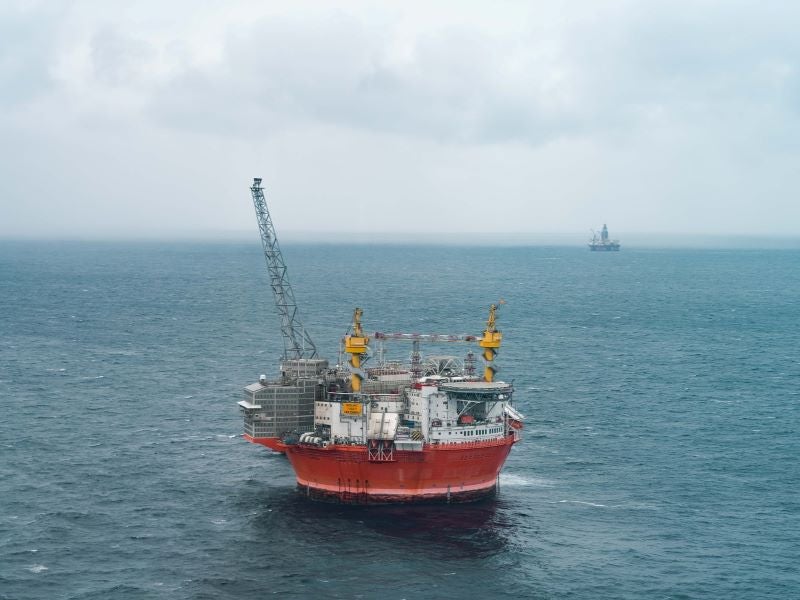
The Zagato discovery lies close to the Goliat field, around 8km north-east of the Goliat floating production, storage and offloading (FPSO) vessel, in water depths of around 410m.
Recoverable resources are estimated at 3.3–11.9 million standard cubic metres of oil equivalent, or 21–75 million barrels of oil equivalent (mboe).
Discovery details
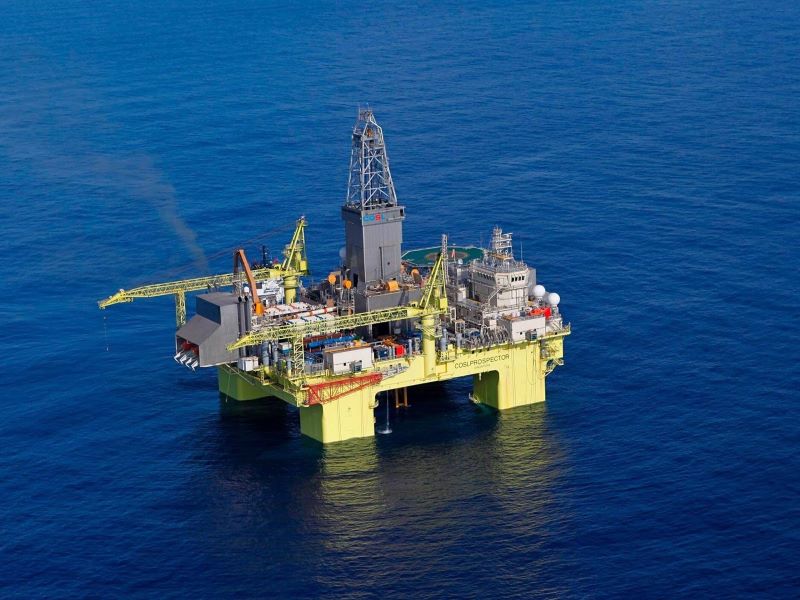
The Zagato discovery was made by wildcat well 7122/8-3 S, the 11th well drilled in production licence 229, drilled by the COSL Prospector rig.
The well was drilled as part of a two-year drilling programme undertaken in collaboration with Equinor and covering both infill development drilling and exploration targets.
The presence of hydrocarbons was proven in Lower Jurassic to Upper Triassic intervals within the Realgrunnen Subgroup and in Middle Triassic sands in the Kobbe Formation, with a total thickness of 189m.
In the Kobbe Formation, the well encountered oil-bearing columns totalling 72m across three separate reservoir zones, with the best reservoir properties in the upper section and moderate quality at the lower section, with no oil-water contact identified in this interval.
In the secondary targets in the Tubåen Formation, the well encountered a 3m oil column within a 20m package and showed excellent reservoir quality, with an oil-water contact encountered at 1,427m below sea level.
An additional 2m oil column was confirmed in the Klappmyss Formation within a sandstone structure of moderate quality.
The well reached 2,542m true vertical depth below sea level and was terminated in the Lower Triassic Klappmyss Formation. It was then temporarily plugged and abandoned.
Appraisal of Zagato oil discovery
Vår Energi completed appraisal work on the Zagato discovery in January 2026, confirming reservoir quality and supporting higher recoverable volumes.
Appraisal well 7122/8-3 A intersected a combined oil column of 63m in multiple oil-bearing intervals in the Kobbe Formation within a 38m reservoir section, which was assessed as moderate to good.
Oil-water contacts were observed at 2,098m and 2,187m below sea level in the upper and lower zones, while no contact was seen in the middle zone.
Two successful formation tests achieved peak oil flow rates of 738 standard cubic metres per day (sm³/d) on a 52/64in choke in the upper interval and 659sm³/d on a 60/64in choke in the middle interval, alongside gas-oil ratios of 95sm³/sm³ and 117sm³/sm³, respectively.
The appraisal well was drilled to 2,285m measured depth and 2,268m true vertical depth below sea level and was terminated in the Kobbe Formation. It was permanently plugged and abandoned.
Zagato field development plan
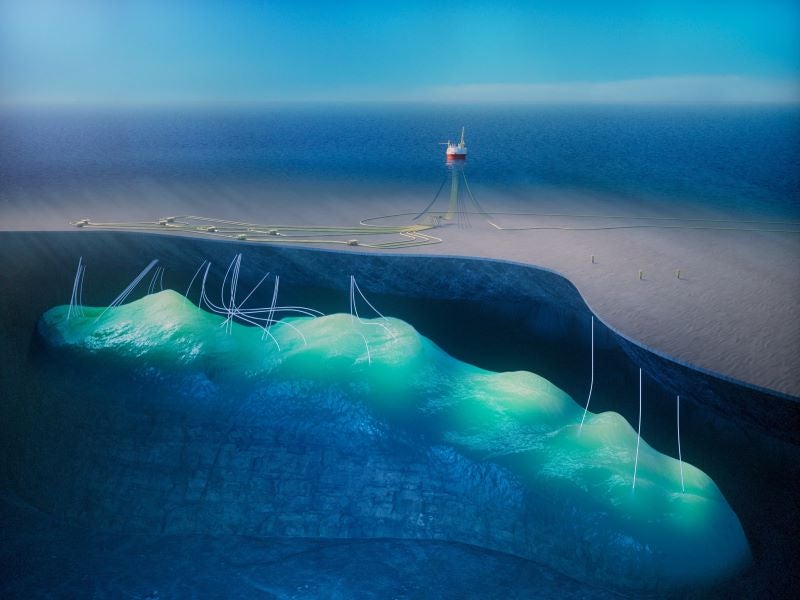
The Zagato field is expected to be developed as a tie-back to the Goliat FPSO.
The Goliat FPSO, operated by Vår Energi, was built by Hyundai Heavy Industries in Ulsan, South Korea. The FPSO was delivered in 2016 and has been in production since then.
The FPSO features a 90m-diameter hull with a storage capacity of 950,000 barrels of oil and a processing capacity of 100,000 barrels per day.
The platform can offload a total of 8,000m³ per hour. It is further equipped with 25 riser slots and can provide accommodation for up to 120 people.
