
New research led by UK-based Durham University suggests that a minimum distance of 0.6km from sensitive rock strata is required to undertake safe fracking operations.

Discover B2B Marketing That Performs
Combine business intelligence and editorial excellence to reach engaged professionals across 36 leading media platforms.
The probability of rogue fractures from shale gas fracking operations extending beyond 0.6km from the injection source is very low, while the probability of fractures extending beyond 350m is 1%, according to the study.
Richard Davies, Durham University director of Durham Energy Institute, said: "Based on our observations, we believe that it may be prudent to adopt a minimum vertical separation distance for stimulated fracturing in shale reservoirs."
"Such a distance should be set by regulators; our study shows that for new exploration areas where there is no existing data, it should be significantly in excess of 0.6km," added Davies.
"Minimum vertical separation distances for fracturing operations would help prevent unintentional penetration of shallow rock strata."

US Tariffs are shifting - will you react or anticipate?
Don’t let policy changes catch you off guard. Stay proactive with real-time data and expert analysis.
By GlobalDataThe research also concluded that the likelihood of ground water contamination is "negligible" while fracking at shallower depths in aquifers, when there is a separation of more than 1km.
Durham University, which collaborated with Cardiff University and the University of Tromsø for the research, said the analysis could be used across the world in setting a minimum distance between the depth of fracking and shallower aquifers used for drinking water.
The analysis surveyed data from several fracking operations in the US and natural and induced rock fractures from the US, Europe and Africa.
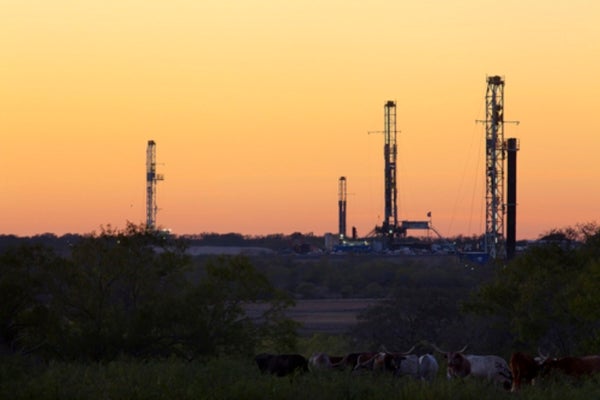
Image: The probability of rogue fractures from shale gas fracking operations extending beyond 0.6km from the injection source is very low, according to a new study. Photo courtesy of: Marathon Oil.


