

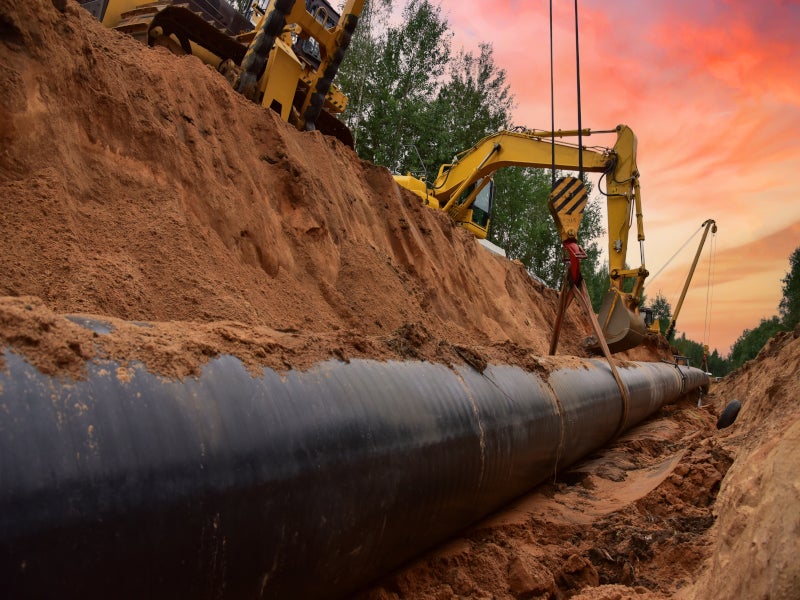
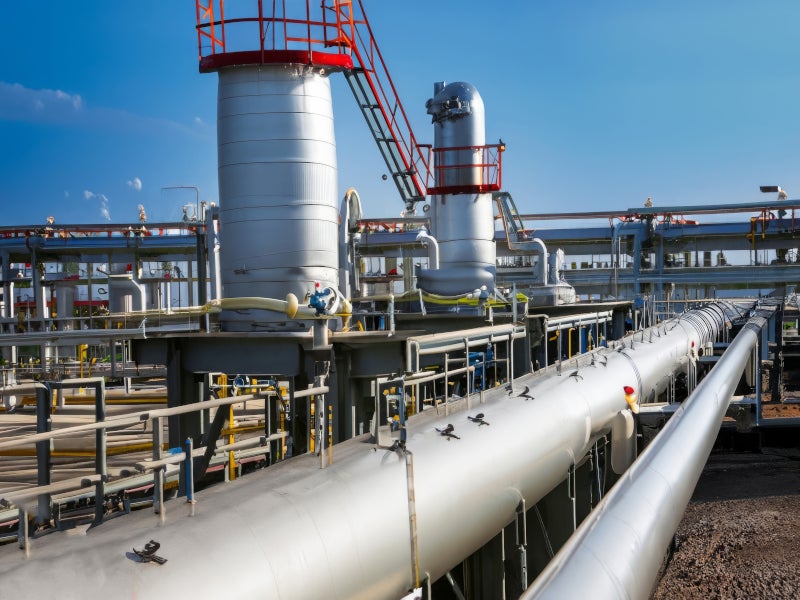

The Matterhorn Express Pipeline is a 510-mile (820.76km) intrastate natural gas pipeline in Texas, US.
It transports up to 2.5bcf/d of natural gas from the Permian Basin to the Katy area near Houston.
Recommended Buyers Guides

In May 2022, a final investment decision was made to proceed with the construction of the pipeline.
Construction on the Matterhorn Express Pipeline commenced in June 2023, and it was placed into service in November 2024.
The pipeline is operated by WhiteWater Midstream. It was previously owned by WhiteWater Midstream, EnLink Midstream, Devon Energy and Midstream Fuel Logistics & Distribution (MPLX).
In May 2025, I Squared, MPLX and Enbridge signed a definitive agreement to purchase equity stakes in the pipeline from Ridgemont Equity Partners and Devon Energy.
The project’s current ownership structure involves a joint venture (JV) named Matterhorn JV, in which WhiteWater Midstream holds a 65% stake, ONEOK holds a 15% stake, and MPLX and Enbridge have a 10% stake each.
WhiteWater Midstream’s stake in the Matterhorn JV is owned by FIC and I Squared Capital.
The project employed more than 3,500 skilled workers during construction and created 50 permanent jobs in Texas upon commencing operations.
Matterhorn Express Pipeline details
The Matterhorn Express Pipeline comprises a 510-mile, 36in and 42in diameter mainline.
The pipeline also includes two 36in laterals – the Waha to Rankin Lateral and the Stanton Lateral – in addition to six smaller laterals and four compressor stations.
The Waha to Rankin Lateral runs from the Waha compressor station in Pecos County, Texas, to the Rankin compressor station in Upton County, Texas.
The Stanton Lateral stretches from the Rankin compressor station to a meter station in Martin County, Texas.
The project also involved the installation of 21 meter stations, four temporary launcher/receiver sites, 36 mainline valve sites and four temporary contractor yards.
Pipeline route
The pipeline project crosses more than 17 Texas counties, spanning the Permian Basin and moving toward the Gulf Coast. Some of the counties include Austin, Burnet, Concho, Crane, Fort Bend, Glasscock, Irion, Lampasas, Lee, McCulloch, Midland, Reagan, San Saba, Tom Green, Waller, Wharton and Williamson.
The Matterhorn Express Pipeline begins in the Chihuahuan Desert ecoregion, extending from south-eastern Arizona to the Edwards Plateau in central Texas. This area includes Pecos, Crane and Upton Counties, making up 12.7% of the project.
Most of the gas pipeline runs east of the Pecos River, featuring basins and playas, towards the Stockton Plateau.
The Waha to Rankin Lateral and Stanton Lateral converge in the Edwards Plateau ecoregion, with the latter extending into the southern High Plains, which includes Crane, Upton, Midland, Glasscock and Reagan Counties, accounting for 12.3% of the project area.
Continuing east, the pipeline crosses the south-western Edwards Plateau, including Upton, Reagan, Irion, Tom Green, and Lampasas Counties, which represent 20.7% of the area. It then enters the Central Great Plains ecoregion, comprising Tom Green, Concho and McCulloch Counties, accounting for 12.7%.
The pipeline progresses into the Cross Timbers ecoregion and then the Texas Blackland Prairies, which includes Williamson, Washington and Austin Counties, covering 10.1% of the area. The project concludes in the Western Gulf Coastal Plain, representing 9.4% of the total area.
Eiger Express Pipeline details
In addition to the Matterhorn Express Pipeline, the Matterhorn JV is developing the 450-mile, 42in Eiger Express Pipeline in Texas, US.
The pipeline will carry up to around 2.5bcf/d of natural gas from the Permian Basin in West Texas to the Katy area near Houston.
It is being developed by the Eiger Express JV, which is 70% owned by the Matterhorn JV, 15% by ONEOK and 15% by MPLX. ONEOK’s consolidated interest in the pipeline amounts to 25.5%, reflecting its stake in the Matterhorn JV.
The project is backed by firm transportation contracts with terms of ten years or more.
WhiteWater will build and operate the pipeline, which is scheduled for completion in mid‑2028, subject to the receipt of customary regulatory and other approvals.
