

Fram Sør is a combined development of several discoveries located within the Norwegian North Sea.
The project is owned by Equinor Energy (45%, operator), alongside Vår Energi (40%) and INPEX Idemitsu Norge (15%). The partners plan to invest more than Nkr21bn ($2.2bn) in the project.
Recommended White Papers
Recommended Buyers Guides

The plan for development and operation for the project was submitted to the Ministry of Energy in June 2025 and approved during the same year.
First production from Fram Sør is set to begin towards the end of 2029.
Fram Sør Project location and reserves
Fram Sør is located on the Norwegian Continental Shelf (NCS) in the North Sea, covering licences PL090, PL090I and PL090E.
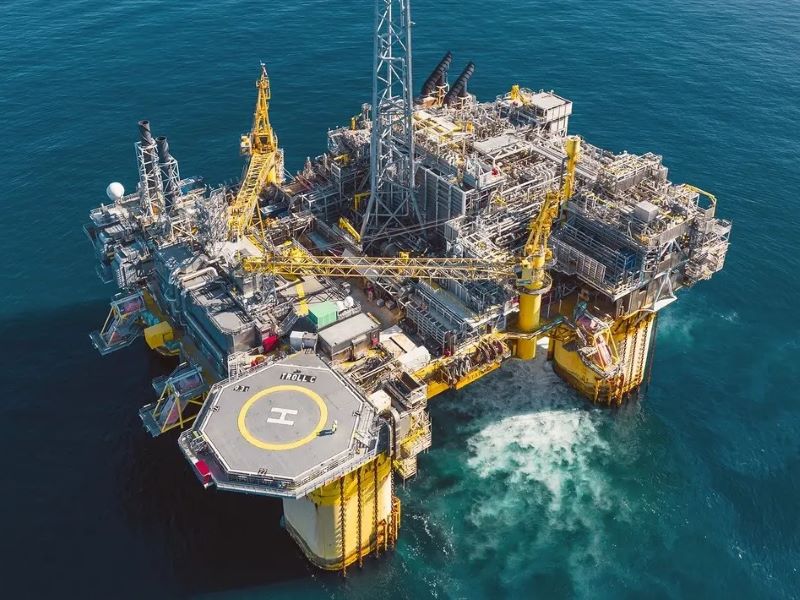
The development lies roughly 20km north of the Troll C platform at the Troll oil and gas field and around 120km north-west of Bergen, in water depths of around 350m.
The reservoir depth is estimated to be between 1,800m and 2,800m, with recoverable resources totalling 116 million barrels of oil equivalent (mboe), comprising approximately 75% oil and 25% gas.
Discovery details
The Fram Sør development includes the Echino South and Blasto discoveries, along with two smaller discoveries, Fram Vest (Fram West) and Dermata.
Equinor and its partners made the Echino South (Echino Sør) oil and gas discovery in November 2019 with the drilling of wildcat well 35/11-23. The discovery is located 3km from the Fram field in the northern area of the North Sea.
The 35/11-23 well was drilled by the Deepsea Atlantic drilling rig to a vertical depth of 2,946m below sea level. Within the main target, the well intersected two hydrocarbon-bearing sandstone packages in the Sognefjord Formation. The upper package contained an oil and gas column of approximately 25m, with reservoir properties ranging from good to exceptionally good.
In the secondary target interval, the well penetrated an aggregate oil and gas column of around 35m within the Ness and Etive Formations, including about 30m of sandstone with reservoir quality from moderate to very good.
In 2021, the same partnership announced the Blasto discovery by the wildcat wells 31/2-22 S and 31/2-22 A, drilled by the West Hercules drilling rig. The wildcat 31/2-22 A well was deemed dry.
The 31/2-22 S well encountered oil pay totalling approximately 30m within the upper Sognefjord Formation, along with a further oil column of around 50m in the lower Sognefjord Formation.
Fram Sør Project development details
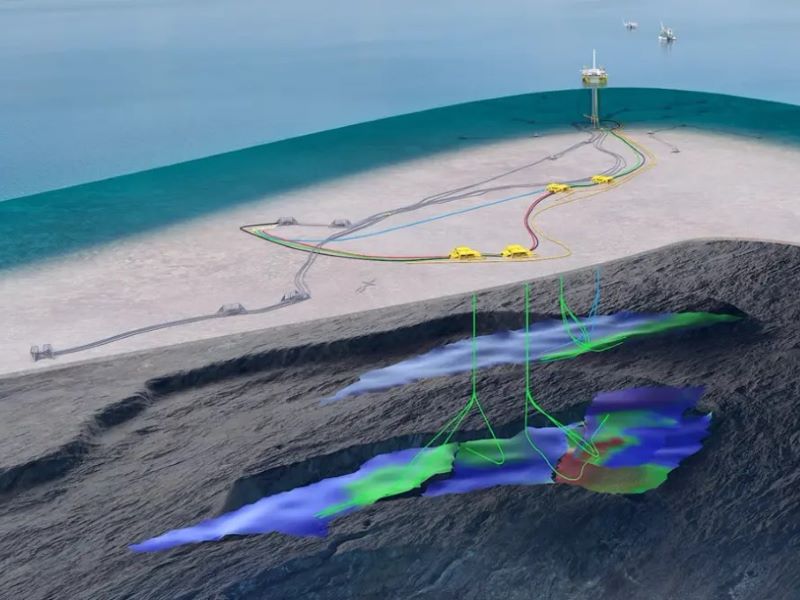
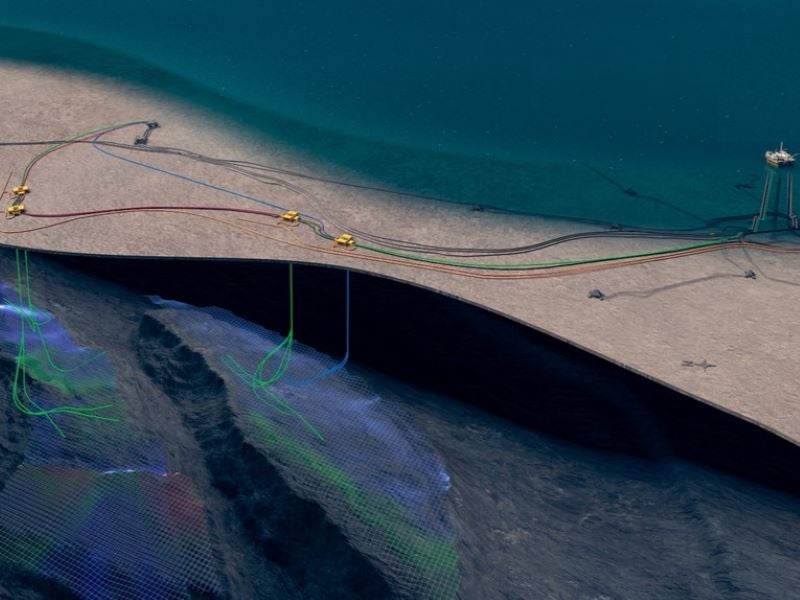
The Fram Sør development will be a subsea tie-back to the Troll C platform.
The field development plan includes four subsea templates with four slots each. For start-up, 12 wells are due to be drilled, with four additional slots reserved for potential later drilling in the Fram and Troll area.
The subsea system will connect to existing Fram infrastructure and route production to Troll C for processing and export. Oil from the Fram field is transported via Troll Oil Pipeline II to Mongstad, while gas is exported to Kollsnes through the Troll A platform.
Fram Sør is also set to introduce the world’s first large-scale electrically controlled subsea X-mas trees (eVXT). This removes the need for hydraulic fluid supplied from the host platform, improves monitoring of subsea equipment and reduces environmental risk.
The project has a CO2 intensity of around 0.5kg per barrel of oil equivalent, compared with averages of 8kg on the NCS and around 16kg across the wider industry, according to the International Association of Oil & Gas Producers 2023.
Power and systems control
Power and communications will be delivered through a direct current and fibre optic (DC/FO) link from Troll C to the subsea installations. The arrangement is designed to support future tie-ins, allowing the initially installed cable to be used to connect additional manifolds as the first connected field approaches depletion.
Using an all-electric subsea control system is also expected to cut the topside footprint and reduce umbilical and control system requirements compared with conventional electro-hydraulic solutions.
Contractors involved
Subsea7 secured the engineering, procurement, construction and installation contract in July 2025, covering subsea structures and flowlines, including 53km of production, gas lift and water injection lines, along with installation of the umbilical system. The contract follows a front-end engineering and design (FEED) contract awarded in January 2025 that finalised the technical definition, with offshore installation planned in 2026–28.
In August 2025, the SLB OneSubsea joint venture received an engineering, procurement and construction contract for the 12-well, all-electric subsea production system. SLB OneSubsea will supply four subsea templates and 12 all-electric subsea trees.
In July 2025, Aker Solutions won a contract to ready the Troll C topside to receive and process production from the Fram Sør tie-back. The scope covers engineering, procurement, construction, installation and commissioning, as well as services linked to the new subsea templates.
In the same month, Alcatel Submarine Networks was contracted to supply and install the DC/FO submarine all-electric cable infrastructure from Troll C.
