

The Barossa project is a gas and condensate field in the Bonaparte Basin of the Timor Sea offshore Australia. It is being developed along with the nearby Caldita field under the Barossa offshore development project.
The field is operated by Santos, an oil and gas company based in Australia, with a 50% working interest. Other partners in the field are SK E&S, an energy company based in Korea, with a 37.5% interest through its subsidiary Prism Energy International Australia, and JERA, a power company based in Japan, which holds the remaining 12.5% interest.
Recommended White Papers

Recommended Buyers Guides

The proposal for the development of the field was accepted by the National Offshore Petroleum Safety and Environmental Management Authority (NOPSEMA) in March 2018. The final investment decision of $3.6bn (A$4.98bn) on the project was made in March 2021.
The Environment Plan Revision 3 of Barossa drilling and completions was approved by NOPSEMA in March 2022.
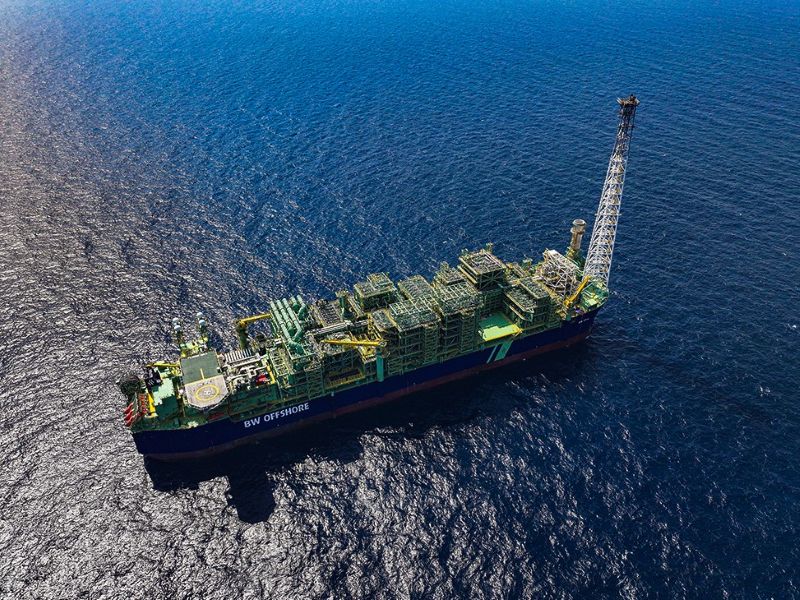
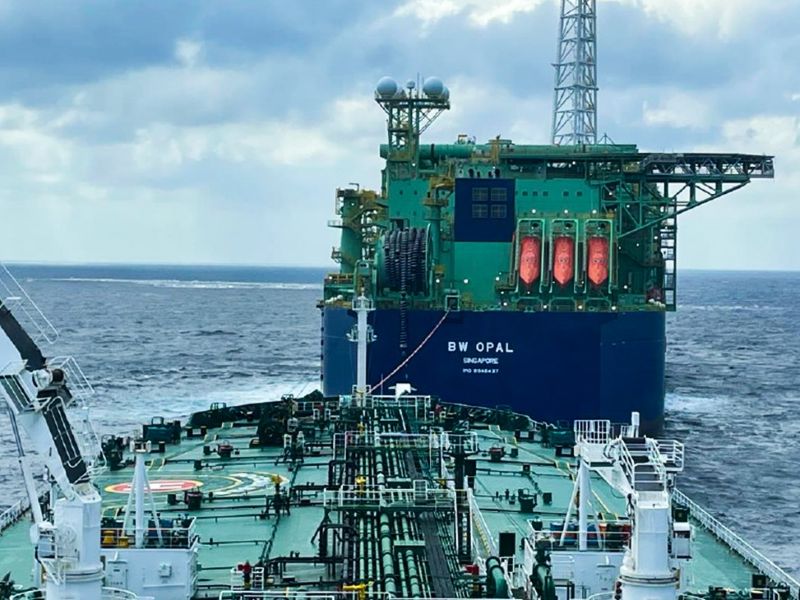
In September 2025, the BW Opal floating production, storage and offloading (FPSO) vessel received first gas into the facility, marking the start of production operations.
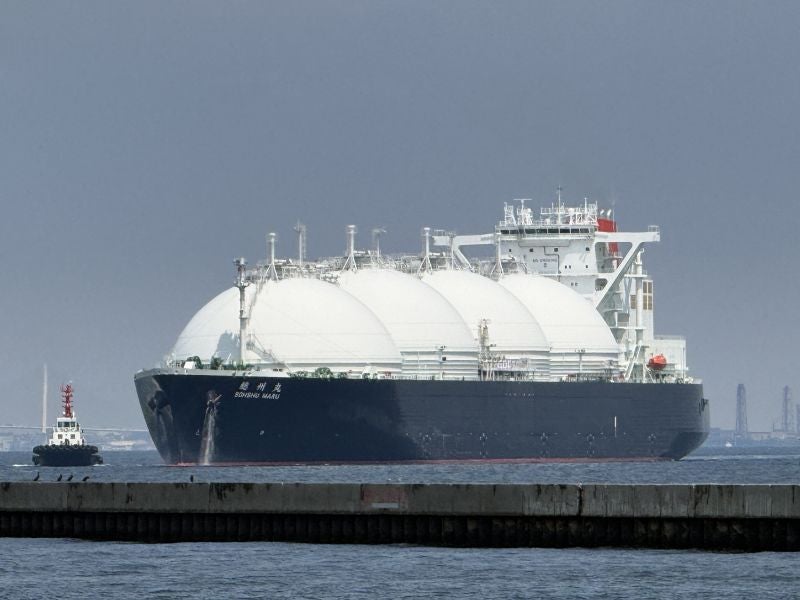
In June 2026, JERA confirmed the arrival of its first liquefied natural gas (LNG) cargo from the project, via LNG carrier the Sohshu Maru at the company’s Futtsu LNG terminal, signalling the start of LNG deliveries.
The project has an annual LNG production capacity of approximately 3.4 million tonnes and is expected to have a production life of approximately 25 years.
Location
The field is located within petroleum permit NT/RL5 in water depths of between 130m and 350m in the Commonwealth waters of the Timor Sea.
It is located approximately 140km north of Seagull Island and 285km offshore north-north-west of Darwin in the Northern Territory.
Barossa and Caldita discovery
Barossa was discovered in 2006 with the drilling of the Barossa-1 exploration well to a depth of 4,310m.
Two drill stem tests were conducted on the well, which confirmed the presence of gas. One test witnessed a flow rate of 30.1 cubic feet per day, while the second test witnessed 0.8 million cubic feet per day (mcf/d).
The Caldita field was discovered in 2005 by the Caldita-1 well and subsequently appraised by the Caldita-2 well in 2007.
Appraisal on Caldita-Barossa
The Barossa field has been appraised by a total of five wells. The first three wells, Barossa-2, Barossa-3 and Barossa-4, were part of a three-well appraisal programme that was completed in 2015.
Barossa-2 struck 88m of net pay in the Upper Elang, Lower Elang and Plover reservoirs, while Barossa-3 encountered 104m of net pay and Barossa-4 further confirmed the potential of the field.
A second appraisal programme consisting of two wells, Barossa-5 and Barossa-6, was completed in June 2017. The two wells confirmed reservoir productivity and provided critical data for field development planning.
Barossa-6 struck gas and condensate in the Elang reservoir located between depths of 4,103m and 4,144m. Tests conducted on the well resulted in a flow rate of 65mcf/d.
Barossa project development details
The field is being developed with the permanently moored BW Opal FPSO facility, a subsea production system, supporting in-field subsea infrastructure, the gas export pipeline and the Darwin Pipeline Duplication (DPD).
Plans include drilling up to eight subsea wells in the Barossa field, which includes contingency measures for two wells. Six wells positioned across three drill centres have intersected excellent reservoir quality.
Gas and condensate extraction from the wells are facilitated through the subsea production system, followed by transportation to the FPSO facility via a network of subsea infrastructure.
The initial processing takes place at the FPSO facility, where the natural gas, water and condensate extracted from the Barossa field are separated. The dry natural gas is then transported via the gas pipeline for further processing onshore at the existing Darwin LNG facility operated by Santos. The condensate is transferred from the FPSO to dedicated tankers for export.
BW Opal FPSO details
The BW Opal FPSO arrived at the Barossa gas field in June 2025 and was successfully installed.
The M350 hull-based FPSO measures 350m long, 64m wide and 33m deep and has been moored at the project site using a RapidFramework design.
The FPSO has a total cargo storage capacity of 2.2 million barrels. It can process up to 850 million standard cubic feet per day of raw gas and 11,000 barrels per day of stabilised condensate. It has a storage capacity of 850,157 barrels of oil and can also store condensate for periodic offloading.
The vessel features standardised living quarters for 160 people, a submerged cargo pumping system, Davit-launched or free-fall lifeboats and a helideck with or without helicopter parking. Its topside deck area is 20% larger than standard very large crude carriers’ tankers.
Pipeline details
The project included the installation of the 262km Barossa gas export pipeline and a 23km section of the DPD to transport the produced LNG to the Darwin LNG facility.
The final investment decision for the development of the DPD pipeline was made in August 2022.
The project included the replication of a portion of the existing Bayu-Undan pipeline and incorporates a shore crossing at Wickham Point within the Greater Darwin area.
Offtake agreement details
In December 2020, Santos signed a sales and purchase agreement with Diamond Gas International, a subsidiary of Mitsubishi, to supply 1.5 million tonnes per annum of LNG from the project for ten years.
JERA signed an offtake agreement for approximately 425,000 tonnes per annum of LNG from the field in line with its equity share.
Financing
The project secured $1.15bn of debt financing from a syndicate of nine international banks: ABN Amro, Clifford Capital, Cooperative Rabobank, the Korea Development Bank and Natixis, as well as Oversea-Chinese Banking, Sumitomo Mitsui Banking, UFG Bank and the United Overseas Bank, for the construction of the FPSO in August 2021.
The project also had financial support from the Export-Import Bank of Korea and Korea Trade Insurance.
Contractors involved
BW Offshore, a floating production services provider, secured a ten-year lease to operate the BW Opal FPSO in March 2021, handling engineering, procurement, construction, installation and operation.
Subcontractors include SK Oceanplant, a shipbuilding company, for hull fabrication; NOV APL, an offshore technology service provider, for the submerged turret production system; Dyna-Mac Engineering, a construction company, for topside modules; and FG Industry, an offshore engineering company, for detailed engineering.
Subsea 7, an offshore engineering company, managed the transportation and installation of subsea infrastructure.
Allseas, a pipelay and subsea construction company, provided engineering, procurement, transport and installation for the gas export pipeline, with Van Oord, a marine contractor, and DEME, an offshore contractor, handling trenching and pipe pull operations.
Shawcor, a materials science company, provided coatings for the pipeline. Technip FMC, an energy technology company, supplied the subsea production system.
MODEC International managed FPSO engineering, procurement, construction and installation, preceded by a front-end engineering design (FEED) contract. A consortium of TechnipFMC and Samsung Heavy Industries worked on the FEED for the FPSO.
INTECSEA (now part of Worley Parsons Group) was awarded a FEED contract for the subsea infrastructure.
ABB was responsible for supplying essential equipment including a massive E-House, Integrated Control and Safety Systems and advanced digital solutions, intended to support safe and efficient FPSO operations.
