

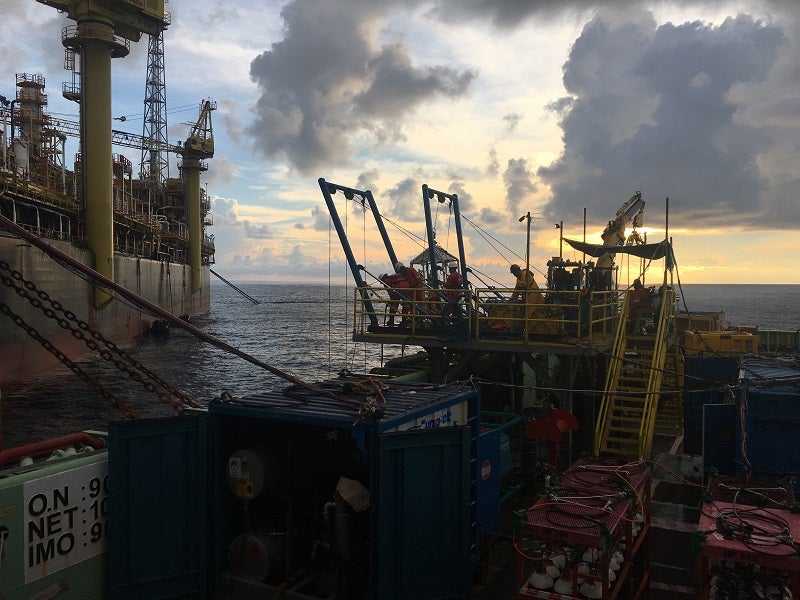
Some oil market leaders seem to have black-listed Petrofac after 2017 SFO probe.
The London-listed oilfield services company blamed the scarcity of new contracts for the 5.13% decline in full-year revenue as it announced 2019 results. Petrofac warned the revenue slide could spill over into at least 2020 full-year results.
Go deeper with GlobalData

Access deeper industry intelligence
Experience unmatched clarity with a single platform that combines unique data, AI, and human expertise.
After coming out on the wrong side of the corruption probe that closed with a senior executive pleading guilty to 11 counts of bribery, it looks like Petrofac has lost the trust of some of its most relevant customers in the past.
In a sector where trust is highly valued, it seems difficult for Petrofac to recover its past levels of revenue after falling out of favour with leading countries in the oil production and distribution business.
Although the company has not commented on any specifics regarding the cause of the contraction in revenue at this year release, last year it pointed at the failure to win new contracts in Saudi Arabia and Iraq as the main reason for the low intake of new orders.
This happened after those two countries were cited by Petrofac in the corruption probe launched by the Serious Fraud Office (SFO) on the oilfield services company as part of a wider probe into Unaoil. The SFO investigation into Petrofac cost the oilfield services company future work contracts in both countries worth $10bn last year.
US Tariffs are shifting - will you react or anticipate?
Don’t let policy changes catch you off guard. Stay proactive with real-time data and expert analysis.
By GlobalDataBut the negative consequences of that may last longer than the own Petrofac forecasted in its last released annual report, where it estimated that future growth would rely heavily on the rise of oil production in the Middle East.
Petrofac sells an optimistic future but the stock market seems doubtful
Petrofac CFO Alastair Cochran argued that the company has not been formally barred from bidding in any market, so it does not rule out winning contracts there in the future. He also stressed the fact that Saudi Arabia and Iraq combined represented less than 20% of its overall revenues.
Additionally, Petrofac has based its optimistic message on this being a transition year, arguing that even though last year revenue dropped, profits went up. Although its main division, engineering and construction, saw a significant drop in net profit.
Given those contradictory signs, the stock market has shown mixed reactions to this situation. Whereas Petrofac has lost around 10% of share value in the last year, shares have gone up every time the oilfield services company has released financial results.
Petrofac has recently announced that it does not plan to lower dividends and it is expected to increase them up to $0.40 in an attempt to keep share value stable over this proclaimed transition period.

