

Inherently plagued by hard-to-abate emissions, this week’s DECARBON Congress is spotlighting the innovations that are reimagining oil and gas’ (O&G) dirty image.
Grey hydrogen is part and parcel of activities across the sector, used in hydrocracking, hydrotreating and desulphurisation, as well as ammonia and methanol production. However, grey hydrogen is increasingly becoming an unattractive stain on decarbonisation strategies; produced from natural gas via steam methane reforming, it is cheap – but without the expensive addition of carbon capture, it is also dirty.
Go deeper with GlobalData


Discover B2B Marketing That Performs
Combine business intelligence and editorial excellence to reach engaged professionals across 36 leading media platforms.
“If you look at grey hydrogen, no one is interested in it, but the grey hydrogen production cost is about €0.90–2.20 [per kilogram (kg)]. If you do carbon capture and sequestration, the cost increases by 50–100%,” explained Ray Fletcher, engineer and CTO of Alléo Energy.
Speaking on a panel on 9 February, he was presenting the company’s biomass-to-green hydrogen technology, which uses industrial cellulosic waste such as excess sawdust produced by sawmills to produce carbon-negative hydrogen, while turning a profit.
“There are no scale issues involved in this technology,” said Fletcher. “Furthermore, the price of production cost for green hydrogen is less than €1.70/kg.”
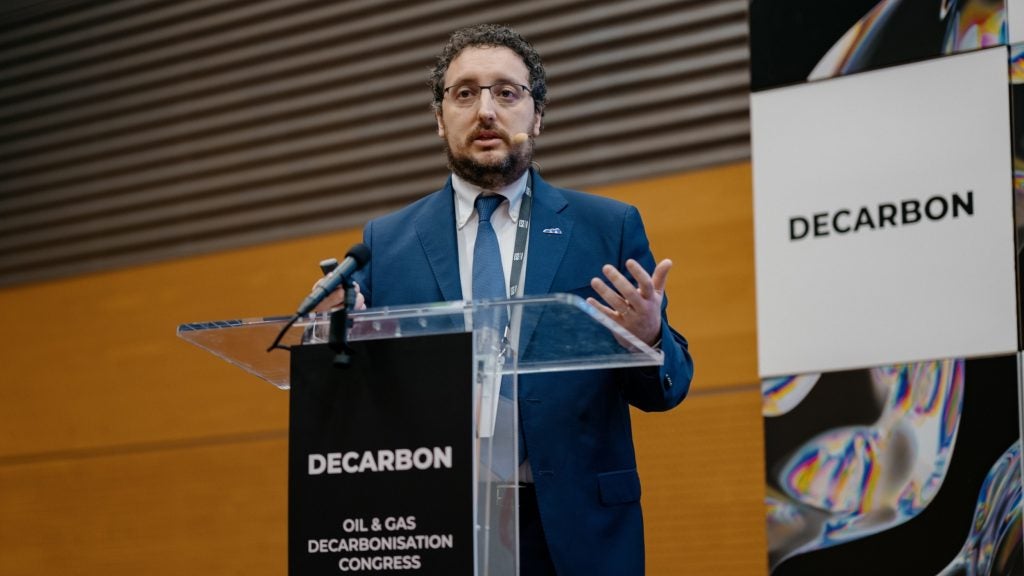
Low-carbon hydrogen, in particular green hydrogen, is crucial to the sector’s clean up, and Alléo Energy wasn’t the only company touting new low-carbon solutions in the hydrogen space. Fabio Ferrari, department head for circular carbon and integration solutions at NextChem, offered the integration of the company’s new catalytic partial oxidation technology as a means of decarbonising hydrogen.
US Tariffs are shifting - will you react or anticipate?
Don’t let policy changes catch you off guard. Stay proactive with real-time data and expert analysis.
By GlobalData“It is not exactly a new technology by itself,” he told delegates, “but up to now, nobody has really had the opportunity to install these solutions. Why? Because nobody was really looking at the decarbonisation intelligence.”
Another positive phrase in discussions was ‘blue hydrogen’, which involves the use of carbon capture and storage (CCS), driving up costs but driving down emissions. CCS solutions promise to be the conference’s other hot topic, and leveraging them as a decarbonisation tool in existing gas value chains could enable the production of large volumes of clean hydrogen.
“In specific fields, we can move towards blue hydrogen production, which will be essential to reach 2030 and 2050 requirements in the industry, regardless of any push from the industry or from governments,” noted Ferrari.
Governments also formed a central part of conversation. The consensus of speakers at DECARBON 2026 was that current EU hydrogen regulation is too restrictive, as well as overly prescriptive and poorly aligned with real project economics.
Current EU criteria considers green hydrogen to be a renewable fuel of non-biological origin (RFNBO), meaning that the electricity used to produce it must be from renewable, non-biological sources (thus excluding biomass); must achieve a minimum 70% greenhouse gas emission reduction compared to fossil fuels; and must be produced in the same bidding zone as the electrolyser. RFNBOs must also comply with specific regulations around additionality and temporal and geographical correlation.
Eurogas policy advisor Camilla Montemurro argued that “the European Commission has adopted a very restrictive definition of what is renewable hydrogen, according to them, and that is just peripheral views – but isn’t it true that there are other options that provide a very broad potential? That is the case in bio-based, renewable hydrogen;[…] I don’t think they have this bigger picture in mind.”
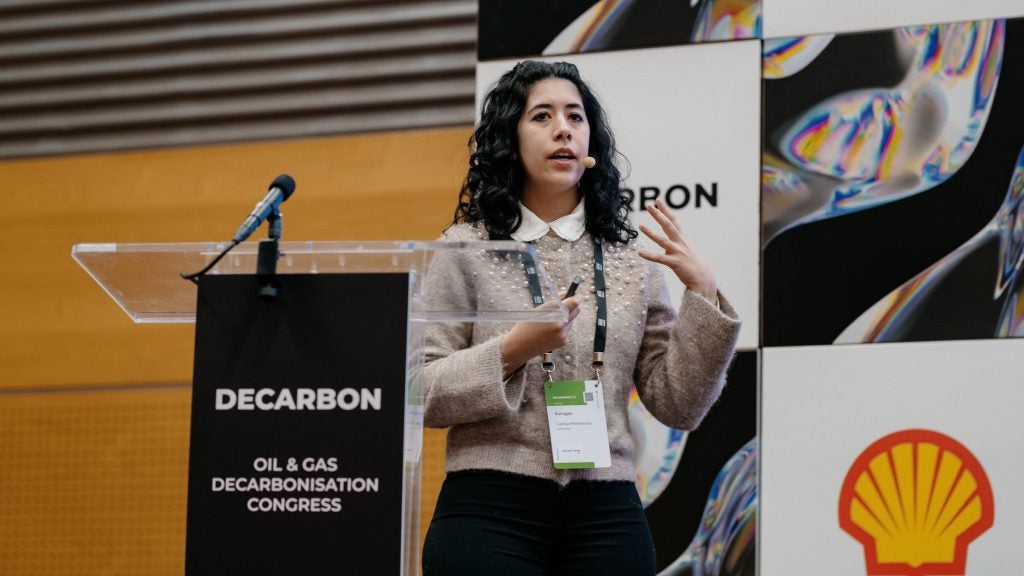
Asked for a final message, the low-carbon hydrogen panel echoed each other decisively in their call for either less, or improved, regulation. “Less regulation and more pragmatism” was Montemurro’s succinct conclusion.
Italgas’ head of engineering and investment execution Valeria Vignolo offered a subtly different, but equally succinct, echo: “Less regulation, but supportive regulation.”
Offshore Technology is in attendance at DECARBON 2026, with associate editor Eve Thomas available for interviews on the ground. Contact her at eve.thomas@globaldata.com to arrange timings and discuss topics.


