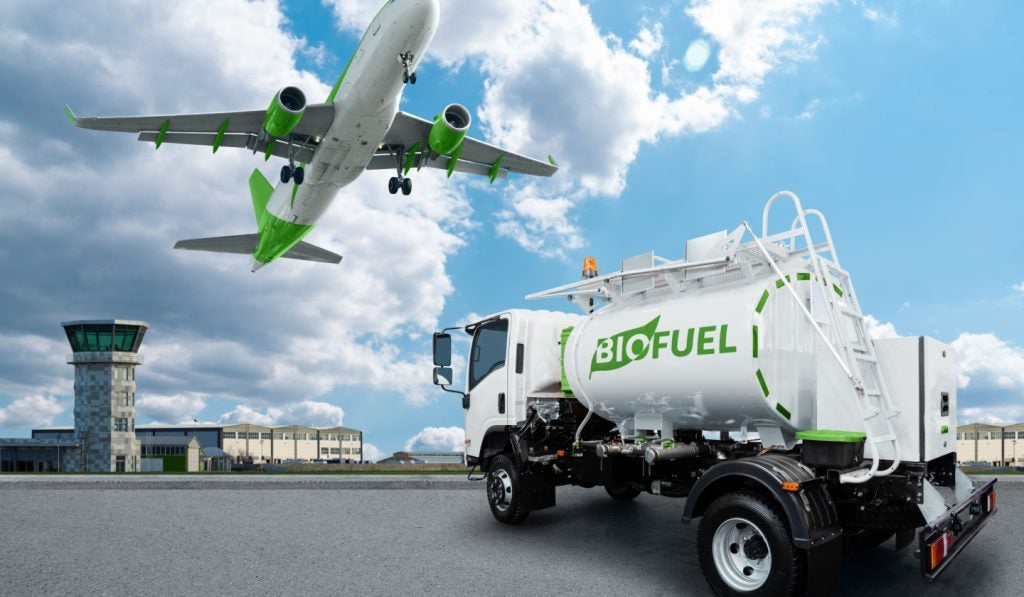
The European Parliament accepted new rules that will increase the quantity of sustainable aviation fuel (SAF) in flights departing from EU airports. The rules stipulate that a steadily increasing amount of green jet fuel must be blended with kerosene, with the level increasing every five years. The legal obligation will begin at 2% of a tank in 2025, increasing to 20% in 2035 and reaching 70% in 2050.
SAFs are made from renewable biomass and waste resources. They can deliver the same performance as petroleum-based jet fuel but emit up to 80% less carbon emissions. The International Air Transport Association estimates that SAFs could contribute around 65% of the reduction in emissions needed for the aviation industry to reach net zero by 2050.
At a plenary sitting of the European Parliament in Strasbourg, MEPs voted overwhelmingly in favour of the SAF law, with 518 votes in favour, 97 votes against and eight abstentions.
Greens MEP Ciarán Cuffe said in a statement: “Sustained industry pressure to quash measures that challenge their polluting business model means that greening aviation is so much harder today. This new law, however, marks an important point of departure from the industry’s reliance on fossil fuels.”
Despite the approval of such a law, the move to sustainable aviation is fraught with difficulty. In May 2023, Boeing CEO David Calhoun said that SAFs will “never achieve the price of jet fuel”. According to Calhoun, unless the SAF industry achieves drastic economies of scale, Jet A, a kerosene aviation fuel, will always remain cheaper than SAFs.
Nick Wyatt, head of research and analysis for travel and tourism at GlobalData, commented: “There are costs associated with a transition to greener technologies. Some of this may need to be passed on to travellers at least in the short term, but given that many consumers extol the virtues of environmentally friendly solutions, we may see a greater willingness to accept them for this purpose.”
The Financial Times reported that the move to zero-emissions plans powered by SAFs will require $323.3bn of investment on top of a tax.
The law must still gain approval from member states in the Council before being passed and entering into force on 1 January 2024.