

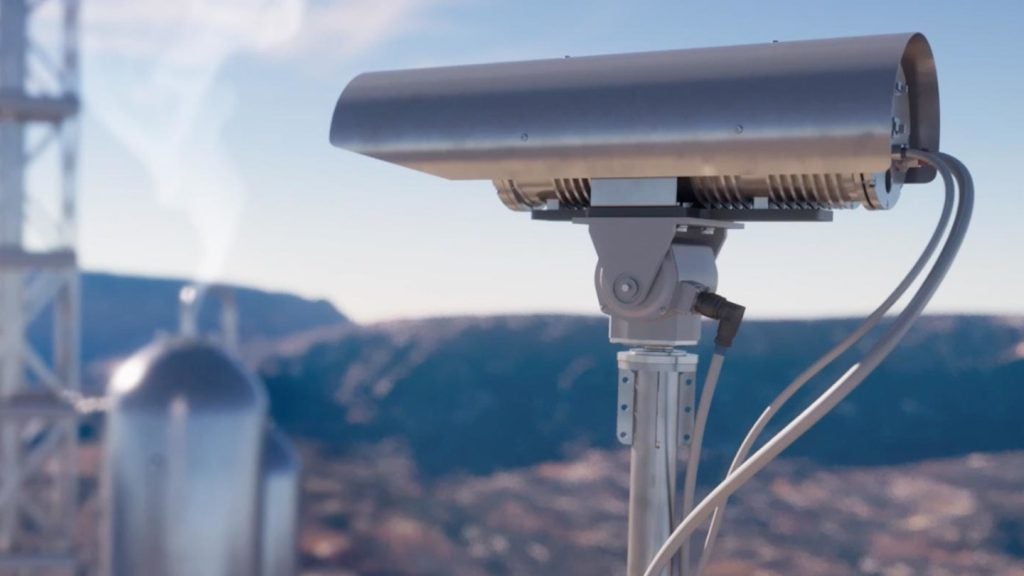
Global energy technology company SLB’s Methane LiDAR Camera has received the green light from the US Environmental Protection Agency (EPA) as an alternative test method (ATM) for methane detection.
This technology was developed in compliance with the EPA OOOO standards, which target the reduction of fugitive methane emissions, a potent greenhouse gas (GHG).
The Methane LiDAR Camera offers autonomous measurement with component-level spatial resolution.
This capability allows for differentiation between fugitive leaks and permitted emissions, negating the need for secondary measurements.
Oil and gas operators, with the EPA's ATM approval, can now leverage the LiDAR solution as a stand-alone detection technology, streamlining the process and moving away from traditional, labour-intensive optical gas imaging (OGI) surveys.
SLB Emissions business manager Ravi Peddibhotla said: “Advanced technology solutions are crucial to address the industry’s emissions of methane – a potent GHG with a near-term warming impact up to 80 times that of CO₂.
“Unlike other EPA-approved technologies, the Methane Lidar Camera's spatial resolution allows it to identify emissions sources precisely, preventing false alarms from permitted methane vents. This will enable our US customers to improve their compliance and more efficiently mitigate fugitive emissions from their operations.”
The Methane LiDAR Camera has been approved for all leak resolution thresholds under the regulation and works under various conditions, including day and night, and in the presence of other gases.
Its laser imaging technology provides visualisation and quantification of emissions, including duration, rates, location and timing.
Operators can remotely access measurements and images through a digital platform, which aids in the management of leak detection, repair activities and compliance reporting.
To date, SLB has installed 100 Methane LiDAR Cameras in four continents, the company said.
In December of the previous year, SLB introduced its AI-powered Neuro autonomous geosteering technology, further enhancing the efficiency of drilling operations.