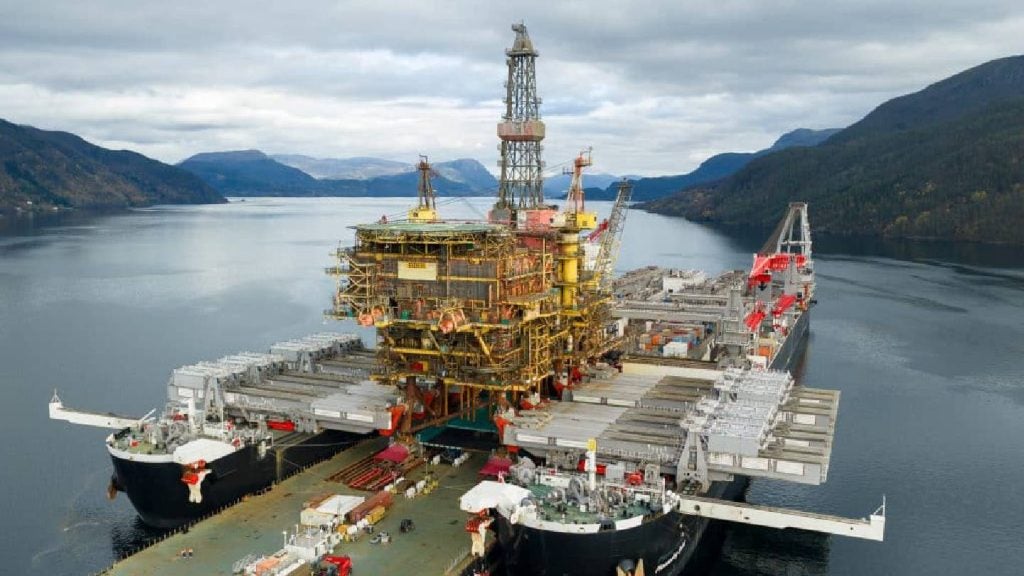
TAQA UK has achieved a major milestone in its North Sea decommissioning programme with the removal of the Eider Alpha topsides from the northern North Sea.
Eider is the first offshore platform in this region to reach the topside removal and dismantling phase.
The 11,640-tonne (t) structure was lifted by the Pioneering Spirit, a heavy-lift vessel operated by offshore contractor Allseas. It was transported to the AF Environmental Base in Vats, Norway, for dismantling.
TAQA said that the operation aligns with its objective to recover up to 97% of materials from its decommissioning projects.
The removal follows extensive planning and a 90-day preparation phase to ensure a safe and efficient lift. It is part of a series of offshore lifts scheduled under a long-term contract awarded to Allseas in 2022.
With production having ceased at Eider, the removal reduces operational emissions, supporting TAQA UK's decommissioning strategy for late-life assets, said the company.
TAQA UK managing director Sandy Hutchison said: “The removal of Eider heralds a new phase for TAQA UK as we enter the dismantling stage of our northern North Sea [NNS] portfolio.
“It underlines our expertise and leadership in safe and efficient late-life operations and decommissioning and speaks volumes for the efforts of our teams and suppliers who have delivered this project safely and responsibly.
“Our first major decommissioning project, Brae Bravo in 2022, was one of the largest topside removals in the North Sea, setting the standard for future decommissioning while demonstrating TAQA’s position as a pioneer in this field.”
TAQA UK said the engineering, preparation, removal and disposal contract for its NNS assets is the largest decommissioning contract awarded in the UK.
In addition to Eider, Allseas will handle decommissioning for the North Cormorant, Tern and Cormorant Alpha platforms.
The dismantling of Cormorant Alpha and Tern topsides will be conducted at Able Seaton Port in the UK, reflecting TAQA UK’s commitment to supporting the local energy sector and communities.
Installed in 1988, Eider has significantly contributed to the UK’s energy security, producing around 175 million barrels of oil equivalent over its operational life.
The platform supported production from the Otter field through subsea infrastructure.