

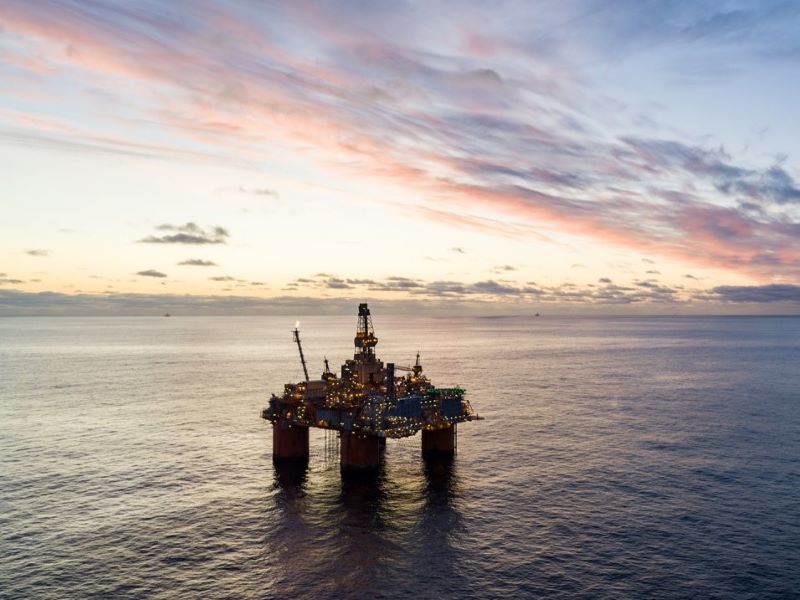
Askeladd Vest is an offshore gas development in the Snohvit area of Norway’s Barents Sea.
The field is jointly owned by Equinor Energy (36.79%, operator), Petoro (30%), TotalEnergies EP Norge (18.40%), Var Energi (12%) and Harbour Energy Norge (2.81%).
Recommended White Papers

Recommended Buyers Guides

The financial investment decision on the project was reached by partners in April 2021, announcing an investment of approximately Nkr3.2bn ($336.1m).
In November 2024, the Norwegian Ocean Industry Authority granted Equinor consent to bring the Askeladd Vest facilities into use.
Production from the Askeladd Vest gas field commenced in September 2025.
Askeladd Vest location and reserves
Askeladd Vest is located in the southern Barents Sea, offshore Norway, in block 7120/7 of the Snohvit Field area.
Recoverable volumes from the field are estimated at roughly 15 billion cubic metres (bcm).
Discovery and appraisal
Askeladd Vest was discovered in 1982 with the drilling of well 7120/7-1 on the Ringvassoy Loppa Fault Complex to test Middle-to-Early Jurassic sandstones in the Alpha structure.
The well was drilled in July 1982 using semi-submersible drill-ship the Neptuno Nordraug and reached a total depth of 2,839m in Late Triassic Tubaen Formation sediments.
Wireline logging of the pilot hole confirmed a gas-bearing sandstone between 375m and 392m. Hydrocarbon-bearing intervals were identified within the target Sto Formation sandstone sequence from 2,408m to 2,473m, with the sands interpreted to have good to excellent reservoir quality.
Faint indications were also observed in claystones from 1,941m to 2,172m, along with occasional shows in the lower Hekkingen Formation.
The well was permanently abandoned in October 1982 as a gas discovery.
Two drill stem tests were carried out in the Middle Jurassic Sto Formation sandstone. The first covered the water leg between 2,487m and 2,505m.
The second test targeted the gas interval from 2,415m to 2,435m. It produced 489,000m3 of gas and 18.8m3 of condensate through a 48/64in choke. A planned multi-rate programme was abandoned after a gas leak was detected in the riser.
Askeladd Vest subsea gas field development details
The Askeladd Vest subsea development comprises two wells, 7120/7-K-3 H and 7120/7-K-4 H, drilled by the Transocean Enabler semi-submersible.
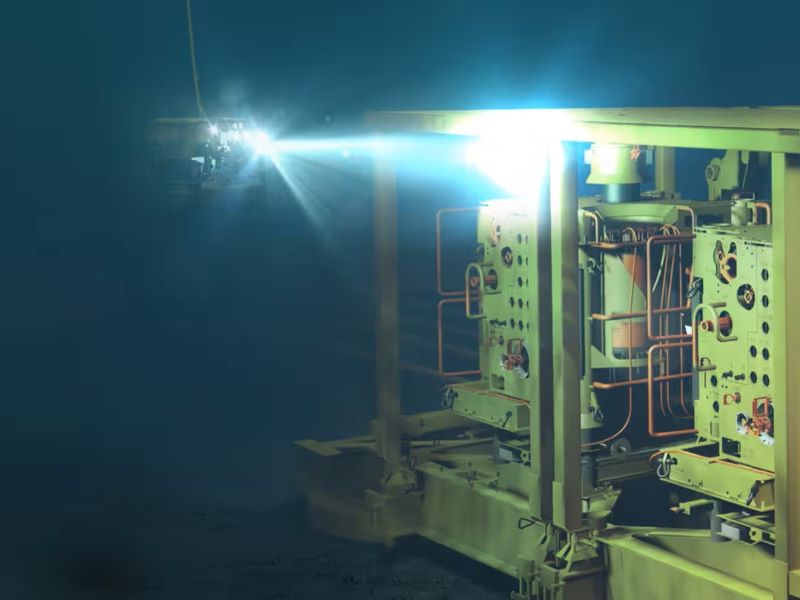
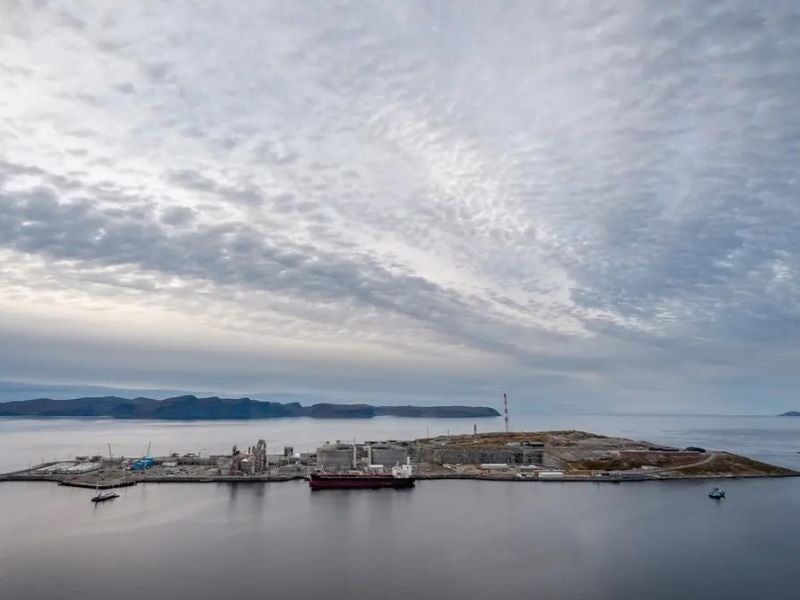
The wells sit on a new subsea production facility comprising a well template and two subsea trees, tied back by pipeline and umbilical to the Askeladd field, which started up in 2022. Gas is transported through a combined 195km pipeline system to shore for processing at the Hammerfest liquefied natural gas (LNG) terminal on the island of Melkoya.
The development supports throughput at Hammerfest LNG ahead of the Snohvit Future project, which is scheduled to introduce onshore compression from 2028. The LNG terminal has an annual output capacity of 6.5bcm.
According to a GlobalData report, Norway continues to lead the offshore gas sector with multiple new and expansion projects expected by 2030, reflecting robust investment and reinforcing the Barents Sea’s position as a growth hub for LNG and subsea technology.
Contractors involved
Aker Solutions was contracted to supply the subsea production facility under a deal estimated at around Nkr460m.
TechnipFMC received a letter of intent (LoI) in June 2020 for pipelay and subsea installation work valued at Nkr1.8bn, while German manufacturer Butting supplied pipeline materials.
Nexans received a LoI in April 2021 to deliver static subsea umbilicals integrating power, fibre-optic communications and hydraulic functions for chemical injection, plus associated termination equipment, under a contract valued at around Nkr100m.
In November 2023, Completion Tracer secured a contract to install chemical tracers in the production wells for monitoring along the export route.
