

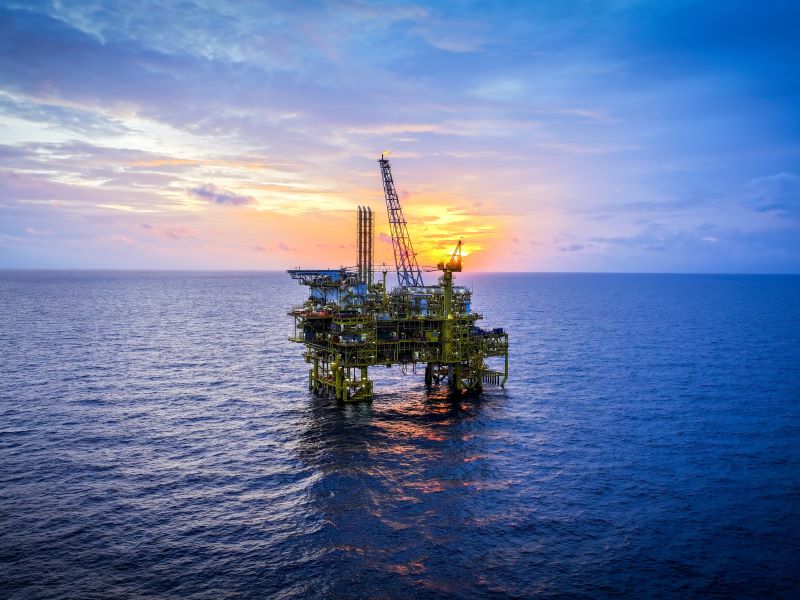
The Cronos gas field is an offshore development located in Block 6, within Cyprus’s exclusive economic zone in the Mediterranean Sea.
Cyprus awarded the Block 6 exploration licence in April 2017 following the country’s third licensing round. The field is being developed by a 50:50 partnership of TotalEnergies and Eni. Eni Cyprus, a subsidiary of Eni, is acting as the operator.
Recommended Buyers Guides

In February 2025, the Block 6 partners signed a Host Government Agreement (HGA) with Egypt and Cyprus to support development of the Block 6 gas resources.
Under the arrangement, production from Cronos would be fast-tracked by sending the extracted gas to Egypt for processing through existing offshore infrastructure at the Zohr field, before being transported to the Damietta LNG terminal for liquefaction and export into European markets.
Following the agreement, work progressed on the Cronos development and production plan in coordination with the Cypriot authorities.
In October 2025, Egypt and Cyprus signed agreements covering the operational and commercial frameworks for the transport, supply, treatment, and liquefaction of gas from the Cronos field for export, while also setting out how Egypt’s existing infrastructure will be utilised for the project.
Another agreement was signed by the Egyptian Natural Gas Holding Company (EGAS) with Eni and TotalEnergies regarding the handling, processing and transport of gas for the project.
The final investment decision for the project is expected in the first half of 2026.
Cronos gas field location and reserves
The Cronos gas field lies 160km offshore Cyprus in water depths of 2,287m. The discovery is estimated to hold more than three trillion cubic feet (tcf) of gas in place.
Cronos gas field discovery
TotalEnergies and Eni announced the Cronos-1 discovery in August 2022 after drilling in Block 6 using the Tungsten Explorer drillship.
The well encountered a significant gas-bearing interval in carbonate reservoirs, which were assessed as fair to very good. Data acquisition indicated more than 260m of net pay, including higher-permeability sections, supporting early work on accelerated development concepts.
Cronos-1 was Eni Cyprus’s fourth exploration well and the second drilled in Block 6, after the Calypso-1 discovery in 2018 and the Zeus discovery reported in 2022. It also pointed to further exploration potential in the nearby areas.
Appraisal details of Cronos field
Appraisal of the Cronos gas field followed in February 2024, when the companies announced the completion of drilling and a production test at the Cronos-2 appraisal well.
The appraisal well is located 160km south-west of Cyprus and approximately 3km from Cronos-1. It was drilled to confirm the lateral extent of the Cronos discovery, previously identified by the Cronos-1 exploration well, and to evaluate reservoir performance through flow testing, which indicated strong deliverability.
Cronos-2 intersected several carbonate intervals with a net reservoir thickness of 115m. The results were consistent with the reservoir sequence seen at Cronos-1 and supported the interpretation of a connected gas column with hydraulic communication and high-permeability intervals.
The production test indicated that, in its production set-up, the well could deliver more than 150 million standard cubic feet per day (mmscfd), providing a key input to ongoing evaluations to identify the most suitable fast-track development route.
Zohr gas field and Damietta LNG plant details
The intended route for Cronos gas links to Egypt’s Zohr development and the Damietta LNG plant.
The Zohr gas field is located offshore in Egypt’s Mediterranean waters within the Shorouk concession, 190km north of Port Said. The concession covers 3,765km² and was awarded to Eni in 2013.
The Damietta LNG facility is operated by Damietta LNG Company, previously known as SEGAS. Damietta LNG Company is a 50:50 joint venture between the Egyptian Ministry of Petroleum and Eni.
The LNG plant has a liquefaction capacity of 7.56 billion cubic metres a year and has been offline since November 2012, with its first cargo after restart loaded in February 2021.
