

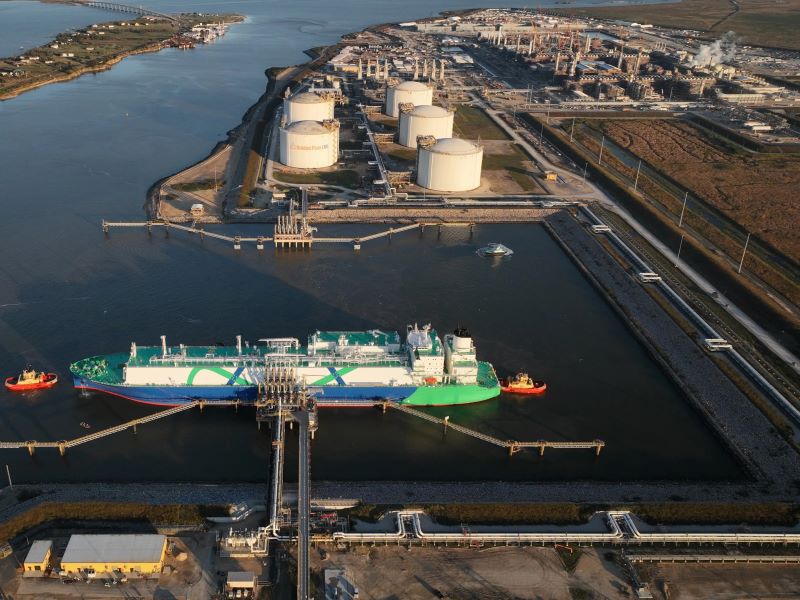
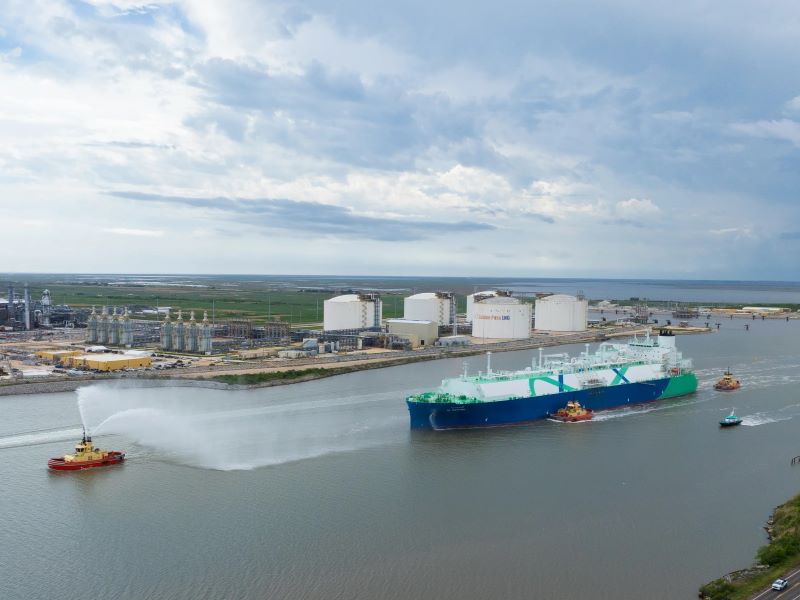
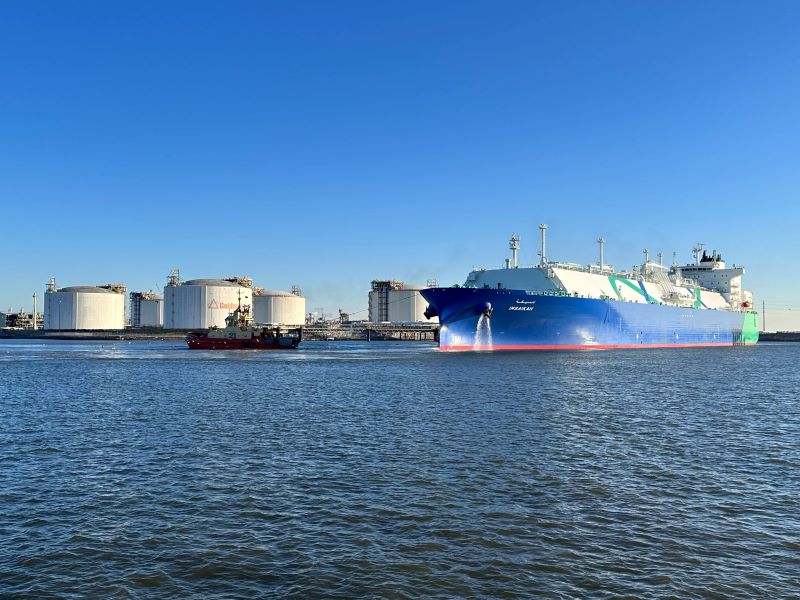
Golden Pass LNG is a liquefied natural gas (LNG) receiving terminal located near Sabine Pass, Texas, and an associated pipeline connecting to existing US pipeline infrastructure.
The $1bn project is a joint venture between Qatar Petroleum (70%) and ExxonMobil (30%). Construction of the project began in November 2003 and operations commenced in 2010.
Recommended Buyers Guides

The terminal imports gas from various domestic natural gas sources such as the Haynesville, Eagle, Permian, Marcellus and Barnett basins, as well as the Ford Bossier, Utica and Mid-Continent basins. It has the capacity to process 15.6 million tonnes per annum (mtpa) of LNG, which is equivalent to approximately two billion cubic feet of natural gas a day (bcf/d).
A new liquefaction and export facility was proposed in 2012 to be constructed adjacent to the existing LNG import terminal on a 919-acre site along the Sabine Neches waterway.
First gas from Train 1 of the liquefaction and export facility was achieved in March 2026, while the first LNG export cargo was loaded and departed a month later in April.
Commissioning of the second and third trains is expected in the second half of 2026 (H2 2026) and H1 2027, respectively.
Location
The terminal is located ten miles (16km) south of Port Arthur and two miles (3.2km) north-west of Sabine Pass, Texas.
The terminal covers 900 acres in an industrial area on the Sabine-Neches industrial ship channel, across from Pleasure Island.
Port Arthur is an appropriate location for an LNG terminal as it is one of only a few deepwater ports along the Gulf Coast suitable for receiving LNG tankers. In addition, Sabine Pass has existing pipeline infrastructure with access to South East Texas and US markets.
Golden Pass LNG terminal development details
A National Environmental Policy Act pre-filing request was submitted to the Federal Energy Regulatory Commission’s Office of Energy Projects in November 2003, which was the first step of the permitting process for the project.
In July/August 2004, the Golden Pass LNG project filed formal applications for the LNG terminal and natural gas pipeline project with the Federal Energy Regulatory Commission (FERC). In June 2005, FERC staff issued the final environmental impact statement.
In July 2006, the FERC approved the Golden Pass LNG project and issued the order granting authorisation under section three of the Natural Gas Policy Act. The Golden Pass LNG terminal also received all other major federal and state permits.
Golden Pass LNG terminal details
The Golden Pass LNG import facility comprises a regasification unit with capacity for 2bcf/d of gas, accompanied by five 155,000m3 LNG storage tanks and two marine berths.
The plant permanently employed up to 75 people at all levels, including operators, maintenance, managers and administrative personnel.
Construction of the import facility created approximately 1,000 temporary jobs in the region.
Golden Pass pipeline
The Golden Pass Pipeline is a 69-mile (111km)-long pipeline system developed to transport natural gas from the terminal to access markets. The construction of the pipeline was completed in 2009.
The pipeline has a capacity of 2,600,000 decatherms of gas per day and is connected to various intrastate and interstate pipelines such as the Texoma and Transcontinental gas pipelines, providing access to the eastern US gas markets.
Contracts involved
In August 2006, the Chicago Bridge and Iron Company NV (CB&I) were awarded a lump-sum turnkey contract to build the Golden Pass LNG terminal. The CB&I contract included the engineering, procurement and construction of LNG production facilities.
Bo-Mac Contractors built the road, and Fugro Consultants carried out soil analysis and test pilings for the construction.
