



The Cantarell field is Pemex Exploración y Producción’s heavy oilfield, located 100km off the coast of the Yucatan Peninsula in the Gulf of Mexico. When it was built in the early 1980s, it was the largest offshore development project in the world, with a total installed cost of more than $5bn.
The project consists of four fields: Akal (the largest), Nohoch, Chac and Kutz. The reservoirs are formed from carbonate breccia of Upper Cretaceous age, the rubble from the asteroid impact that created the Chicxulub Crater.
Recommended White Papers

Recommended Buyers Guides

Crude oil from the field in the Bay of Campeche is transported via pipelines to tanker berths at Cayo de Arcas and to storage tanks onshore at Dos Bocas, where part of the production is exported and the balance is transported inland by pipeline.
Produced gas is sent onshore for treatment and consumption, and the balance is returned offshore for gas lift.
The first field was discovered in 1976 and by 1981 the Cantarell complex was producing 1.16 million barrels a day (bopd). By 1995, however, production had dropped to a million barrels a day.
Pemex has reported a continuous downfall in production from Cantarell. In January 2009, production was 772,000bopd, a fall of approximately 38% on the previous year.
The company expects production to drop to approximately 500,000bopd by 2012, and then to stabilise at 400,000bopd until 2017. The downfall has adversely affected Mexico’s annual government budget and credit rating.
Cantarell design and development
In 1996, project manager Bechteland Pemex prepared a conceptual design study for the development of the Cantarell field. This identified projects to remove short-term production bottlenecks and increase the field’s long-term production.
The design, fabrication and installation of the facilities to accomplish these objectives was known as the Cantarell Field Development Project.
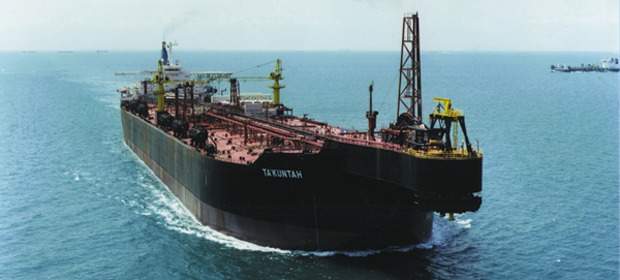
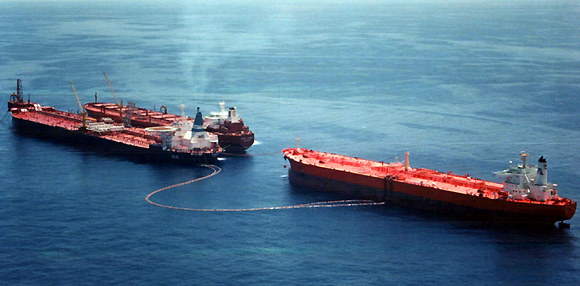
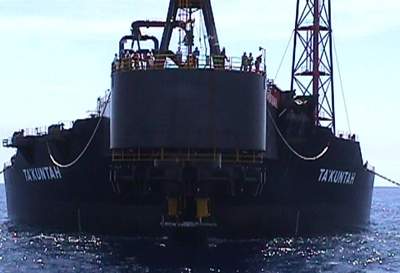
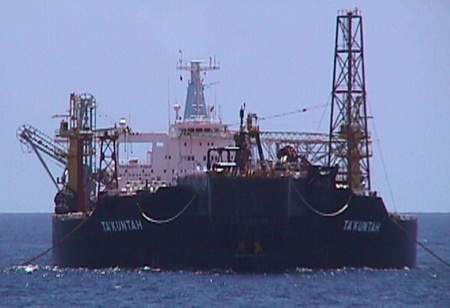
The short-term debottlenecking projects, known as the Short-Term Plan, included modifications to existing platforms to add new production separation facilities, pumps and compressors, and the installation of additional produced gas-compression facilities, interconnecting pipelines and a floating storage and offloading vessel.
The project to increase the long-term production of the Cantarell field was known as the Long-Term Plan. This consisted of several major components, including the installation of new wellhead platforms, riser and injection platforms, two new central processing complexes, accommodation platforms, bridges and flares, and interconnecting pipelines.
Oil production
One of the main reasons for Cantarell’s prolific oil production rate was the existence of a giant natural gas bubble that maintained pressure over the reservoir for the first 20 years of the field’s life. But as reservoir pressure fell, Pemex decided to maintain it by injecting nitrogen to increase the final reservoir recovery.
Gas is at a premium in Mexico, which means that Pemex would be better off selling it. Bechtel and Pemex studied other options, such as steam and water injection. Because of the oilfield’s geological formation, neither of these turned out to be a viable solution, but nitrogen was.
After six months of study, the team recommended that nitrogen be used to pressurise the reservoir and enhance production at Cantarell.
Nitrogen plant
The nitrogen-production facilities were built onshore as a private venture near the town of Atasta. Nitrogen is sent offshore via a pipeline for injection into the reservoir. The nitrogen production for pressure maintenance is about 1,200 billion standard cubic feet a day.
Nitrogen for the injection process is supplied by the world’s largest nitrogen production plant. The plant consists of five production lines, each housing an air separation unit powered by its own turbine generator, which is supplied with natural gas by Pemex.
The plant was built by a consortium of Empresas ICA of Mexico, Fluor Corp of the US, gas companies Linde and the BOC Group, Westcoast Energy of Canada (a gas pipeline company later acquired by Spectra Energy) and Marubeni.
The plant is owned and operated by a joint venture company that is majority-owned by the BOC Group, which was acquired by Linde in 2006.
Cantarell production
The injection project started operating in 2000, and boosted production from about a million barrels a day to 1.6 million barrels a day, then to 1.9 million barrels a day in 2002 and to a peak of 2.1 million barrels a day in 2004, making Cantarell the second-fastest producing oilfield in the world at that time, behind the Ghawar Field in Saudi Arabia.
Cantarell is now in relentless decline. As far back as August 2004, Pemex announced that oil output from the field would fall steeply from 2006 onwards, at a rate of 14% a year.
Cantarell production peaked in March 2006, when output fell by 13.1%, according to Pemex, which also predicted another decline of 15% for 2007. In May 2008, Mexico’s Energy Ministry said output had fallen a further 33% to 1.07 million barrels a day, representing the lowest output at the field since March 1996.
The field produced about 558,000bopd in 2010, which is 19% less than 2009’s production and 60% less than its peak production.
Pemex spent Mex$38bn ($2.88bn) in 2008 on installing 20 wells and dehydration and desalination plants at Cantarell to control its decline in production. Gas flare reduction turbocompressors, gas reinjection and a nitrogen recovery unit were also installed.
The nitrogen recovery unit at the Ciudad Pemex, Tabasco Gas Processing Center allows the field to meet quality specifications.
In order to maintain heavy crude production in the Bay of Campeche, Pemex developed the Ku-Maloob-Zaap (KMZ) complex in an adjacent area, which can be connected to Cantarell’s facilities. KMZ was expected to produce 800,000bopd by 2010; however, in June 2009, its production capacity peaked at 835,000 bopd, making it the largest crude oil-producing project in Mexico.
KMZ received an investment of Mex$26bn to increase production. It had 24 marine platforms and 132 operating wells by 2008.
In the first quarter of 2009, workovers were made on three major and nine minor wells. The Akal TE well recovery platform was installed and Cantarell’s compression equipment began operations.
During the same period, the KMZ-50 nitrogen pipeline also came on line. One development well was completed along with workovers on one major well and nine minor wells. The KMZ complex produced 839,200bopd of crude oil in 2010.
The field is expected to produce 927,000bopd at peak in 2013 due to start-up of adjacent satellite deposits. In November 2011, Pemex invested Mex$2.65bn in installing Gun Barrel technology and improving the quality of crude oil from the KMZ field. It has a capacity to treat 1,100,000bopd.
Rigs
In December 2011, Prosafe was contracted to extend the Safe Hibernia bareboat at the Cantarell field until December 2013 for $39.4m.
Another accommodation rig, Safe Bristolia, is also contracted from May 2011 to March 2013 for $45.3m.
