

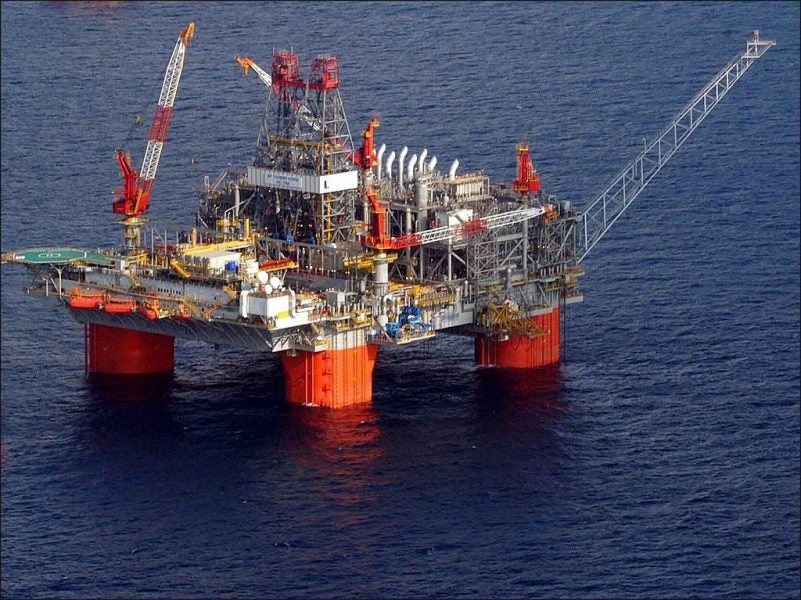
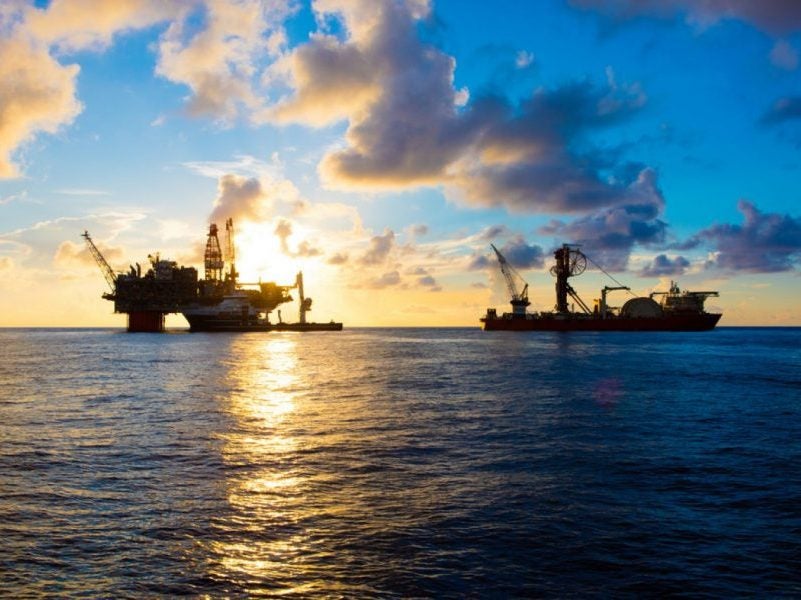
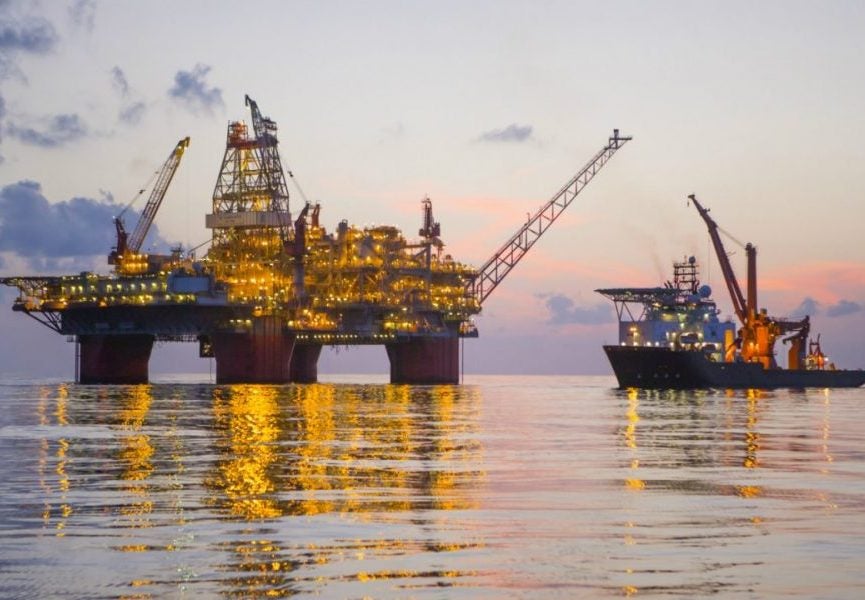
Thunder Horse deep-water oil and gas field is located 240km off the west coast of New Orleans in the Gulf of Mexico. It is operated by British Petroleum (BP, 75%) and co-owned by ExxonMobil (25%). The offshore field commenced production in June 2008.
Peak capacity of Thunder Horse oil field is estimated to be 250,000 barrels of oil along with 200 million metric cubic feet (Mmcf) of gas a day.
Recommended Buyers Guides

The Thunder Horse South expansion project was commissioned in December 2016 while the Thunder Horse Northwest expansion achieved its first oil in October 2018. The expansion projects increased the field’s production capacity to 200,000 barrels of oil equivalent per day (boed). BP subsequently approved the Thunder Horse South Expansion phase II project in May 2019, which was brought onstream in September 2021.
Thunder Horse field post-hurricane
The Thunder Horse field was originally planned to commence production in 2005. However, its production platform was severely disrupted by Hurricane Dennis in the Gulf of Mexico in July 2005.
Following a failure during pre-commissioning checks, components in the subsea system needed to be repaired and replaced. The equipment remained in a cold state since the 2005 hurricane and could not perform the intended high-pressure and high-temperature service.
The floating platform was rescheduled for oil and gas production in 2008.
Thunder Horse oil and gas field discovery
The Thunder Horse field is located in Mississippi Canyon Blocks 776, 777 and 778, in the Boarshead Basin, 125 miles south-east of New Orleans. It is one of the largest fields in the Gulf of Mexico and lies at a water depth of 6,000ft. The field was discovered in 1999. The reservoir consists of Upper Miocene turbidite sandstones 6,000m beneath the seabed in 1,900m of water.
The Thunder Horse discovery well was drilled in 1999 on Mississippi Canyon Block 778. It was drilled to a depth of 25,770ft using the drillship Discoverer 534 and found 520ft net of pay in three intervals.
Thunder Horse 2 was drilled in Block 822 to a total depth of 29,060ft in November 2000. The well was drilled by the Discoverer Enterprise in 6,300ft of water, 1.5 miles south-east of the discovery well. It encountered 675ft net of pay in three primary intervals.
In February 2001, an area named Thunder Horse North was discovered in Block 776, five miles north-west of Thunder Horse. The discovery encountered 581ft net of accumulated hydrocarbons in three intervals. It was drilled in 5,640ft of water by the Discoverer 534 and reached a total depth of 26,046ft.
Thunder Horse field development details
The development comprises two adjacent fields north and south as well as 25 wet-tree subsea wells tied into a floating platform.
In May 2000, BP contracted Mustang Engineering to provide preliminary front-end engineering and design services for the production drilling quarters (PDQ) semi-submersible platform. The PDQ weighs more than 50,000t and produces from some of the deepest wells in the Gulf. The semi-submersible has a displacement of 130,000t.
The facility is designed to process 250,000b/d of oil and 200Mmcf/d of gas. The topsides construction was carried out by J Ray McDermott in Morgan City, Louisiana, while the 15,000m³ hull was built by Daewoo Shipbuilding at Okpo yard in South Korea.
The hull, which weighs 60,000 tonnes (t) and displaces 129,000t, consists of four columns, which are connected by 11.5 metre pontoons. A total of 330 blocks were required for the hull’s regular pontoons, as well as the four corner boxes. A 10m-deep deck box spans the columns.
The topsides can handle a HP/HT well stream, export 250,000b/d of oil and 5.6 million m³/d of gas. It can also treat 140,000b/d of produced water and inject up to 300,000b/d of mixed-produced water and seawater for reservoir support.
The layout is based on three utility modules for production, compression and power generation, with topside modules comprising lift weights of 21,000t. The main power generation capability is 90MW. The PDQ platform provides accommodation for 229 people.
Floating platform
Thunder Horse PDQ is one of the world’s biggest moored, steel-production semi-submersibles ever built. The platform’s topside area is as big as three football fields. It is packed with equipment and systems capable of processing and exporting a quarter of a million barrels of oil per day.
Structure expectations are to realise oil and gas production in one of the biggest hydrocarbon locations in the Gulf of Mexico.
The floating platform operates under critical conditions. It pumps out oil and gas from the reservoir, which is three miles beneath mud, rock and salt, topped by a mile of ocean, and works under pressures exceeding 1,200bar and temperatures of 135°C.
Thunder Horse’s platform has a dual derrick, while the main rig has a hook load capacity of 1,000t and the second derrick is an auxiliary, which saves time making up drill strings and supports completions/workover operations simultaneously.
The helideck is sized for an S-61 with another S-61 parked.
Thunder Horse field expansion
The Thunder Horse South expansion project involved the drilling of four production wells and a 3.25km-long dual-flowline system connecting the existing production platform. The expansion increased the field’s production capacity by 50,000 barrels of oil per day (bopd).
Five vessels, including Siem Stingray, Deep Blue, Development Driller III, Theodore Spoolbase and Grand Canyon II, were used for the construction and drilling activities for the Thunder Horse South expansion project.
The Northwest expansion included the drilling of two production wells and construction of a two-slot subsea manifold. It increased the production capacity of the field by 30,000bopd up to 200,000bopd.
The Thunder Horse South Expansion phase II project envisioned eight new wells and two new subsea production systems towards south of the existing platform. The expansion project was expected to increase the field’s output by 25,000bopd from an initial two-well tieback to the existing platform.
Oil and gas transportation
Oil and gas produced by Thunder Horse are transported to the existing shelf and onshore pipelines via the Proteus and Endymion oil pipeline systems and the Okeanos gas pipeline system. The pipelines are part of the Mardi Gras Transportation System.
BP has an equity interest in both pipeline systems, with a 75% ownership interest in Proteus and Endymion and 66% stake in the Okeanos system.
Contractors involved
Technip and Transocean provided construction and drilling vessels for the Thunder Horse South Expansion project.
Technip also provided subsea equipment and pipeline systems for the South Expansion project.
KBR was the front-end engineering and design (FEED) contractor for the semi-submersible production platform. It also provided the construction, procurement, installation, technical and management services for the hull.
FMC Technologies provided subsea equipment for the Thunder Horse field in 2013. TechnipFMC secured engineering, procurement, construction and installation contract for the subsea production system of Thunder Horse South Expansion phase II project in May 2019.
