

The Kuda Tasi and Jahal (KTJ) development project is an offshore oilfield development in the Timor Sea, offshore Timor-Leste. It will be the country’s first 100% sovereign oil development.
The project is being progressed by a joint venture partnership between Australia-based oil and gas company Finder Energy as operator with a 66% interest, alongside state-owned oil and gas company TIMOR GAP with a 34% interest.
Recommended Buyers Guides

The environmental impact statement and the field development plan (FDP) for the project were submitted, and Timor-Leste’s petroleum regulating authority, Autoridade Nacional do Petróleo (ANP), approved the FDP in July 2026.
A final investment decision for the project is expected in the third quarter of 2026, with first oil targeted between late 2027 and early 2028.
Project location
The Kuda Tasi and Jahal fields sit in the northern part of PSC 19-11 within the Laminaria High oil province.
The proposed development area spans approximately 88km2. The water depth at the project site is between 400m and 450m, with no seafloor reef build-up.
Development background
The production sharing contract, TL-SO-T 19-11, between the two partners was signed in September 2024.
In September 2025, TIMOR GAP, via its subsidiary TIMOR GAP 11-106, agreed to farm into the project, increasing its participating interest from 24% to 34%.
The transaction completed in October 2025 and included terms under which TIMOR GAP would fund 50% of development capital expenditure (capex) up to a gross cap of $338m, alongside near-term funding to advance the project, while Finder Energy retained a 66% participating interest and operatorship.
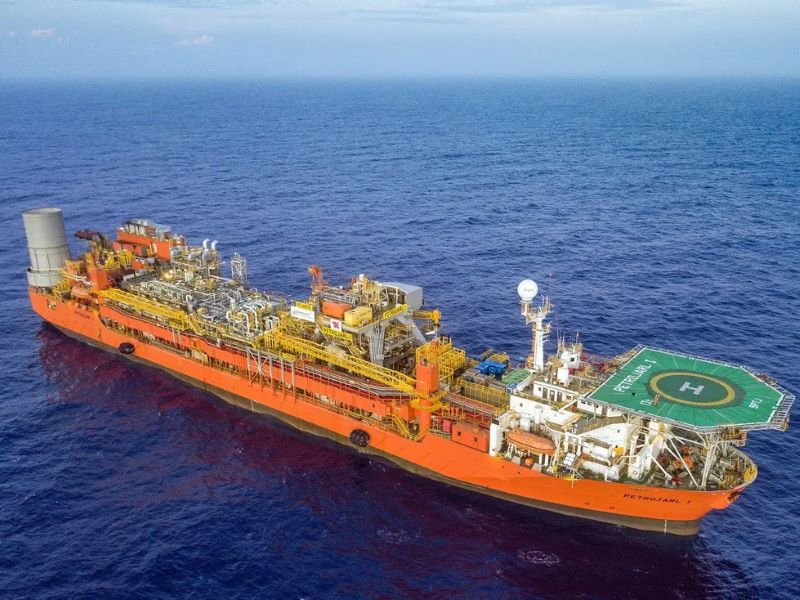
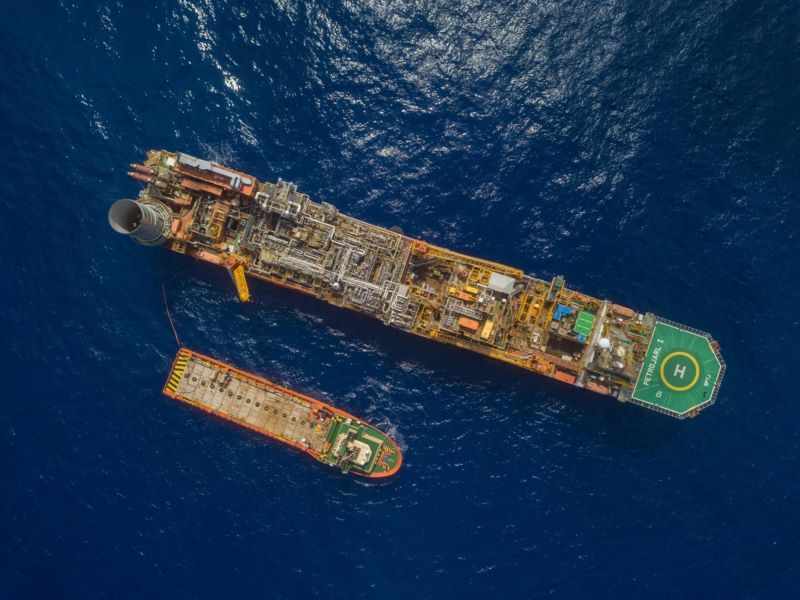
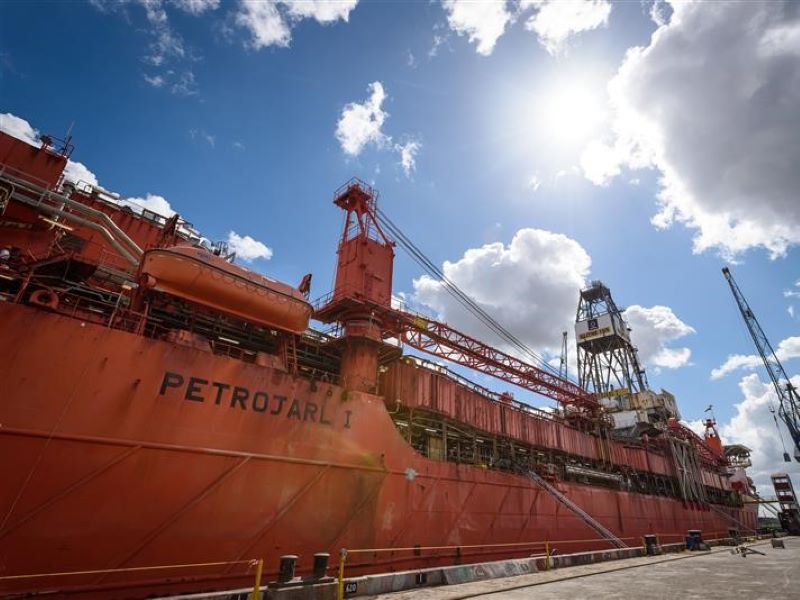
In December 2025, Finder and its wholly owned subsidiary Jarl Marine signed a $15m (A$21.48m) sale and purchase agreement with Amplus Energy, a field development solutions provider, and a share subscription agreement to acquire the Petrojarl I floating production storage and offloading (FPSO) vessel for redeployment to the project.
In February 2026, Finder reported completion of front-end engineering design (FEED) for the subsea production system and production wells. During the same month, the company submitted documentation to ANP to declare a commercial discovery and propose a development area, which ANP approved in March.
Finder signed a letter of intent with Sunda Energy in April 2026, focused on sharing a rig and drilling costs and seeking operational efficiencies across Timor Sea drilling programmes.
Kuda Tasi and Jahal discovery and appraisal
Jahal was discovered in 1996 when BHP drilled the Jahal-1 well, which encountered a 13m gross oil column in Laminaria Formation sandstones within an east-west orientated tilted fault block.
A sidetrack roughly 200m to the south intersected the reservoir 18m higher than the original well and increased the gross oil column to 31m, with testing flowing 55-degrees API oil.
Kuda Tasi was discovered by Woodside in 2001 via the Kuda Tasi-1 well, which intersected a 22m gross oil column in a tilted horst block structure bounded by an east-west trending normal fault and dip closures to the west, east and north.
Appraisal drilling followed in 2003 with the Kuda Tasi-2 well, located 1.3km to the south-east and updip, which intersected a 34m gross oil column close to the main bounding fault and flowed 55-degree API oil in a drill stem test over the upper reservoir.
In 2006, the Kuda Tasi-3 well targeted the extent of the oil-water contact and lateral reservoir connectivity on the eastern side of the field, intersecting an 8m gross oil column with pressures consistent with those of the Kuda Tasi-1 well. Wireline log correlation across the three wells supported reservoir continuity.
Reserves
The KTJ resource base was stated as 25 million barrels of oil (mbbl) of gross 2C contingent resources, with further identified upside of 23mbbl of gross 2C contingent resources and 116mbbl of gross 2U prospective resources as of March 2026.
Kuda Tasi and Jahal field development plan
The field development plan sets out a phased scheme based on redeveloping the Petrojarl I FPSO, with the first phase involving drilling three subsea production wells and installing associated subsea infrastructure.
The concept includes subsea production Christmas trees on each well and two subsea electric submersible pump (ESP) skids, one per field. Fluids are to be routed to the FPSO using flexible flowlines and risers, with the vessel providing controls, power and hydraulics to the trees and ESPs via flexible umbilicals.
The facilities were designed with spare capacity to accommodate future tiebacks and potential expansion within PSC 19-11, enabling further discoveries to be developed in phase two and later stages, and extending the project life well beyond the initial development.
Petrojarl I FPSO details
Petrojarl I is 215m (705ft) long with a deadweight of 35,578t. The vessel uses two propulsion engines supported by four directional thrusters, with power provided by two diesel generators, four gas turbines and two dual-fuel engines.
Crude storage capacity is 180,000 barrels (bbl) in a double hull configuration, and crude processing capacity is 25,000–30,000 barrels of oil per day (bopd). Produced water handling is currently 10,000bopd, with past operations reported at 47,000bopd. In its current configuration, gas capacity is eight to nine million cubic feet per day for fuel gas use, and artificial lift provisions include topsides equipment for three ESPs as well as gas lift capability.
The unit has an internal turret with nine riser slots and is turret moored with eight anchors. It provides accommodation for 70 people, with 30 typically required during operations.
Contractors involved
Amplus Energy was engaged for engineering studies, surveys and life extension work on the FPSO. The engineering studies were carried out in partnership with oil and gas services providers First Marine Solutions, Apollo Engineering, Det Norske Veritas and Subsea7, along with Schlumberger and OneSubsea.
In March 2025, Amplus Energy announced a strategic partnership with V.Ships Offshore to manage the FPSO transition.
Finder Energy signed a Development Alliance Agreement and an Accelerated FEED Project Agreement with Schlumberger Australia, a technology company, in June 2025.
EIF Geosolutions, a seismic data processing and imaging services provider, conducted the Ikan 3D Reprocessing Project to reduce exploration risk within PSC 19-11.
Nobleseas Engineering, an engineering service provider, completed a subsea concept study covering development options for Kuda Tasi and Jahal, including Class IV cost estimates.
Financial services companies Barrenjoey Markets and Canaccord Genuity Australia acted as joint lead managers on a two-tranche placement linked to the FPSO acquisition, with JP Equity Partners as co-manager, and Barrenjoey was also appointed as arranger for sourcing debt financing related to development capex.
RISC Advisory, an advisory company, completed an independent review and verification of the fields’ contingent resources in October 2025.ontingent resources in October 2025.
