

In April, US senators introduced the Next-Generation Geothermal Research and Development Act, a bipartisan bill to accelerate the development and commercialisation of next-generation geothermal energy technologies.
It was a nod to a rapidly developing sector. Advancements in horizontal drilling and hydraulic fracturing have unlocked new opportunities for geothermal, particularly for oil and gas majors looking to pivot or diversify. Improvements include the development of geothermal systems (EGS) – which artificially create permeability, rather than relying on tectonically active areas – and advanced geothermal systems (AGS), closed-loop technologies that extract heat without drawing up underground fluids.

Discover B2B Marketing That Performs
Combine business intelligence and editorial excellence to reach engaged professionals across 36 leading media platforms.
Appetite is strong, and growing, too. Geothermal has received particular interest from technology companies looking to satisfy massive energy demand from new data centres. Google partnered with Fervo Energy to develop Project Red, the world’s first commercial EGS facility, which came online in 2023. A pilot plant, it provides 3.5MW to the local grid to service Google’s Nevada data centres.
Despite the interest, geothermal energy currently accounts for a fraction of global demand – less than 1%. However, the International Energy Agency (IEA) anticipates that geothermal power could account for up to 15% of electricity demand growth to 2050, with the potential for that share to grow as the data centre picture develops.
In the US alone, the geothermal energy market is forecast to grow at a compound annual growth rate of 3.3% from 2026 to 2034, starting from a valuation of $2.34bn in 2025. Market growth is expected to be driven by federal support and tax incentives, alongside corporate and utility-scale clean energy commitments.
According to the vice-president of geothermal at Baker Hughes, Florent Rousset, now is the optimal moment for oil and gas operators to pivot into the geothermal space. Demand, technological capabilities and government incentives have coalesced to offer a ripe opportunity.
Speaking to Offshore Technology, Rousset says that as technology develops alongside demand, geothermal is on track to move from a fringe producer to a mainstream part of the global energy mix.
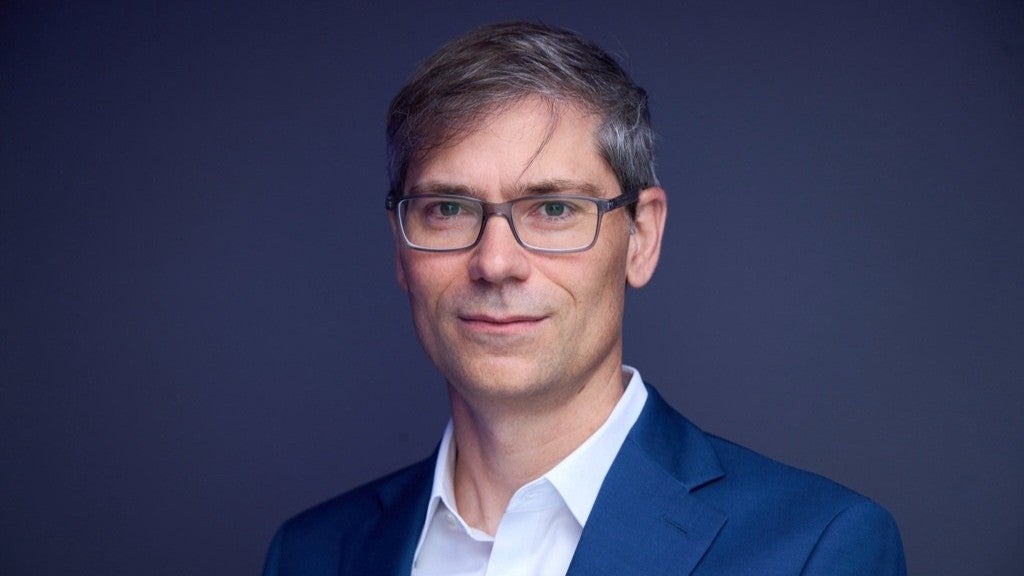
Eve Thomas (ET): Where is the demand for geothermal energy coming from and why is it entering conversations now?
Florent Rousset (FR): There are several reasons underpinning the growth in geothermal demand, and the reasons are different across the world, and for different types of geothermal developments.
If you look at the US and North America, a lot of the demand is coming from a combination of data centres, overall electrification and bringing back manufacturing to the country.
If you look at Europe, some of the demand for geothermal is associated with decarbonisation – reducing the carbon footprint of your district heating, for example. Some of it is linked to energy security, making sure you have a resilient energy system and a diverse set of energy sources.
In Europe, and to some extent in some parts of the US, some of the geothermal demand is associated with lithium extraction. That is another angle where there is a combination of products that make the economics work.
Then there is a combination of all of the above in other parts of the world, whether you are talking about Kenya, Indonesia, the Philippines, Japan or Taiwan.
ET: How much appetite is there from major oil and gas operators for geothermal?
FR: The demand is clear, but what has also changed is the supply. Historically, geothermal has been very localised to small parts of the world that meet a number of criteria. You need to have a resource that can be exploited economically. Some of the key factors are heat – you need very high temperatures – permeability and liquid – having brine as a high‑temperature liquid that can flow through permeable rock to be used for generating electricity.
That has been very localised in places like Indonesia, Iceland, New Zealand, Kenya and California.
What is changing now is the emergence of technologies that do not need all those criteria. EGS, for example, replaces the natural fractures – the natural permeability in the rock – with artificial fractures. That expands where geothermal can be done, because you only need heat.
AGS addresses the same constraint in a different way, by having heat transfer from the wellbore into a working fluid.
So, you have two aspects of the equation. One, more demand that is not being met by traditional power sources, and two, the technology to produce more geothermal energy in more parts of the world, more economically. In the middle of this you have an increase in prices, with data centres willing to pay more for this geothermal resource.
All of that is prompting action from the industry in many ways. We are finding small or newly developed companies that are investing in technologies and in developing geothermal resources. We are also seeing power companies looking at diversifying their portfolios. Maybe their portfolios have a combination of natural gas, coal and nuclear, and they are adding solar, wind and batteries. Now, adding geothermal to their portfolio also makes a lot of sense.
We are seeing some interest from larger companies as well. Several of the technologies required for geothermal are technologies that oil and gas companies have in‑house, so it is a natural transition for them to use this technology in a geothermal setting. However, the returns on geothermal are not the same as the returns on oil and gas, so it still needs to rank in the portfolio of those companies.
ET: Who is investing in geothermal?
FR: A very wide range of companies [are involved] at different stages of those geothermal projects. We see a certain type of company at the early stage – venture capital or seed capital investing in very early‑stage developers or in early emerging technologies.
Then we are seeing traditional banks step up to provide project finance or non‑recourse finance as projects mature.
What has typically been lacking is the capital in-between those two phases, and that has been called the ‘missing middle’. We are seeing new investors coming in here. We are seeing private equity companies and we are seeing funds being built to invest in geothermal projects.
We also need to mention funding coming from governments in various forms, either in terms of incentives (tax incentives) or in terms of grants, with governments like the US or Japan identifying technologies they want to promote and allocating resources to develop those technologies.
There is a very wide range of possibilities. What is really coming to the forefront today is an appeal for companies to raise money from the public markets and get listed. We have seen some recent announcements in this space as well.
Overall, you have the technology, you have the resource and now you have the capital coming into the equation too.
ET: Geothermal could supply 15% of the world’s energy. How quickly can we get to that – and how quickly will we?
FR: That IEA number is a 2050 number. That is the horizon, and it is one of the bookends. This number is premised on continuing to reduce the cost and continuing to modernise the technology.
What we really see is a range of outcomes. Regardless of whether you are looking at the high‑range outcome or the lower‑range outcome, in either case it is creating a whole new industry.
In terms of pace, the amount of activity we are seeing today is unparalleled compared with previous decades. The amount of money that has been raised by these companies in the past five years exceeds by far the investments that have been made in geothermal in the prior decade. It is definitely accelerating.
One of the benefits of those small developers is that they are very aggressive, nimble and fast. We are seeing several wells being drilled as we speak.
To put it in perspective, some of the largest geothermal developers historically have produced something in the order of 1GW. We are seeing new players planning to reach that level within just a few years. They are catching up really quickly.
ET: Which markets are ripest, why, and how can others catch up?
FR: The US is a unique market in many ways. One reason is the resource. Second is the availability of capital. Third is the entrepreneurship and the mindset. Add to that the permitting and the ease of doing business and you have a very strong set of conditions.
The last piece I would add is the ecosystem. The US has an incredible ecosystem with all the different service providers and equipment required to make geothermal a reality. Having all this in one place positions the US as a clear leader in this space.
That said, we are seeing several other countries following suit and putting in place regulations and government incentives, supporting developers so that projects materialise and mature very quickly. A number of countries have set goals around how much geothermal power they need to develop over the years ahead, and that provides a clear signal to the market that there is support for them to move faster.
ET: From a technical standpoint, why is now the right moment?
FR: The way geothermal would have been summarised a decade ago is that there were high risks and low returns. On the upstream side, perhaps something between 30–40% of the wells were turning out to be uneconomic. On the other hand, the returns were based on utilities, so low double digits at best.
The equation has completely changed. It is the economics: higher prices, improved technology and returns that are much more competitive today.
ET: What is required to scale geothermal?
FR: Historically, most geothermal developments have been relatively small. In oil and gas terms, there were a dozen wells. In power terms, there was 30–50MW.
The opportunity to scale was limited because of the resource. The areas and the volumes of hot brine in very highly permeable rock are limited and constrained.
Now, looking at current developments with EGS, you can drill into hot rock that is much more widespread. That also allows much lower uncertainty – something that is a lot more replicable.
One of the approaches the industry is adopting is designing standard clusters with a standard development module that has a certain number of wells and a certain‑scale power conversion unit, then replicating this again throughout the resource – the acreage they have secured.
That has several benefits. One is cost: by doing the same thing repeatedly, you can become very efficient in drilling but also very efficient in the facilities. Another is speed, and another is that it facilitates financing.
All those factors come into play and will allow companies to develop projects that are in the 100MW, 500MW or even 1GW kind of range.
ET: What do you see as the biggest obstacles for geothermal in the near future?
FR: There is a lot that is coming together, but the main obstacle remains the availability of financing to drill more wells, try and mature more concepts, and to go down the learning curve more quickly.
In my mind, the most important aspect today is pace – for those operators to proceed quickly and to mature this industry quickly, while everything is in play, and to build the momentum required for an acceleration, an uptake and a pivot of this success.
ET: Is this the right moment for that pivot?
FR: I absolutely believe it is. I think there is an increased recognition around the world that energy is essential – essential for human development, essential for our well‑being, essential for AI.
This is absolutely the right time for a resource that is sustainable and renewable, that is very low‑carbon, that is firm 24/7 and that has a competitive cost to come to market.
The only additional thing I would say is that, whereas some resources are at a lower technology readiness level and need more time to mature, geothermal has been around for more than 100 years, and the industry is ready to scale now and to leverage existing technology to provide power in a very short time frame.


