

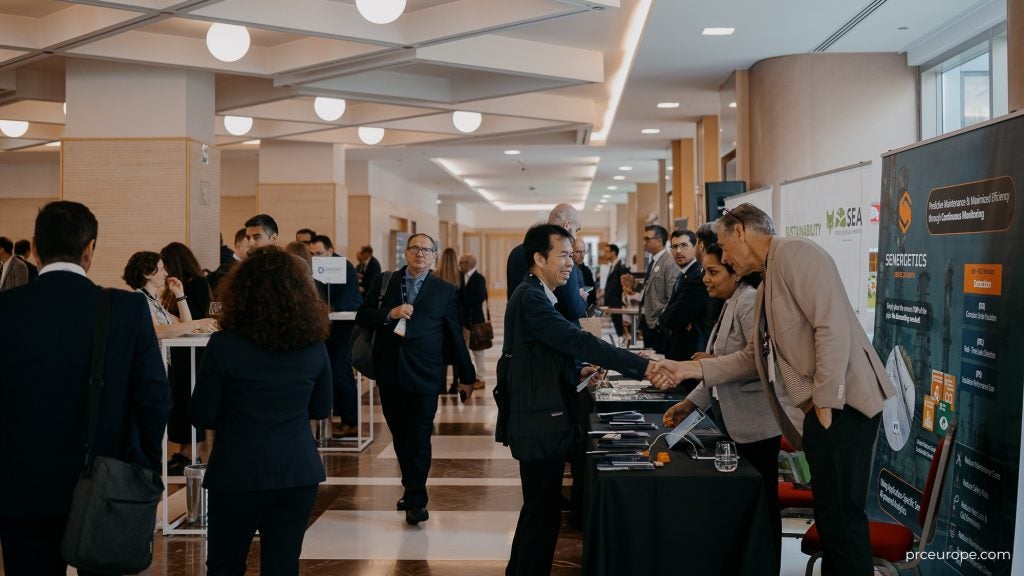
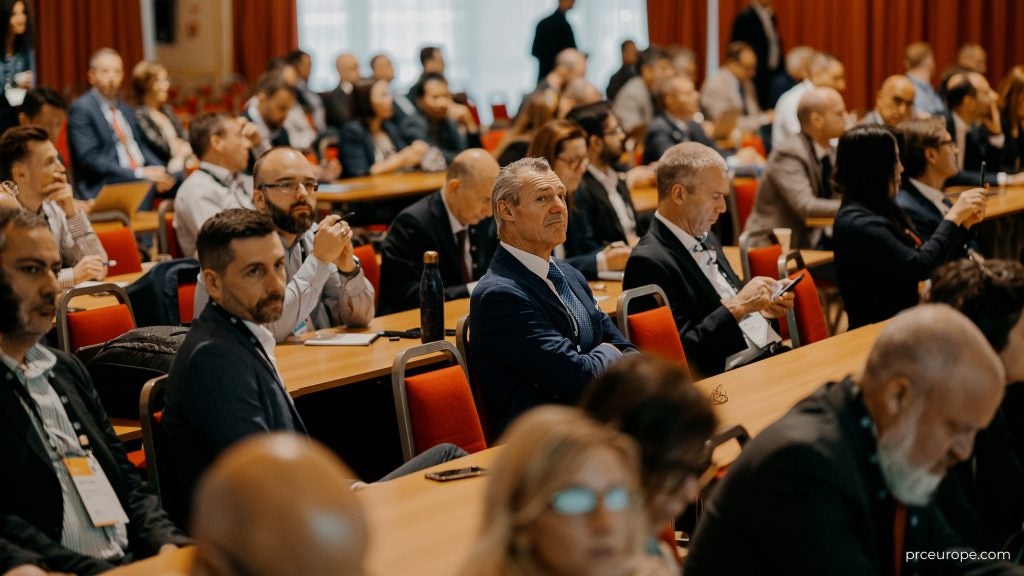
PRC Europe 2026 will take place in Amsterdam, the Netherlands, from 18–19 May. Delegates are set to discuss the future-proofing of downstream operations, as pressure builds around emissions targets. As operators look to adapt existing assets, protect competitiveness and build lower-carbon product portfolios, sustainable aviation fuel (SAF) and renewable diesel are becoming central to long-term strategy.
Refining is being forced to change
Refining is being pushed into a different operating logic. The old model was built around conventional fuel output, utilisation rates and margin management. However, it is experiencing converging pressures.
Go deeper with GlobalData


Discover B2B Marketing That Performs
Combine business intelligence and editorial excellence to reach engaged professionals across 36 leading media platforms.
In Europe, that pressure is regulatory and structural: the EU Climate Law outlines the bloc’s path towards climate neutrality by 2050, and specifies 55% as a minimum reduction target for net greenhouse gas emissions by 2030. Simultaneously, new regulation around transport is starting to reshape demand and scale for cleaner fuels.
That matters directly for refineries. ReFuelEU Aviation already requires fuel suppliers to raise the share of sustainable aviation fuel at EU airports, starting at 2% from 2025 and increasing over time. Meanwhile, the EU’s tighter CO₂ standards for cars and vans are designed around a 100% emissions-reduction target for new vehicles from 2035.
Concurrently, the International Energy Agency expects global oil demand growth to slow towards 2030. It also expects global road transport fuel demand to peak in 2028, with earlier peaks forecast in Europe and the US. Refiners are therefore facing two substantial shifts: stronger demand-side pressure for lower-carbon fuels and weaker long-term growth prospects for parts of the traditional road-fuel pool. The industry must respond while working alongside existing refinery systems.
How the industry is responding – discussions ahead of PRC Europe 2026
The downstream sector is testing potential ways to repurpose existing assets, rather than waiting on a new infrastructure base to emerge. The shape of the sector’s next chapter is gradually emerging, becoming apparent through a mix of technology choices, feedstock strategies, hydrogen pathways and project models designed to make lower-carbon fuels more viable at scale. PRC Europe 2026 will reflect that shift by bringing together senior voices from engineering, infrastructure, licensing, petrochemicals, procurement and construction, refining and technology to discuss the routes the industry is actively evaluating now.
Co-processing of renewable feedstocks
One of the clearest examples is co-processing, which shows how operators are trying to adapt existing refinery units, rather than relying entirely on new-build solutions. Henrik Rådberg, head of new opportunities at VAROPreem, will address this topic at the conference, via a presentation on the co-processing of renewable feedstocks to road and aviation fuels. He notes that “co-processing is a pragmatic transition strategy”, which allows renewable feedstocks – waste oils, fats and bio-oils – to be processed with fossil intermediates in existing refinery units, making it possible to scale lower-carbon road fuels and SAF faster, and with less capital intensity than a full greenfield approach.
However, it comes with technical and regulatory demands. Rådberg highlights that feedstock flexibility only creates value when supported by robust pretreatment, fuel quality control, sustainability certification and transparent mass-balance accounting. Thus, co-processing is relevant not as a sole solution but as a practical bridge between today’s fossil refinery system and the next stage of renewable fuels development.
Overcoming challenges in SAF manufacturing
A related, but more difficult, question is scale. Rocio Gil Bosque, aviation market development manager at Repsol Fuels, will speak on regulatory and technological challenges for large-scale SAF manufacturing at PRC Europe. For the industry, conversations around SAF are shifting from refinery adaptation and production to the conditions needed to push SAF towards mainstream commercial viability.
SAF is already at the centre of aviation decarbonisation plans. However, as Bosque underlines, “fragmented policies, evolving sustainability criteria and constrained feedstock eligibility create investment uncertainty”. That uncertainty continues to slow commercial decisions.
However, SAF scaling remains inextricably tied to refinery systems. This is recognised by Repsol, which treats refining as a multi-product platform, where viability depends on balancing the full output slate, rather than maximising a single fuel stream.
Bosque explains that “refining systems operate as multi-product platforms”, which means SAF expansion has to be assessed alongside renewable road fuels, hydrogen demand, feedstock flexibility and broader production economics. That logic becomes more sharply evident in emerging pathways such as e-fuels, where large volumes of renewable hydrogen, reliable CO₂ supply and major capital commitments remain critical constraints.
Creating the refineries of the future
If co-processing shows one near-term route and SAF scale-up highlights the challenge of volume, Jose de Barros, chief decarbonisation officer at Lummus Technology (regional partner of PRC Europe 2026), will offer a wider asset-level view with his speech on sustainability and profit pathways in the energy transition era. The focus reflects a question that is becoming increasingly central to refining: what does a future-ready plant actually look like when the market is being reshaped?
When operators use decarbonisation as a way to reduce emissions, diversify feedstocks, improve efficiency and open access to new low-carbon markets, “sustainability and profitability move in the same direction”, says Barros. This is an important shift in emphasis – resilience is being treated less as an environmental slogan and more as an operational and commercial issue.
Barros also underlines that the refinery of the future will need to function as a more flexible industrial platform than the one inherited from the fossil-centric era. That means combining electrification, circularity, renewable feedstocks, hydrogen and digital optimisation in ways that reinforce each other. In his words, assets need to evolve into “flexible platforms capable of processing circular and renewable feedstocks, producing sustainable fuels and optimising energy use through digital tools”.
Operators that reposition their plants early, and do so through partnerships across technology, recycling, digital and process innovation, will be better placed to meet future standards and remain competitive as traditional fuel demand becomes less predictable.
The next stage of downstream transformation
Taken together, these examples show that future-proofing refining is not about one fuel or one technology. Co-processing, SAF scale-up and refinery flexibility are different responses to the same underlying pressure, and the foundation of conversations for PRC Europe. The Congress attracts oil and gas leaders across the value chain and places decarbonisation, low-carbon feedstock, hydrogen potential, project execution and investment readiness in one connected discussion.
With less than two weeks to go, the event offers a timely setting for companies looking at a broader downstream strategy. Join PRC Europe 2026 to take part in the conversations shaping the next stage of transformation.


