
SSCS Timeline
SSCS presents this timeline of noteworthy projects of the past ten years.
Seabed Scour Control Systems (SSCS) was established in 1984 to provide frond scour protection systems and services to the offshore subsea oil and gas industry. Following an intensive period of product development and on-site trials by SSCS and major offshore oil and gas companies, SSCS frond systems were first put to commercial use at new and existing oil and gas development sites in 1986.

You have successfully submitted your enquiry. Someone from our company will respond ASAP
Seabed Scour Control Systems (SSCS) was established in 1984 to provide frond scour protection systems and services to the offshore subsea oil and gas industry. Following an intensive period of product development and on-site trials by SSCS and major offshore oil and gas companies, SSCS frond systems were first put to commercial use at new and existing oil and gas development sites in 1986.
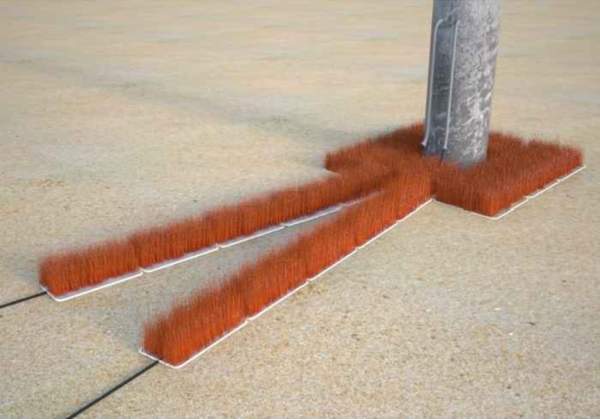
SSCS frond mats reduce current velocity and related turbulence in the location in which they are installed, eliminating the conditions that create scour, resulting in immediate and permanent protection. The reduction in current velocity stabilises the seabed and prevents scour occurring. Sediments being transported by the current are captured by the fronds and deposited within the mat.
Immediate scour protection is combined with the build-up of a fibre-reinforced, compacted sediment sandbank throughout the fronded area, providing strengthened stability. Frond mats eliminate the occurrence of scour immediately upon installation and provide permanent, maintenance-free protection.
Frond mats are not susceptible to edge scour, which occurs with other methods, and as a result of the natural tidal motion of the viscous drag created by the buoyant fronds, the protection extends beyond the extremities of the base of the frond mat. As a result, the mats protect a greater area of the seabed than is provided by other methods.

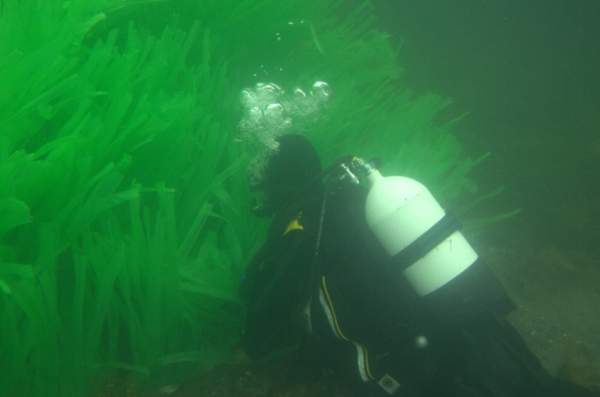
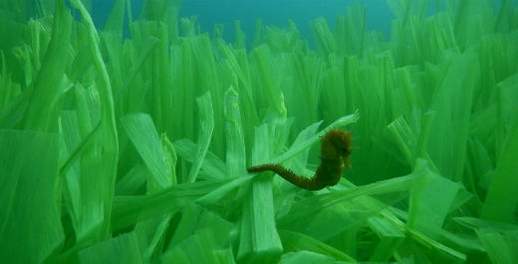
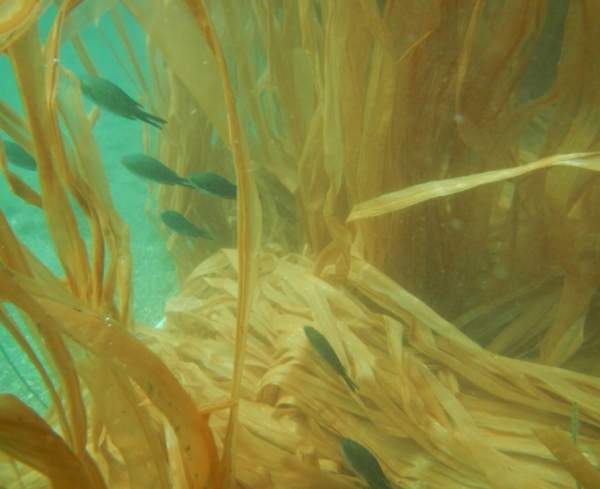
SSCS carries certified approvals from DNV and Lloyds, and is fully approved by Defra and numerous regulatory authorities and environmental groups worldwide. SSCS scour control products have been accepted as environmentally acceptable and compatible with the marine habitat.
The effectiveness of frond mats has been endorsed by Krystian W. Pilarczyk of the hydraulic engineering division of Rijkswaterstaat in Delft and Ryszard B. Zeidler of the Institute of Hydro-Engineering of the Polish Academy of Sciences, whose joint paper said: "Based on the artificial seaweed concept of ‘arrested sedimentation’, SSCS system (mat) suffers none of the drawbacks of similar previous systems.
"It has superb positional stability, it is not prone to phytoplankton colonisation, it requires no special tools or skills for installation and it actually serves to enhance its own effectiveness and that of other conventional sea defence forms.
"In conjunction with this action, at relatively shallow water the fronds also interfere with wave-induced orbital forces, effectively causing waves to break early and thus reducing the impact on threatened shorelines, breakwaters, etc.
"Environmentally acceptable, the sandbank contours follow and blend into the river or seabed, and does not affect marine life or vegetable growth or fishing."
The Fleetwood Fish Producers Organisation has also stated that SSCS fronded solutions to scour are: "The only technique we are able to endorse as being compatible both with the fishing fraternity and the environmental lobby."
SSCS frond mats have been installed worldwide to protect all types of subsea installations, including:
SSCS frond systems do not require maintenance. As a result of their natural, tidal action, they are ‘self-maintaining’. Other methods are known to require repeated maintenance, and SSCS frond mats have frequently been installed to provide protection where these other methods have failed; for example, Arklow Bank.
There are two main areas for significant cost-saving using SSCS frond systems:
These savings have proven the overall cost of installing the frond systems to be approximately 30%-50% of the cost of using other methods, while the removal of all maintenance costs results in considerable annual savings.
Fleetwood Fish Producers Organisation: "We will continue to recommend your systems for any future developments, such as the offshore wind farm developments, the next generation of offshore energy and for any civil and oil and gas industry installations on which we are consulted."
Shell: "We would have no hesitation in commending it to any interested parties in the Shell Group of companies or to any of your prospective clients."
Transco: "Engineers came up with a novel solution to stop tides and strong current damaging a vital underwater gas pipeline off North Wales: plastic seaweed! The prize for ingenuity goes to the plastic seaweed, pioneered by SSCS, which has been used to help anchor the pipe to the seabed."
For more information, including detailed case studies, please visit our website or get in touch using the form below.
SSCS presents this timeline of noteworthy projects of the past ten years.
Bohai Bay is the largest oil and gas production base offshore China, among those owned by the China National Offshore Oil Corporation (CNOOC).
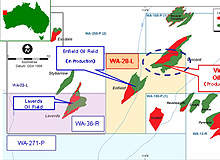
Vincent oil field lies in production licence WA-28-L, 50km offshore Exmouth in Western Australia. Operated by Woodside E
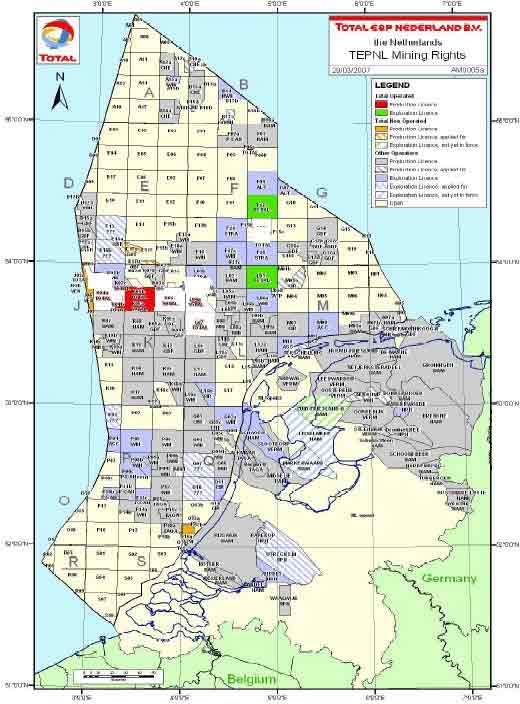
The K5F field is located in block K5 in the Dutch sector of the North Sea, approximately 110km northwest of Den Helder.

The Sable Offshore Energy Project lies near Sable Island, 10km to 40km north of the edge of the Scotian Shelf, offshore Nova Scotia, in water depths ranging between 20m and 80m.
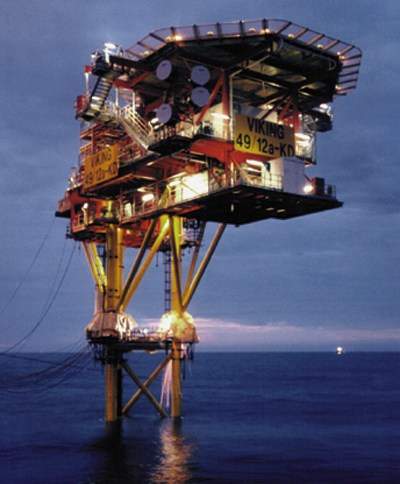
With its original reservoirs gradually depleting, Conoco has begun to carry out substantial changes to extend Viking B's field life well into the next century.
SASMAP's purpose is to develop new technologies and best practices in order to locate, assess and manage Europe's underwater cultural heritage.
SSCS has been supplying Type 12 and Type 25 frond mats to major Chinese oil and gas operators since 2006, which continue to be installed to rectify scour and provide permanent scour-protection for such assets as subsea pipelines and offshore platforms.
A quantity of SSCS weighted frond mats were delivered to the GMS Endeavour during June 2014 at the Great Yarmouth outer harbour prior to deployment at the Anglia A site in the North Sea, to protect the platform legs from scour where the water depth was approximately 20m-25m with a sandy seabed.
Arklow Bank is a shallow-water sandbank located 10km off the east coast of Ireland in approximately 3MWD.