
CoolCheck® 2 Automated Coolant and Diesel Exhaust Fluids Analysis System
CoolCheck provides measurement and profiling of coolant condition and diesel exhaust fluid (DEF) integrity.


You have successfully submitted your enquiry. Someone from our company will respond ASAP
Spectro Scientific focuses on developing, manufacturing and selling application-specific, mid-infrared (mid-IR) analytical instrumentation for both qualitative and quantitative measurements.
All Spectro Scientific analyzers and spectrometers are designed for easy, onsite field or at/near line use. They are equally as useful virtually anywhere repetitive measurements are needed, whether is is in the analytical or testing laboratory. Spectro Scientific instruments are the ideal solution for a wide variety of measurement applications in the biofuels, petrochemical, environmental, quality control and manufacturing industries.
Spectro Scientific analyzers have easy-to-use operator interfaces, making them ideal for non-technical personnel with little or no analytical or infrared background. Users can quickly and accurately obtain on-site results, typically in less than a minute. They let you cost-effectively move the application out of the laboratory to the analysis location, eliminating the wait for off-site lab results. All Spectro Scientific products are virtually maintenance-free, providing years of dependable, trouble-free operation.
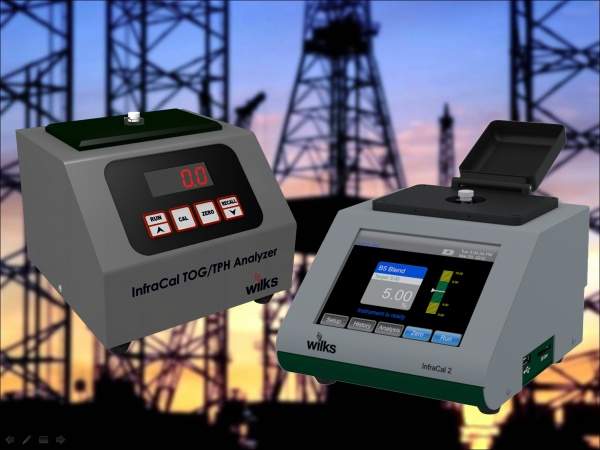
InfraCal Analyzers are designed specifically to be rugged, compact (less than 5lb), and easy to use by non-technical personnel. With more than 3,500 in use worldwide, they have become the instrument of choice for on-site analysis of oil in water, providing measurement results in less than 15 minutes.
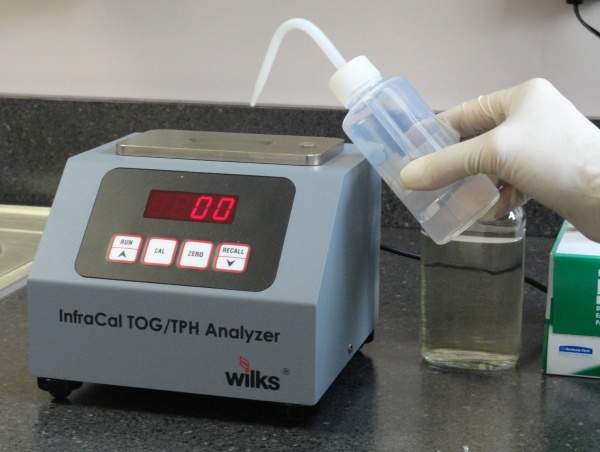
The analyzers eliminate the wait for off-site lab results to ensure that oil-in-water levels comply with discharge permits, as fines for non-compliant discharges can be costly.
InfraCal TOG / TPH analyzers:
Four InfraCal analyzer models are available for measuring oil content in water, drill cuttings and soil. All are ideal for use by non-technical personnel and provide virtually maintenance-free operation.
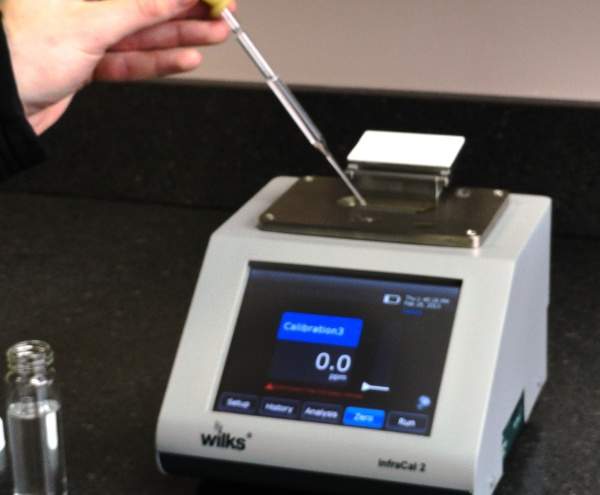
Both the InfraCal Model HATR-T2 and the new InfraCal 2 ATR-SP use hexane, pentane or Vertrel MCA for the extraction process. Measurement data from either model will correlate to EPA Method 1664, as both procedures are based on evaporation techniques and measuring the residual oil and grease. They are equipped with a built-in cubic zirconia horizontal attenuated total reflection (HATR) stainless-steel sample stage on which the extract is deposited for analysis.
The sample preparation takes a few simple steps and the ppm hydrocarbon result is obtained in less than 15 minutes. The InfraCal Model HATR-T2 has a minimum detectable limit of 8ppm oil in water and the InfraCal 2 ATR-SP will measure down to 0.3 ppm.
Both the InfraCal Model CVH and new InfraCal 2 Model TRANS-SP are based on US EPA Methods 413.2 and 418.1 and ASTM D7066-04, which uses Freon 113, perchloroethylene, or S-316, as the extracting solvent. Since the oil concentration is measured directly in the solvent, light end volatile components are retained, making it ideal for gas condensate measurements.
The sample preparation takes a few simple steps and the result is obtained in less than ten minutes. The InfraCal Model CVH has a minimum detectable limit of 2ppm oil in water. It was one of the instruments used to develop the ASTM D7066 oil in water method. The InfraCal 2 TRANS-SP will measure down to 0.1ppm.
In addition to lower detection limits, InfraCal 2 analyzers have added features, which include multiple calibrations to cover a larger range of analysis, data storage that tags measurements with analyst, date and time, and security features with different user access levels.
The analysis of oil in water by infrared technology is not new to the oil and gas industry, as it has been used worldwide for more than 40 years. Unlike UV fluorescence, which only measures aromatic hydrocarbons, infrared measures both aromatic and aliphatic hydrocarbons.
If there is any change in the aromatic / aliphatic ratio in produced water, infrared will see little effect while UV fluorescent analyzers will require recalibration.
Whether you choose an InfraCal TOG/TPH Analyzer or a new InfraCal 2 model, all are accurate, cost-effective and easy to use by both skilled technicians and non-technical personnel. They provide an analysis method that is ideal for onsite use, as well as in analytical or testing laboratories.
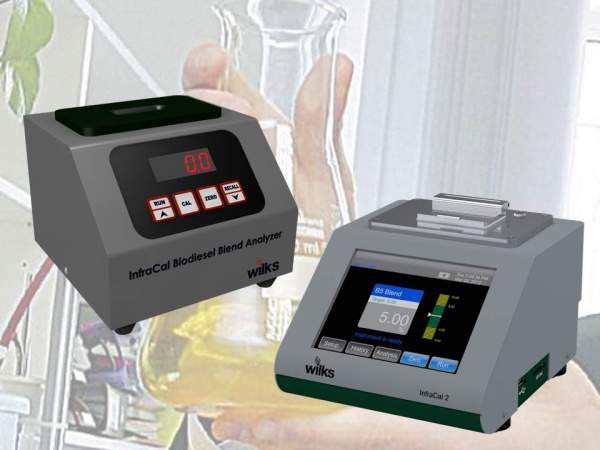
With the increase of biodiesel and ethanol blended into petrol fuels, those involved in the downstream end of fuel distribution need a quick and easy way to measure how much biodiesel is blended in diesel fuel or ethanol into gasoline.
Using the same technology as the InfraCal analyzers for oil-content measurements, the InfraCal biodiesel blend and ethanol blend analyzers are compact, portable and designed for the rugged environment of a fuel terminal.
Benefits and features include:
CoolCheck provides measurement and profiling of coolant condition and diesel exhaust fluid (DEF) integrity.
Anyone involved in field analysis of oil in water will continually get the question 'Does your equipment match the regulatory method?' While the amount of oil in water is highly regulated, it can also be a challenging measurement.
Spectro Scientific CoolCheck® 2 Coolant Analyzer provides analytical results on nine key parameters in easy-to-understand reports for use by the mechanic
Spectro Scientific today announced the launch of the new MicroLab® Series all-in-one, automated lubricant analysis systems.
Spectro Scientific Company Wilks is pleased to announce new website www.WilksIR.com focused on providing users with easy to use portable analysers for a variety of practical on-site measurements.
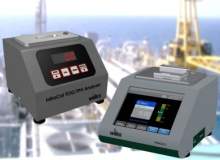
The new InfraCal 2 analyzer, recently introduced by Wilks, offers additional features to the already established and accepted InfraCal oil in water analyzers and InfraCal biodiesel blend analyzers.
The new InfraCal 2 Analyzer, recently introduced by Wilks for oil in water measurements, offers additional features to the already established and widely-used line of InfraCal TOG/TPH Analyzers.
As offshore oil wells age, the increase in produced water can challenge wastewater treatment systems. In order to ensure oil levels in the water are under the regulatory limit, it is important to do regular testing.
The answer to the commonly asked question of how one type of oil in water measurement compares with different regulatory methods is not always simple and straightforward.
The Petroleum Industry – both offshore and onshore – has regulations that limit the amount of oil in discharged water.
Portable infrared (IR) analysers, such as InfraCal analysers from Wilks, have been used worldwide for measuring offshore oil in produced water for over 50 years. They have the advantage over other analytical instruments in that the measurement can be performed by non-technical users and it is relatively unaffected by composition changes in the effluent.
Leading Chelmsford, Massachusetts-based developer and manufacturer of analytical tools and software for the industrial performance fluids market Spectro Inc. has announced the purchase of Wilks Enterprise for an undisclosed sum.
By using careful analytical procedures, understanding the composition of the waste stream and knowing the limits of each measurement system, useful information can be generated from comparing oil and grease in water testing methods.
Large amounts of drill cuttings are produced in offshore drilling, which for ocean disposal have a limit on the total petroleum hydrocarbons (TPH) they are allowed to contain.
Sandra Rintoul, president of Wilks Enterprise, will present a paper at the upcoming Unconventional Gas & Produced Water Conference in Aberdeen, Scotland, on 4 June 2013.
The new InfraCal 2 field portable IR analyser can measure down to 0.1ppm oil in water accurately, onsite and in less than 15 minutes. It is the newest addition to the Wilks line of rugged, easy-to-use oil-in-water / soil analysers, and provides added sensitivity and features for today's most challenging environmental applications. InfraCal 2 is ideal for non-technical users and will provide years of dependable, maintenance-free operation.
A new generation of portable, easy-to-use infrared (IR) analysers that provide fast, on-site measurements with better sensitivity for more challenging applications has been introduced by Wilks Enterprise.
The petroleum industry - both offshore and onshore -- has regulations that limit the amount of oil in discharged water. Fixed filter infrared (IR) analysers have been used to test oil levels in produced water on drilling platforms for over 45 years for a number of reasons. On oil rigs where real estate is at a premium, infrared analysers such as the Wilks InfraCal TOG/TPH analysers are compact (typically 6in or 15cm², weighing less than 5lbs) and rugged enough to withstand salt air and a rustic lab set up.
A new white paper published by Wilks Enterprise compares EN 14078 and ASTM D7371 methods for measuring the percent biodiesel in diesel fuel.
A white paper entitled, 'Solvent Choices for Infrared Testing of Oil and Grease in Water' was recently published by Wilks Enterprise.
Oil-in-wastewater discharges are highly regulated and each region of the world has their specific regulations. For the offshore oil industry regulating bodies such as the NPDES (national pollutant discharge elimination system) in the US have strict ppm limits that are coupled with costly fines for non-compliance.
Wilks Enterprise is pleased to announce several new videos that demonstrate the ease of using portable infrared analyzers for measuring the level of total oil and grease in water and total petroleum hydrocarbons (TPH) in soil.
The amount of water used in and produced by hydraulic fracturing of shale gas wells is in the millions of gallons per well. Whether the water is going to be taken offsite for disposal or reused for re-injection, the flowback or produced water needs pretreatment to remove any residual oil from the water.
Wilks Enterprise is pleased to announce the availability of factory-calibrated portable infrared analyzers for determining the concentration level of oil in water or soil.
Determining total hydrocarbon or oil/grease levels to ensure compliance with regulatory permit requirements for discharging produced water is a worldwide problem facing the oil and gas industry.
As effluent discharge regulations continue to become more stringent, often requiring an oil in water measurement of less than 1ppm, the InfraCal 2 Analyzer is the newest addition to the globally recognised Wilks InfraCal line of portable, filter-based infrared analysers.
As offshore oil wells age, the increase in produced water can challenge wastewater treatment systems.